










Now Reading: Black Clover disappeared — only to outrun every shōnen on its return
-
01
Black Clover disappeared — only to outrun every shōnen on its return
Black Clover disappeared — only to outrun every shōnen on its return

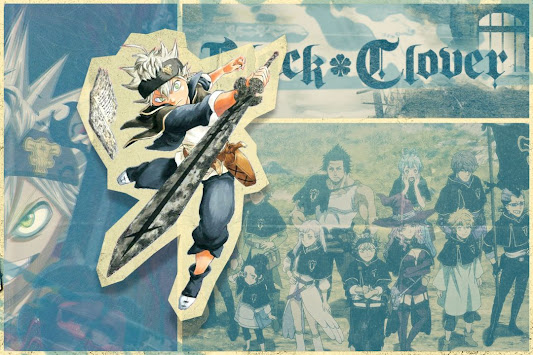
“People have been underestimating me my whole life!”
That defiant cry from Asta doesn’t just define his character but also mirrors the journey of Black Clover itself. Once brushed off as another run-of-the-mill shōnen, the series now rises into its second season not as a surprise, but as a correction.
It was never just about loud battles or familiar tropes — it was about grit, structure, and a world that dares to challenge who gets to hold power.
From cancellations to canon
To call the series a comeback narrative is reductive. Its revival, amidst a volatile anime economy and a shōnen genre rapidly fracturing into experimental forms, is nothing short of mythopoeic. With Season 2 officially on the horizon, what we are witnessing isn’t mere resurgence, but a reclamation of tonal clarity and ideological earnestness in a market saturated with genre deconstruction.
The five-leaf epic occupies a curious threshold: too classic to be labeled revolutionary, yet too eccentric to be purely derivative. In a post-Chainsaw Man moment, where narrative dissonance and affective chaos have become currency, Asta’s trajectory offers a near-liturgical rhythm of growth. Not because it resists complexity — but because it insists on clarity.
The confirmation of Season 2, following the cinematic pivot of Sword of the Wizard King, suggests a series no longer at the mercy of production cycles. It implies forethought, curation, and most crucially: narrative breath.
The Clover Kingdom as ideological architecture
Asta’s world is not merely fantastical — it is political. The Clover Kingdom, with its triadic caste hierarchy (Nobility, Commoners, Peasants), is less a narrative setting than an encoded critique of meritocracy’s performative myth. Mana is not only an energy resource — it is a metaphor for privilege, breeding a state apparatus that naturalizes class supremacy under the guise of magical inheritance.
Asta’s anti-magic is thus anti-hegemony. His strength emanates from a void — an absence that becomes antagonistic to the state’s essence. He is not a chosen one; he is a system error. That the series doesn’t sensationalize this rupture, but embeds it in his day-to-day praxis, making his political function less rhetorical and more structural.
The Black Bulls, meanwhile, become a compressed portrait of societal outcasts: perceived deviance (Gordon), class migration (Noelle), and species liminality (Charmy, Secre). Their cohesion isn’t accidental — it’s ideological, held together by shared dispossession.
Unlike Fairy Tail, whose guild system often blurred meaningful stakes under the warmth of found family, Black Clover tempers camaraderie with a critique of meritocracy. It dares to ask: who benefits from the system, and who is erased by it? While Fairy Tail leans on emotional payoff, Black Clover insists on structural reckoning.
The manga’s discursive maturation
Tabata Yūki’s evolution as a mangaka is most legible not in his character arcs, but in his shifting formal techniques. Early volumes of the series adhered to symmetrical battle layouts, archetypal pacing, and predictable cadence. But as the narrative breached the Elf Reincarnation arc and segued into the Spade Invasion and Judgment Day sagas, the structure itself began to fragment.
Lucius Zogratis’ vision of a soul-controlled utopia echoes the bioethical horror of Bleach’s Aizen: charismatic, meticulous, chillingly rational. Yet where Aizen sought godhood through detachment, Lucius seeks it through orchestration — he wants not to dominate chaos, but to choreograph peace.
Where earlier arcs framed magic as mechanical power, recent developments reimagine it as metaphysical debate. The Devil Union, Soul Domination, and Chrono-Manipulation arcs don’t escalate power — they escalate philosophy. Who controls the self? Where is identity stored when the soul becomes tradable?
Pierrot, pipeline, and perception
Studio Pierrot’s early adaptation of Black Clover was an exercise in industrial compromise. With multiple projects (Boruto, Tokyo Ghoul:re) running parallel, the show often suffered in fluidity and tonal control. Frames stuttered, sequences blurred. Still, its heart beat’s imperfect, but persistent.
Then came Sword of the Wizard King — not merely a film, but a stylistic reset. The animation was tighter, spell sequences layered with symbolic color theory (red for resistance, white for submission), and action framed with spatial depth. The flick proved the anti-magic canon wasn’t a technical accident; it was a production mismatch, now being corrected.
If Season 2 continues this trajectory, it could mark a visual renaissance. It doesn’t need to mirror Bleach: Thousand-Year Blood War’s cinematic coolness, but it could adopt its pacing discipline and visual architecture. Where Bleach weaponizes silence and saturation, Black Clover can weaponize rhythm and resolve.
Intertextual constellations
The gritbound saga resists easy comparison, yet thrives within a web of intertextual echoes. Asta’s spirit may echo Naruto’s resilience, but lacks the prophecy padding. He fights not for legacy, but for visibility. Unlike Fairy Tail’s Natsu, Asta isn’t powered by fate or bloodlines — he’s powered by refusal. Refusal to be excluded, ignored, or erased.
Yuno, by contrast, is a negation of the hotheaded rival trope. He doesn’t challenge Asta; he parallels him. Their relationship isn’t dialectical but dual. Tabata subverts rivalry-as-conflict, offering instead rivalry-as-reflection — a rare emotional realism in a genre that often renders competition as combat. This nuance elevates Black Clover beyond Fairy Tail, which often substitutes power-ups for internal growth.
Villains, too, shift across reference lines. Lucius Zogratis carries echoes of Griffith (Berserk) in ambition, and DIO (JoJo) in theological self-styling. Yet his calm rhetoric and bioethical vision position him as uniquely modern — less tyrant than totalitarian visionary.
And in the era of revisionist shōnen, the series doesn’t parody or deconstruct. It reframes, listens, and steadies.
Thematic preoccupations beyond the page
Magic here isn’t just elemental — it’s epistemological. It reflects its users’ convictions, traumas, and cosmologies. Nacht’s shadows aren’t darkness; they’re multiplicity. Noelle’s sea dragon isn’t just a spell; it’s a reckoning with lineage and loss. Asta’s anti-magic identity is friction: a body that repels structure, yet keeps pushing toward it.
The current arcs suggest an increasing concern with ontological instability. When Julius Novachrono fractures into Lucius, the series asks: Can time itself be moral? What is leadership when fractured by duality? These are not moral questions — they’re structural. And they reframe the Wizard King ideal as a contested symbol rather than a concrete goal.
The series interrogates the nature of power: who constructs it, who maintains it, and who disappears when institutions attempt to fix themselves.
Season 2’s burden of clarity
With Season 2 entering production, the burden isn’t simply narrative continuity — it’s tonal alignment. The Judgment Day arc is dense, morally ambivalent, and emotionally unforgiving. A careless adaptation risks flattening its tension. This arc requires patience in pacing, musical minimalism, and a refusal to over-explain.
Voice acting must carry ambivalence, not affirmation. Fights must articulate metaphysical tension, not just kinetic payoff. If the anime can trust its audience with complexity — resist the impulse to simplify — it will transcend mere fanfare.
Asta as post-shōnen archetype
Asta is not subversive in form, but in function. His appeal is accumulative, not explosive. He does not deconstruct the genre; he reinforces its best tendencies through relentless consistency. He is not interested in ideology, but his actions produce one: a politics of refusal, of endurance, of collective will.
In many ways, he is a metaphor for the series itself. Misread early, underappreciated by critics, yet unrelenting in delivery. Season 2, then, is not a return — it is a rearticulation. Not a recovery of lost ground, but the unveiling of a deeper terrain.
Let him scream. Let the magic swell again — not for glory, but for proof.
“My magic is never giving up.”
Now, that line doesn’t feel like branding.
It feels like a prophecy.