









Now Reading: BURIED IN WASTE: Warnings ignored before the Binaliw landfill disaster
-
01
BURIED IN WASTE: Warnings ignored before the Binaliw landfill disaster

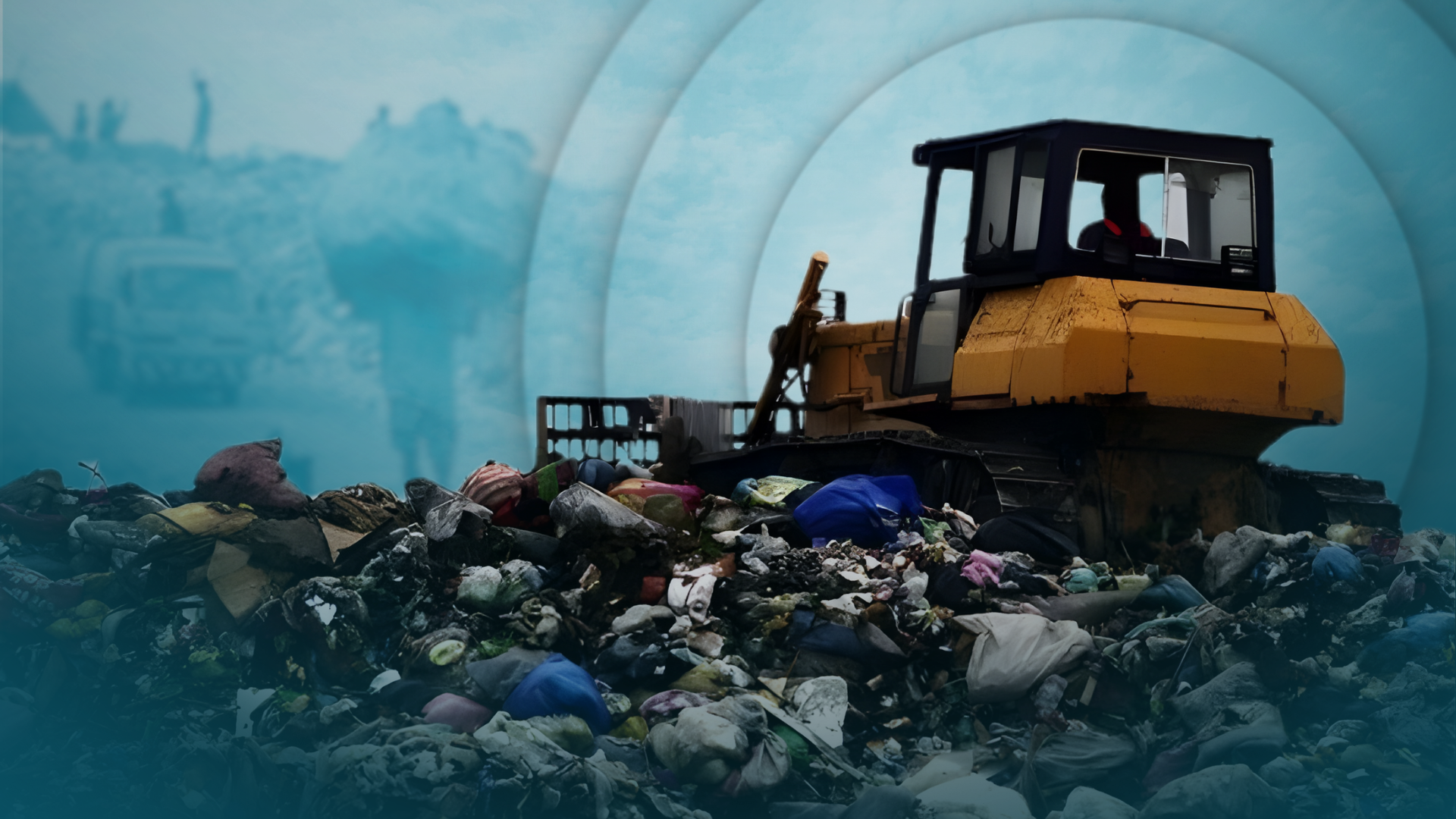
An hour away from the city’s cluster of high-rise buildings lies Barangay Binaliw, an upland community in Northern Cebu with steep terrains, narrow roads, and densely packed homes. For years, it has also carried the burden of the city’s waste.
The Binaliw Landfill, originally designed as a controlled disposal site, received tons of garbage daily—far beyond what the land and nearby communities could safely bear.
What rose over time was not a regulated facility operated by Prime Integrated Waste Solutions Inc. (PIWS), but a towering mound of trash looming over residential areas. Residents repeatedly raised concerns about the stench, the infestation of pests, and the visible instability of the landfill itself.
Still, operations continued, even as the site exceeded its intended capacity.
Warnings that went unheeded
The landfill had a rough go for a while, even before the collapse. It was problem after problem and some environmental screw-ups.
From the issuance of its Environmental Compliance Certificate (ECC) in 2017 to successive warnings from environmental regulators, city officials, and residents, concerns over safety and compliance persisted for years.
Complaints about foul odors, leachate, and cracks in parts of the landfill were raised years as early as 2019, alongside violation notices and reports of health and environmental risks.
Critics in the city council also questioned the landfill’s design, because it resembled an open dumpsite rather than a proper sanitary facility.
Despite ECC amendments in 2020 and management changes in 2023, inspections in 2024 again flagged violations of the Ecological Solid Waste Management Act, including conditions similar to open dumping.
Residents continued protesting persistent foul odors, wastewater problems, and fly infestation; while the landfill workers themselves raised concerns about its excessive heights.
Even with repeated warnings, there is little evidence that comprehensive geotechnical assessments or long-term stability studies were conducted.
Environmental groups and community members argue that the landfill’s continued operation reflected a pattern of weak enforcement and reactive governance, where temporary fixes took precedence over sustainable waste management.
In a community already vulnerable due to its terrain, the lack of monitoring turned a known risk into a looming disaster.
The Deadly Consequences
On January 8, 2026, this risk became reality. Residents near the Binaliw landfill site initially thought that the ground-shaking sound was a struggling vehicle. But then shortly before 5 p.m., a massive section of the landfill gave way, burying workers under tons of garbage inside the materials recovery facility and offices near the landfill’s base.
Rescue teams were immediately deployed, working amid unstable ground, toxic waste, and the threat of further collapse. The conditions slowed the retrieval and exposed responders to serious health risks.
Search-and-rescue operations continued for more than a week. By January 18, they stopped looking for survivors. The next day, January 19, authorities confirmed 36 deaths.
Among the casualties was a 50-year-old volunteer responder who later died from sepsis after sustaining wounds during rescue operations. His death underscored the hazardous conditions on site and raised questions about whether responders were adequately protected and equipped.
Disaster rooted in systemic failure
Initial investigations pointed to chronic failures in waste management. The landfill had been overfilled for years, safety protocols were inconsistently enforced, and monitoring of soil stability and drainage appeared insufficient.
Environmental advocates said the site had long exceeded its safe capacity. A landfill’s capacity has a limit to how much trash it can hold before things get risky. At Binaliw, it reaches 35-meter high, equivalent to a 10- to 20-storey building.
Following the incident that killed dozens, the Department of Environment and Natural Resources–Environmental Management Bureau Region VII issued a cease-and-desist order against the Binaliw sanitary landfill, halting its operations.
Authorities said the collapse was not a sudden or unforeseeable tragedy. It was the outcome of prolonged neglect, regulatory lapses, and the absence of a long-term waste management strategy.
Policy shifts after the collapse
In the aftermath of the disaster, Cebu began implementing new waste management measures aimed at preventing similar incidents.
One of these is the “No Segregation, No Collection” policy, which was launched on January 26 across Metro Cebu, including Cebu City. Under this policy, unsegregated garbage will not be collected to reduce landfill volume and increase recycling and composting.
The city had outlined a phased enforcement plan. Trial runs and public information campaigns on proper waste segregation will be conducted in mid-February, followed by priority collection of biodegradable and properly sorted waste on January 15. By March, fines are set to be imposed on households and establishments that fail to comply.
To manage the city’s estimated 600 tons of daily waste, Cebu City government also added five garbage trucks for night pick-up and deployed plastic-shredding machines that can process up to 40 tons of waste daily.
With the Binaliw landfill still closed, the city is seeking alternative waste-handling options. The local government has requested approval from the national government to use a site in Inayawan as a temporary transfer station to help clear and redistribute garbage.
Mayor Nestor Archival said the proposed site would be temporary and not a new landfill. He has repeatedly urged residents to comply with waste segregation rules as part of efforts to reduce dependence on landfills and keep city streets clean.
As investigations continue, the disaster has intensified calls for accountability—not only for what went wrong on January 8, but for the decisions that allowed the danger to grow unchecked for years.