



Now Reading: Finding home in the Filipino shows that shaped our childhood
-
01
Finding home in the Filipino shows that shaped our childhood
Finding home in the Filipino shows that shaped our childhood

Janelle Avida Alvarez and Shean Jeryza Alibin
There was a certain kind of magic and mystery that only children could feel—a time when our small, innocent minds held boundless imaginations and experienced a rush of pure emotion.
As children, we may easily befriend mystical creatures; fairies with sparkly wings, big-nosed elves, sky-faring pirates, a man with the head of a horse, a graceful woman with a mermaid’s tail, and so many more.
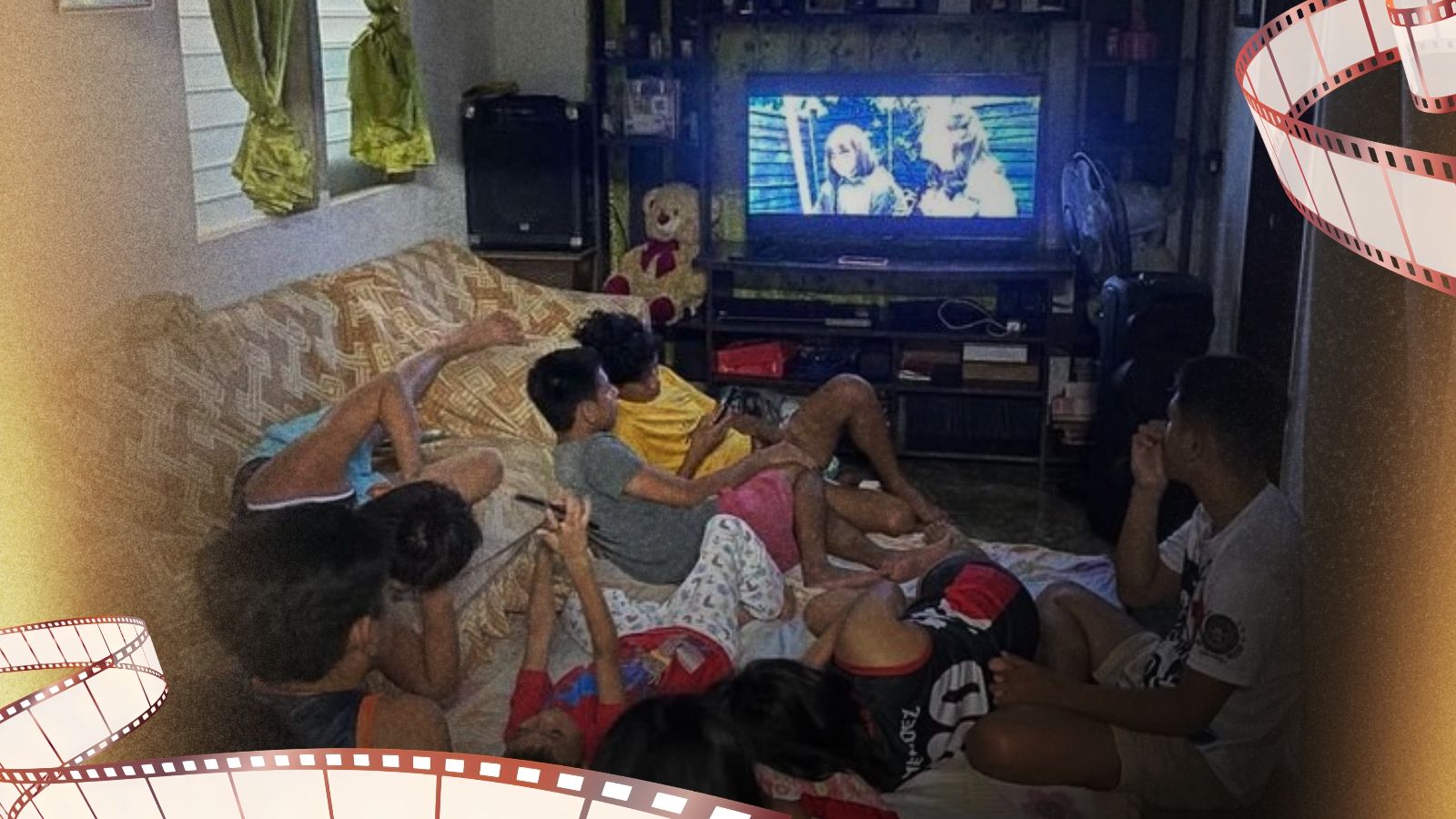
From the tales we conjured in our heads to the bedtime stories our grandmothers shared, fantasy eventually found its way onto our screens. We grew up watching Filipino television shows that captivated us after school and after our midday naps. These childhood teleseryes dominated our screens, captured our imaginations, and quietly helped shape our values.
Today, as adults navigating the real world, the fantasy realms we once carried in our hearts still hold the lessons that make us who we are.
Wansapanataym
“Wansapanataym, kay saya, halika na.”
Remember how hearing this line meant it was time to sit back, watch, and let another magical story unfold straight from a book?
The opening song of Wansapanataym, a fantasy anthology series by ABS-CBN, was enough to bring us rushing toward the television, curious about what kind of adventure was waiting for us that weekend. Running from 1997 to 2019, with a break between 2005 and 2010, Wansapanataym brought a different story and a different set of characters to our screens each week.
From children discovering magical objects to ordinary people having extraordinary powers, every episode opened a new world where our wishes could come true and impossible things could happen, all while teaching us new lessons about family, kindness, and friendship.
Nathaniel
As children, we are often seen by the world as symbols of goodness and grace. We are not merely miniature adults, but angels sent from heaven to remind grown-ups of the good that exists in the world—and within themselves.
This is the central premise behind Nathaniel, a 2015 Philippine fantasy drama that follows the story of the child angel Nathaniel (starring Marco Masa), sent down to Earth to restore humanity’s faith in God. Amidst a world clouded by human sin and earthly desires, the show serves as a gentle reminder that a ray of hope always exists, even in the deepest darkness.
Dressed as an ordinary human child, Nathaniel himself is born out of tragedy. Having died as a baby in an accident that ultimately tore his parents apart, his return as an angel proves that decay and sorrow do not have to be the end of the story.
Sometimes, God uses brokenness to create His messengers and deliverers of kindness.
May Bukas Pa
Magic does not only revolve around mystical beings and creatures in flowery dresses. Sometimes, magic arrives in the most quiet, peaceful, and profound way—from Him.
May Bukas Pa, a religious drama airing from 2009 to 2010, follows an orphan boy named Santino (played by Zaijian Jaranilla) who is raised by Franciscan priests in the fictional town of Barangay Bagong Pag-asa.
Santino forms a close, personal bond with Jesus Christ, whom he affectionately calls “Bro.” Given the gift of healing and the ability to converse with Jesus, Santino uses his special blessing to help the townspeople overcome personal struggles, repair broken relationships, and find hope amidst adversity.
This shows us how children can serve as God’s instruments, reminding us that He is always present and ready to offer guidance, often in ways that feel miraculous to human eyes. It reassures young viewers and adults alike that no matter how difficult life becomes, Someone is always watching over them.
100 Days to Heaven
They say adults are just children forced to grow up, merely complying with the standards and roles set by society. Yet, not all adults act maturely: at times, they can be far more menacing and spiteful than children.
Such was the case in the 2011 show 100 Days to Heaven, with Madame Anna Manalastas (played by Coney Reyes) who is the ruthless, cold, and tyrannical owner of a toy empire who treated everyone around her with cruelty.
Her life takes a sudden turn when her greedy associates orchestrate a car bomb explosion to eliminate her. Denied entry into heaven due to her past misdeeds, Anna bargains with the gatekeeper for a second chance. She is sent back to Earth with a strict 100-day deadline, but with a catch: she is transformed back into her seven-year-old self (portrayed by Xyriel Manabat).
To earn her ticket to heaven, she must seek out everyone she wronged, apologize, and repair the damage she left behind.
The series reminds us of the profound weight our actions and words carry—whether good or bad. In Anna’s case, her cruelty stemmed from her own painful past, showing that hurt people often hurt others. Through her journey, the show teaches us that while making mistakes and causing pain is part of being human, real growth comes from correcting our wrongdoings, repenting, and making amends with the hearts we have shattered.
The magic of 100 Days to Heaven lies in its message that kindness and justice can break the cycle of pain, giving even the most broken individuals a chance to heal and make the world a better place.
Mutya
What if the girl you knew as ordinary was hiding something extraordinary beneath the surface? When Mutya played on our screens in 2011, it brought magic into the childhood of viewers, inviting them to immerse in the journey of a young girl whose story is as deep and fascinating as the waters.
Mutya was adopted at birth and her biological mother never knew that she was still alive. Surrounded by the love and care of her adoptive family, Mutya grew up unaware that she was a mermaid.
As a child, she learned to keep her tail hidden and live as normally as possible. As she grows older, Mutya begins to uncover the mystery of her origins, leading her into a journey of finding where she truly belongs, making meaningful friendships, and reconnecting with her family.
Played by Mutya Orquia and directed by Erik C. Salud and Jojo A. Saguin, the series was based on Pablo S. Gomez’s comic of the same name. For children watching at the time, “Mutya” made the impossible feel a little more believable as it gives a story about a girl who was different, yet deeply loved, even before she discovered the truth about herself.
Super Inggo
You might have wandered around your home wearing a cape, pretending to save someone from danger and imaging yourself as a superhero.
In 2006, Super Inggo captured that dream through the story of Budong, a street-smart kid played by Makisig Morales who dreamed of becoming a hero without knowing that he already had powers of his own.
Raised by his adoptive mother, Budong secretly trained at the Power Academy and became Super Inggo, where he began to uncover the secrets about his family. Directed by Gilbert G. Perez and Malu L. Sevilla, the series brought action, adventure, friendship, and unexpected twists to viewers.
It was the kind of show that made us run around and believe that, even for a moment, we could be heroes too, saving the day and the people around us.
Encantadia
To step into a world woven from primal enchantments—where fire, wind, water, and earth shape the very fabric of existence—is a breathtaking thrill. However, what truly breathes life into this realm are its eternal guardians: the magical Sang’gres.
Whether you grew up watching the original 2005 classic or fell in love with the 2016 retelling, every child of those eras remembers rushing to the television as the haunting, regal theme music played, signaling it’s already the time to watch Encantadia.
It was a show that defined childhoods, a time when playground games were transformed into epic battles, with kids raising their hands to chant, “Avisala!” or pretending to command the elements with their own magical and powerful brilyantes.
From the realm of Lireo, where all elemental magic converges, the four sisters, Pirena, Amihan, Alena, and Danaya, were entrusted with the sacred power gems: the brilyante ng apoy (fire), hangin (air), tubig (water), and lupa (earth).
Written with visionary heart by Suzette Doctolero, Encantadia was far more than an action-packed fantasy filled with dark villains and stolen powers; it served as a vivid, spellbinding parable reminding generations of Filipino viewers that our natural world is a precious treasure worth protecting at all costs.
Starla
We often looked at the stars as little reminders that magic could exist beyond what we could see. Some childhood stories stay with us because of the wonder they bring, while others remain because of the lessons they leave behind.
Starla, which aired from 2019 to 2020, follows Buboy, an orphan who escapes from an orphanage and finds himself in Baryo Maulap, where he mistakes a wishing star named Starla for a firefly.
After capturing Starla, Buboy learns that she is one of the wishing stars from the sky. Stranded on Earth, Starla must fulfill wishes to complete her mission, leading her and Buboy to help the people of Baryo Maulap.
Directed by Onat A. Diaz, Darnel Joy R. Villaflor, and Jerome C. Pobocan, and starring Jana Agoncillo as Starla and Enzo Pelojero as Buboy, the series blended fantasy with stories of family, hope, forgiveness, and helping others.
More than a story about a wishing star, “Starla” showed that some of the deepest wishes cannot simply be granted by magic—they require people to understand, forgive, and find their way back home.
Honesto
There was something unforgettable about a boy who could make a lie impossible to hide. First aired in 2013 and ended in 2014, Honesto follows a young boy, played by Raikko Mateo, whose nose swells and turns red whenever he lies.
Before Honesto was born, his father Diego, along with two men, Hugo and Cleto, discovered a village called Sitio Katapatan. Diego fell in love with Fina, the chieftain’s daughter. Hugo’s attempt to steal the village’s gold led to betrayal and separated Diego and Fina.
Honesto eventually becomes caught between his family’s forgotten past and Hugo’s fear that the boy’s unusual could expose the secrets he has spent years hiding. As the series unfolds, Honesto’s gift becomes a way for the people around him to confront the lies, pain, and mistakes they have carried for years.
Directed by Jerry Lopez Sineneng, Darnel Joy R. Villaflor, and Claudio “Tots” Sanchez-Mariscal IV, this series tells us how a child’s simple honesty can bring truths and give people a chance to make things right.
My Dear Heart
“I heart you po, Doctora.” A simple line that carried so much love, innocence, and longing—one that many viewers of My Dear Heart may still remember.
Aired from January to June 2017, it follows seven-year old Heart De Jesus, played by Nayomi “Heart” Ramos, a young girl who lives happily despite having a rare heart condition.
When Heart falls into a coma, her soul becomes visible to Dr. Margaret Divinagracia, played by Coney Reyes, bringing the two into an unexpected bond. As Margaret begins to understand Heart’s story, she discovers a deeper connection between the young girl and her estranged daughter, Gia.
Led by Zanjoe Marudo, Bela Padilla, Coney Reyes, and Ria Atayde, with Jerome C. Pobocan and Jojo A. Saguin as directors, the series blended fantasy and drama to tell a story about love and family. It is a reminder of the little moments that once made us feel deeply—of a young girl’s innocent words, the families we rooted for, and the kind of love that made us believe that no matter how far people drift apart, there is always a way for their hearts to find each other again.
Be Careful With My Heart
Between 2012 and 2014, no Filipino household could ever forget the iconic, cheerful rallying cry: “Kapit-bisig!” Spoken in the bright and charming voice of Jodi Sta. Maria through her beloved character Maya dela Rosa, those two words became a national anthem of hope.
Be Careful With My Heart captured the hearts of millions as a comforting daytime habit. The story follows Maya dela Rosa, an ambitious province girl determined to become a flight attendant.
To support her family and fund her dreams, she moves to Manila and unexpectedly lands a job as a nanny for the wealthy Lim family. Her employer is Richard Lim—affectionately dubbed, “Sir Chief” by viewers—a stern, widowed aviation executive struggling to connect with his three children: Luke, Nikki, and Abby.
Entering a home shrouded in grief, Maya became the ray of sunshine the family desperately needed. She mended the rift between Sir Chief and his older children and played a pivotal role in helping young Abby overcome selective mutism brought on by her mother’s passing.
Maya’s relentless positivity not only transformed the household and won over the family, but it also sparked a heartwarming romance with Sir Chief that kept the entire nation tuned in every single morning.
The magic from the screens and from within
With just the joy illuminated from our simple television screens, these iconic Filipino teleseryes helped shape not just our childhoods, but also became part of our identities and the foundation of our values.
The magical anthology of Wansapanataym opened our minds to endless wonder; Nathaniel taught us the healing power of hope; May Bukas Pa reminded us of the divine kindness always present in the world; 100 Days to Heaven showed us that repentance and second chances can break cycles of pain; Mutya celebrated the deep love found in unconditional acceptance; Super Inggo made every child believe they had an inner hero waiting to awaken; Encantadia taught us to reverence and protect our natural environment; Starla proved that true wishes are granted through forgiveness; Honesto showed the quiet strength of unyielding truth; My Dear Heart reminded us of love’s power to bridge the deepest divides; and Be Careful With My Heart taught us to face every day with warm, unwavering optimism.
As adults navigating the complexities of the real world, we may no longer rush home for afternoon TV shows or pretend to command magical brilyantes.
Yet, the magic never truly left us.
The values, innocence, and lessons woven into those afternoon and evening stories remain tucked safely inside our hearts—a gentle reminder that no matter how old we grow, the child who once believed in miracles is still very much alive.