



Now Reading: GROWTH ON PAPER: PH hits upper-middle income status; Filipino families continue to face economic disparity
-
01
GROWTH ON PAPER: PH hits upper-middle income status; Filipino families continue to face economic disparity
GROWTH ON PAPER: PH hits upper-middle income status; Filipino families continue to face economic disparity

John Paul Siapel
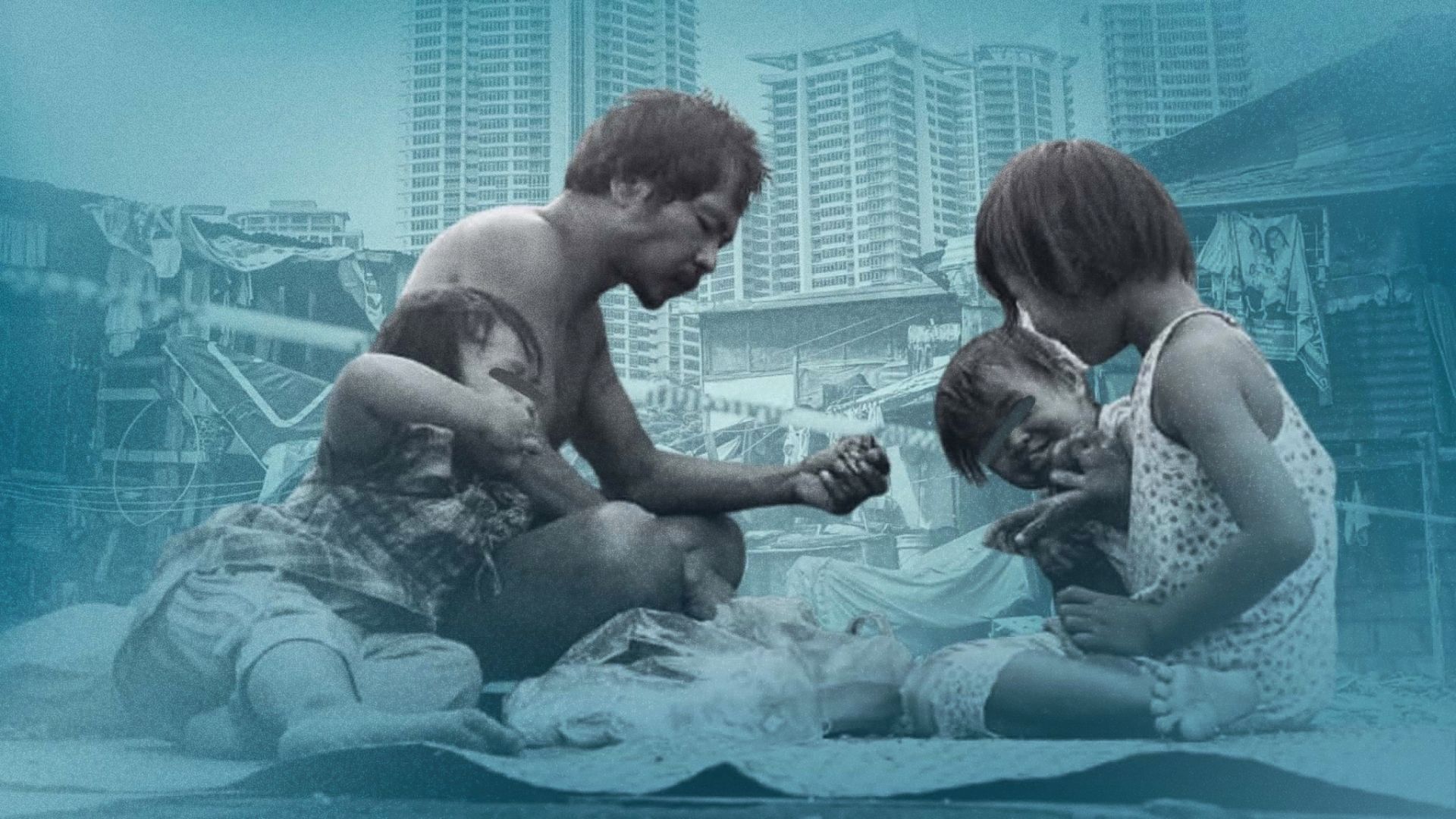
While the Philippines celebrated its reclassification to Upper-Middle Income Country (UMIC) on July 1 after four decades of being stuck in the lower-middle income bracket by the World Bank, growing poverty gaps highlight severe wealth inequality across the population.
According to the March 2026 Social Weather Stations (SWS) survey, the national self-rated poverty rate rose to 52 percent, meaning roughly 14.5 million families nationwide still consider themselves poor.
For Ronilyn Salilan, a second-year mathematics education student, surging basic commodity prices and rising jeepney fares serve as the primary indicators of the nation’s economic growth, forcing her to budget meticulously as daily schooling costs continue to climb.
“Now, one of my greatest concerns is trying to find balance between schooling and the ever-increasing price of almost everything,” Salilan said, adding that her family’s income remained stagnant while retail market prices climbed constantly.
To support her family, Salilan spent her academic vacation managing customer inquiries for her father, a courier, gaining a firsthand view of the relationship between labor wages and purchasing power.
“But despite his hard work, it still did not seem like enough,” she remarked, pointing out the financial strain experienced by working-class households.
Upper-Middle income status
The World Bank reclassified the Philippines as an Upper-Middle Income Country (UMIC), marking an institutional shift after a long time of classification as one of the lower-middle-income bracket states.
This reclassification occurred after the country breached the specified threshold by recording a Gross National Income (GNI) per capita of $4,850.
“This milestone confirms the inherent resilience of the Philippine economy and validates our ongoing efforts to pursue comprehensive and inclusive structural reforms,” stated Department of Economic Planning and Development (DEPDev) Secretary Arsenio Balisacan.
Furthermore, the World Bank reported that the Philippine economy maintained a Gross Domestic Product (GDP) growth rate averaging 5.8 percent annually over a sustained five-year observation window.
What does UMIC imply
Economists note that the new status serves strictly as an aggregate economic benchmark rather than a direct indicator of household financial security.
University of the Philippines Diliman associate professor and Inquirer data scientist Dr. Rogelio Alicor Panao explained that these classifications group countries by average national income rather than evaluating the actual quality of life enjoyed by citizens.
“To make sense of this, one can think in simple terms; the World Bank’s income classifications work like moving through school grade levels,” Panao said.
He emphasized that crossing into a higher global bracket does not mean a nation has suddenly become wealthy or that ordinary citizens will immediately feel richer.
“Every year, the World Bank checks how much income a country earns on average per person and places it into one of four groups: low income, lower-middle income, upper-middle income or high income,” he added.
UMIC vs. economic risks
Despite the rise in macroeconomic designations, localized challenges and global supply disruptions continue to strain the domestic economy.
The Development Budget Coordination Committee (DBCC) recently lowered its real GDP growth target for the year to a range of 3.5 to 4.5 percent.
“The issues surrounding alleged anomalies in flood control projects last year and, more recently, the conflict involving the United States, Israel and Iran made a drastic impact on the country’s macroeconomic fundamentals,” the Department of Budget and Management (DBM) declared.
Compounding this growth slowdown was a surge in average domestic inflation, which economic managers projected to reach 6 to 7 percent according to Bangko Sentral ng Pilipinas (BSP).
At the same time, the national government managed a widened fiscal deficit projected at ₱1.658 trillion, equivalent to 5.4 percent of the economy in the current fiscal year, as expenditures outpaced revenues.
These macroeconomic pressures reduced consumer confidence, forcing families to adjust spending to afford basic food, medicine, and utilities.
Holds zero value
According to IBON foundation executive director Sonny Africa, the highly publicized UMIC upgrade holds zero value for an average Filipino citizen, while millions of households continue to identify as poor.
“PH getting so-called upper-middle income status amid its first ‘trilyonaryo’ while some 15 million Filipino families are poor and another seven million lower-middle class says it all,” Africa said in a Facebook post.
Africa explained that UMIC confirms that there are a lot of problems that need to be fixed in order to feel the success of the received acknowledgement.
“So when the government hypes ‘upper middle income’ status, it’s propaganda—not progress,” he added.
‘Numbers can look good on paper’
For Salilan, the discrepancy between international economic titles and localized household survival offered a critical lesson that will shape her approach as a future teacher.
“This news feels both good and bad to me. It is good because it shows that our country has potential and is capable of growth. But it is also bad, because it might create a wrong idea that everyone’s life has already improved, when in truth, many Filipinos, including my own family, still feel the heavy weight of rising prices and hard work just to survive,” she said.
From her perspective, the government could only claim true economic advancement when macroeconomic growth manifested as lower market prices, enhanced financial stability, and genuine relief at the family dinner table.
“To the government, I want to say that I hope you will not only look at numbers, reports, and rankings to measure success. Numbers can look good on paper, but they do not always show the real pain and struggle that ordinary Filipinos go through every day,” she stated.