







Now Reading: How Labor Day remains a labored day for working students
-
01
How Labor Day remains a labored day for working students


Aldrich Allaga, Dorothy Gonzales, and Aaron Dave Mendina
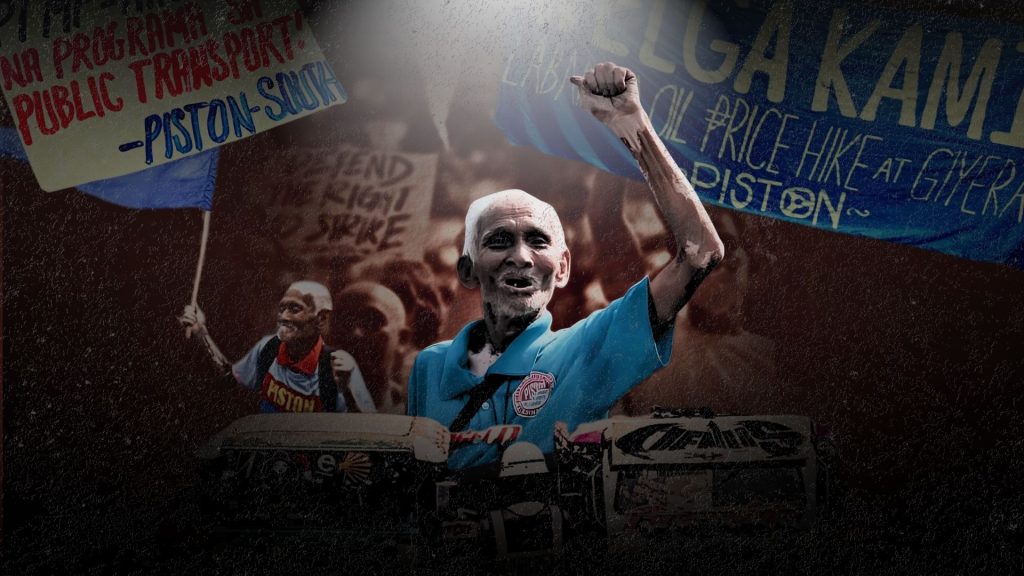
Labor day celebrates the country’s workforce. Yet in reality, student workers see it as merely a pause in a life yet to be fully lived.
For more than 200,000 working students, school does not simply end when the last bell rings. Even after learners filter out of classrooms, the evening continues to stretch for night shift workers who are all too familiar with the rhythm of caffeine and work buzz.
And for these five students, this is the routine they have no choice but to live and carry day by day, one shift at a time.
Alive after hours
Aicee Joie Ayong, 19, a diplomacy student by day and a call center agent by night, has learned to take on the roles of a breadwinner early on in her life.
In the eyes of big companies and corporations, she, alongside thousands of employees, are ultimately numbers. Payrolls. Deductions. But as a student pursuing a Bachelor of Arts in Diplomacy and International Affairs, she aspires to become far more.
“My job right now is very different from the career that I’m trying to pursue through my education,” she shares. “Hindi ko nga inexpect na aabot ako rito, and I don’t feel the relationship at all because it’s very different.”
In a country where workers and laborers are often the least prioritized, most seen in half-baked grants and aids, Labor Day becomes ironic rather than celebratory. Aicee learned this truth early in her life, trading rest for telephone lines as though second nature. Many are compelled to forego their teenage years, facing the reality of our systems that favor quick fixes over long-term employment solutions.
Aicee says it best. “In a nuanced standpoint, I kind of have a 50/50 view on Labor Day because my job is basically a big corporation exploiting offshore employees. And it shows the cracks of the Philippines’ lack of improvement in terms of providing rights to Filipino workers and improving our salaries. Kasi sa totoo lang, yes, we are being celebrated, but at what cost? It shows how flawed the system is, kasi hindi naman ako magiging working student kung pinapasahuran nang maayos ang tatay kong magsasaka.”
Even in taxing, unfulfilling work settings, she finds solace in what may come after her current arrangement ends. The working student expressed that there’s a future that will offer something more for her once she finishes her degree.
In the meantime, she and those with similar stories will continue to burn midnight oil, still alive after hours. Not romantically or cinematically, but in necessity.
Struggles unseen on the screen
For many, responsibility was never introduced to them gently. And one of them is this 19-year-old broadcasting student from Iloilo City.
Beyond the lines uttered on the radio and the polished projections on television, Donald Pamittan Jr. plays different roles beyond the gates of West Visayas State University, as he works as a guest experience leader at McDonald’s, an event coordinator at Heartsio, and a freelance host. Raised to be responsible, he chose to work, not just to meet his own needs, but also to ease the weight his mother carries as a solo parent working abroad.
“Managing my time is actually the hardest task,” he shared together with how he exerts time in scheduling his week for him not to miss any school assignments while also having time for his weekly quests like hiking and jogging. He also believed that working would also allow him to build connections and hopefully land a good job after he graduates.
His experiences have awakened a deep desire for change. Having witnessed the hardships of workers and the flaws in the system, he dreams of a better Philippines where labor is valued fairly. Though the thought of working abroad crosses his mind, he still holds hope that the country will one day give its hardworking people the justice and respect they deserve.
“Imagine working tirelessly for hours only to end up being paid minimum wage, while a senator who has been absent for months still receives a salary of 200,000 to 300,000 pesos. How unfair is that?” Donald told us.
He is also grateful for his friends who would help him accomplish his tasks and would even lend him money from their own allowances when he is short. Hence, he gives the best that he can in all of his interviews and exams. “I simply use my confidence to make a living. To succeed, you have to give 100 percent.”
To those planning the same journey, he said that if one can just focus wholly on their studies, they should do it because education is a precious privilege. But if the struggle calls you to work, prepare well and seek scholarships.
“Remember that you are only human and you are allowed to fail.”
The more sweat, the sweeter the success?
Ever since she was in eleventh grade, Christine May Lantaco couldn’t count anymore how many times she had cried and how often in a single day she broke a sweat, not from moments of ease and fun, but from the weight of responsibilities she carries.
Currently, she is a first-year student at Binalbagan Catholic College, and the weight becomes somehow unbearable. Her days begin while most are still asleep, moving like a steady river from dawn till dusk.
From 7:30 AM lectures to evening classes, there is no time for idle hours. Instead of resting during breaks, she serves at the library to earn her keep. By 7:50 PM, she finishes cleaning and tidying rooms.
Weariness and aching feet walk beside her always, yet struggle kindles her spirit. She believes success holds sweeter meaning when earned through sacrifice. Every pain she feels is a gentle reminder that she is drawing closer to repaying her parents’ love and lifting her family out of hardship.
“Kakapoy, balhas, kag biring sa tiil ang mas nagapa-motivate sa akon nga mas magtadlong sa pag-eskwela (Exhaustion, sweat, and aching feet motivate me even more to be better in schooling),” she shared.
She moves forward,carried by love and courage. She draws from her parents, whom she dreams of giving the comfort they deserve, and her siblings, whom she wants to shield from the struggles she faced head on.
“Time will come wala ka kabalo nga ang imo luha magulpi lang tulo nga wala sang rason, siguro sa kakapoy ukon sa kabudlay sang kabuhi (you’re not aware that you’re already crying without any reason; perhaps it’s because of the tiredness or how life is just so hard),” she said.
May with every tear that came from her heart and every sweat she gave with all of her strength, may be the time when she finally sheds the same tears again, not from pain but from joy… when she finally walks forward to claim the degree she has long fought for.
Stitched her by sacrifice
Dreams are not ready-made; they are sewn slowly, by hand and with all of one’s heart.
At 16, Gia Wina Gicana was already learning something that transcends the four classroom walls. She started selling clothes online to help pay her tuition fees and provide herself with allowance. Now at 23, the hard work she has put in building her own boutique in Negros Occidental is nearing its harvest, as she is about to graduate as a Bachelor of Physical Education student at the Himamaylan Campus of West Visayas State University.
“People think we don’t focus on studies, but actually, we value education more. It’s very tiring, but it makes us stronger and independent,” she said as she also expressed gratitude for her family and their prayers for her to manage her time well.
She believes that it is indispensable to know one’s limits, care for their own health, and for working students to be ready to sacrifice comfort for growth, since not all education happens in classrooms, because life teaches the hardest and most important lessons.
Passion’s prize and price
In the Philippines, the creative industry is often thought to be an unstable path — a career that blurs the line between prize and price. For Kizabelle Aromin, 21, it is both.
As a working student and a freelance actor for theater and film, Kizabelle is familiar with the price of pursuing your dreams, especially when one does not have a safety net. He notes that working in the industry has grounded him to the reality of many Filipino creatives; long nights and low pay, where passion costs more than just security.
Despite this, he and many others continue to persevere in the artistic field. “But then again, labanan lang din ng passion eh. Most, if not all, of the people I know doble-doble ang trabaho makapagprovide lang while still being able to pursue their dreams… Pero laban lang, lagi’t lagi ka rin kasing babalik sa bakit mo ba ginagawa ito at para kanino ba?”
In an age where artificial intelligence threatens the creative industry, the question of passion or practicality has taken a different form for many aspiring artists. Chasing your passion risks stability, security, and a regular paycheck — with the fear of your career being machine-replaced festering at the back of your mind.
For learners like Kizabelle, they have learned early on the price of this path — working twofold to manage the fire of the creative industry and the burn of academic pressure. Yet he continues. “Nandun yung stereotype, especially sa college na pag working student ka, pabigat ka. But no, siguro case-to-case basis pa rin siya but with my experience alam ko kasi ang priority ko. Kaya ako nagtatrabaho para makapagpatuloy ng pag-aaral,” he shares.
This Labor Day, while he may not see himself as a vital inclusion in the workers celebrated, his message for our country’s workforce resonates. He shares, “…the essence of the day itself is more than just a celebration; it also holds that weight that we should champion their campaigns for a better and just society: may it be with our calls for higher wages, land rights, proper work conditions, etc.” His call for just systems stands true for everyone.
Amidst it all, passion persists. Kizabelle and his peers in the field continue to wield their tenacity in sharing their passion even after the curtain call. And perhaps the truest prize of passion is not a big break at the silver screen or a headline at Araneta. It is the utterly human joy of becoming and creating.
May 1 and Mayroon?
Labor Day offers a temporary respite seemingly for all— yet, for 20-year-old Taxi (an alias), May 1 is another day of asking if “Mayroon?”
Taxi is a 20-year-old student-athlete scholar taking Bachelor of Arts in Governance and Public Affairs at De La Salle-College of Saint Benilde, yet behind the Lasallian-Benildean prestige is the grueling reality of many students who wear a different hat after class. As a part-time sports coach, she admits that not-so-ideal circumstances stem from financial constraints and social pressure.
“I took a small part-time job, so I have another way of getting allowance [and] not just asking from my parents,” she said, despite being a scholar. This was also his way of giving back since he was teaching at his former elementary school and lessening the financial burden on his parents’ shoulders.
Still, her part-time job is barely enough to get by, citing her meager daily allowance of P100–150 amidst fuel price hikes, daily commutes, and food inflation— while the world refuses to adjust to her favor, she has no choice but to. She shared that he tries his best to plan everything out, from her classes at the beginning of the term, her morning training as an athlete, and his coaching sessions on Fridays.
Prioritization becomes a skill for those like Taxi who live double lives, advising others in similar situations to consider, “Do you need to? or Do you HAVE to? … Always think if [you] have the emotional and mental capacity to balance two things that require responsibility and discipline both at the same time.”
Though undoubtedly stressful, she was able to become more mature and learn much from the life she is living as a working student.
“It made me a more patient person, [and] taught me how to compose myself and be mature,” she commented, highlighting the fact that she is also handling kids hence he has to display maturity, patience, and being responsible because it is not all fun and games.
And for Taxi, being a working student doesn’t mean they use it as an excuse to be late, to not attend class, or to not pass schoolworks. “We are exhausted but still try to show up; we try our best to go to school and learn.” Thankfully, for her, she does not face these hurdles alone; she thanks her family, friends, and a “special someone” for acting as pillars of support in trying times.
Ironically, however, May 1 sings the same song as any day for Taxi, who excludes himself from the celebration of Labor Day. “I don’t consider myself to be ‘considered part’ of the people to be celebrated during Labor Day, but Labor Day reminds us to be thankful for the people who have worked endlessly to give us good products or services,” calling it a day for acknowledgement and “recognition” for every worker.
What this day truly means
Today, Labor Day may be an escape from everyday toil for many, but for Aicee, who trades rest for telephone lines in a corporation that sees her as a payroll number, for Donald, who juggles three roles to lighten a solo mother’s load, for Christine, whose aching feet have become her greatest motivation, for Gia, who stitched her own future one online sale at a time, for Kizabelle, who pays the price of passion with every curtailed rehearsal, and for Taxi, who earns P100 on a good day and for around 216,000 others like them – May 1 is but another day of begging if “mayroon?”
Mayroon pa bang pambayad sa dyip?
Mayroon pa bang natitira para sa pamilya ko?
Mayroon pa bang pag-asang umahon sa siklo ng kahirapan?
Their stories are not extraordinary exceptions; they are the quiet rule behind the celebration. Labor Day was built on the backs of people exactly like them: young, exhausted, and still showing up.
Until the country builds a system worthy of their sacrifice for fair wages, genuine social support, and opportunities that don’t demand the youth be surrendered for survival, as the holiday will remain more of an irony than honor. But for now, they carry on. Not because the world has made it easy, but because they have learned, early and without ceremony, that no one else will carry it for them.