




Now Reading: INSIDE THE WALLS: A peak in Davao City’s little ‘Chinatown’ during Lunar Year
-
01
INSIDE THE WALLS: A peak in Davao City’s little ‘Chinatown’ during Lunar Year

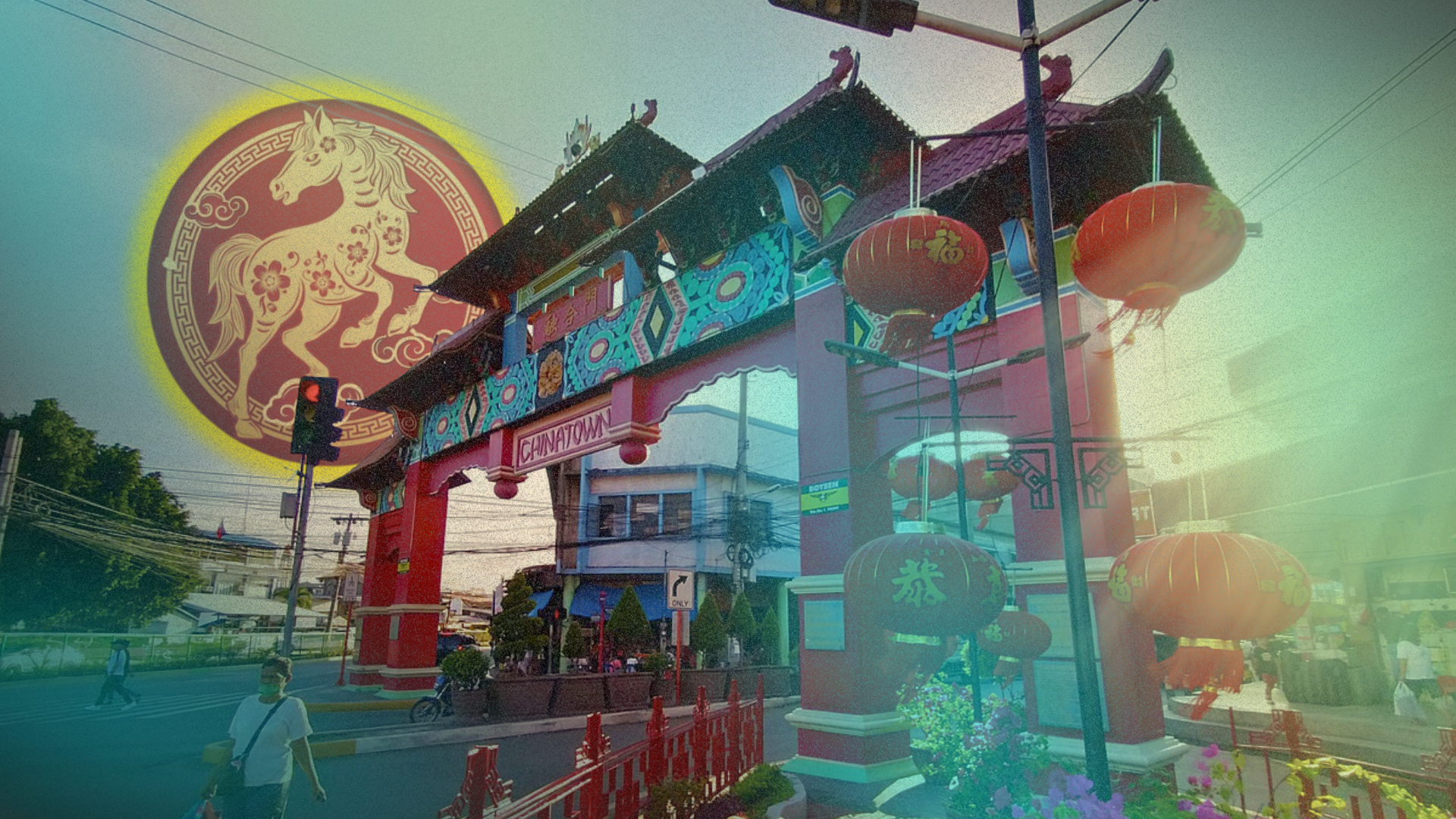
In the bustling streets of Davao, one city road stands out due to its historical location — Uyanguren. Despite having its new identity transformed into Ramon Magsaysay Avenue, this street is still known for what it used to be, and continues to serve its people for what it is known for — a Chinatown.
During Chinese New Year celebrations, the street suddenly turns into a vibrant festival hotspot filled with adornments, music, significant traffic congestion, and a considerable amount of people flock.
Uyanguren’s Historical Scope
A Spanish leader named Don Jose Cruz Maria de Oyanguren y Ibarzabal, colonized Nueva Vergara (now called Davao province) during the mid-1800s. He defeated Datu Mama Bago, the Datu of the Davao Gulf; then later on became the first Governor of the city following the defeat of the previous chieftain, and then instituted a Christian community.
While no one really named it ‘Uyanguren’, it started through community usage as an act of honor for the explorer who established the city and is still being recognized by Davaoeños as its previous name. It was renamed into Ramon Magsaysay Avenue in line with the City Council Resolution No. 413 in 1963, succeeding the construction of the Magsaysay monument near the Sta. Ana pier.
That Uyanguren Experience
When you ask locals where to find budget-friendly items and ‘ukay-ukay’, they’ll always point towards the biggest Chinatown in the Philippines — and still call it Uyanguren.
Aside from its rich cultural heritage, it remains famous as it is because of cheap bulk items such as crafting materials. Many small stores offer products at lower prices compared to malls, making it a practical destination for everyday needs.
Here are two of the many hotspots where locals can find treasures:
- NCCC
- DCLA
Although there are only a few well-known stores, there are still retail and wholesale stalls, selling basically everything from electronics and appliances to groceries to clothes at a reasonable price.
Four Archways of Virtues
Also situated within the 44-hectare vicinity of Uyanguren lie four significant archways called páilóu/páifāng, named after different key values representing the interconnectedness of Chinese-Filipino culture. These archways are usually designed with red for good fortune, gold for wealth, and green for harmony, along with typical Chinese symbols, including a dragon and/or lion for spiritual protection.
Arch of Friendship: This arch was launched in 2008 along Ramon Magsaysay Avenue near Jones Circle. This represents the deep-rooted relationship between the Chinese-Filipino community in the city. Looking closely at the architectural structures, we can see names of contributing families written on granite within the beams. Examples of patrons are the heirs of Francisco Villa-Abrille (Lim Chuan Juna), who sponsored this arch.
Arch of Peace: Located near Sta. Ana Avenue, this arch shows that different cultures can co-exist in peace and harmony despite having distinct backgrounds.
Arch of Prosperity: The well-known arch, which is situated in the corners of Sta Ana Avenue near Alvarez Street, embodies economic growth, good fortune, and success.
Arch of Unity: Stationed at the junction of Ramon Magsaysay Avenue and Quezon Boulevard, this arch illustrates the unity between Filipino and Chinese traditions, recognizing the strong influence of various families that contributed to the development of Davao.
How the Chinese New Year is celebrated
For this year’s festivity for Year of the Fire Horse, the City Tourism Operations Office (CTOO) revealed that there will be a celebration at the recently launched Bucana Bridge, along with the formal lighting of its LED System. Although there are activities at Chinatown, the said infrastructure is China-funded, making it a significant venue for the upcoming Lunar Year opening.
According to Willenito Tormis Jr, the head of office, he stated that the celebration is a recognition of the time-honored Filipino-Chinese communities in Davao.
“Beyond its role as a key infrastructure project improving connectivity and traffic flow, the bridge stands as a symbol of the healthy partnership and enduring friendship between China and Davao City. Hosting Chinese New Year celebration at this location is therefore not only strategic but also a gesture of gratitude from Davao City, showcasing our appreciation for this meaningful collaboration,” said Myrna Dalodo-Ortiz, Chair of Committee on Tourism and Beautification.
Officials also underlined the significance of this event, as it highlights the shared heritage while advertising the major development project. Besides the celebration at Bucana Bridge, there will also be activities such as a Dragon Dance at Uyanguren as the city welcomes the Chinese New Year, indicating the start of the Year of the Fire Horse.
One in a Million Years
The Pacific Ring of Fire Solar Eclipse, a phenomenon which coincides with the celebration of the Chinese New Year, the Year of the Fire Horse. This astronomical event adds a unique touch to the Chinese lunisolar calendar, as it is a one-of-a-kind event. Although there were such events, such as a partial eclipse recorded on January 26, 2009, that actually fell on the first day of the Lunar Calendar, this is the first time we can experience this unique cosmic event.
This Chinese New Year will be an extraordinary event not only for Davaoeños who will welcome the new calendar at the Bucana Bridge, but also for everyone who gets to see this celestial phenomenon.
This sky event marks new beginnings. Families gather together to celebrate, doing distinct rituals or performing other forms of traditions. Which all goes back to beliefs that span several centuries ago.