


Now Reading: Who controls the campus press?
-
01
Who controls the campus press?
Who controls the campus press?

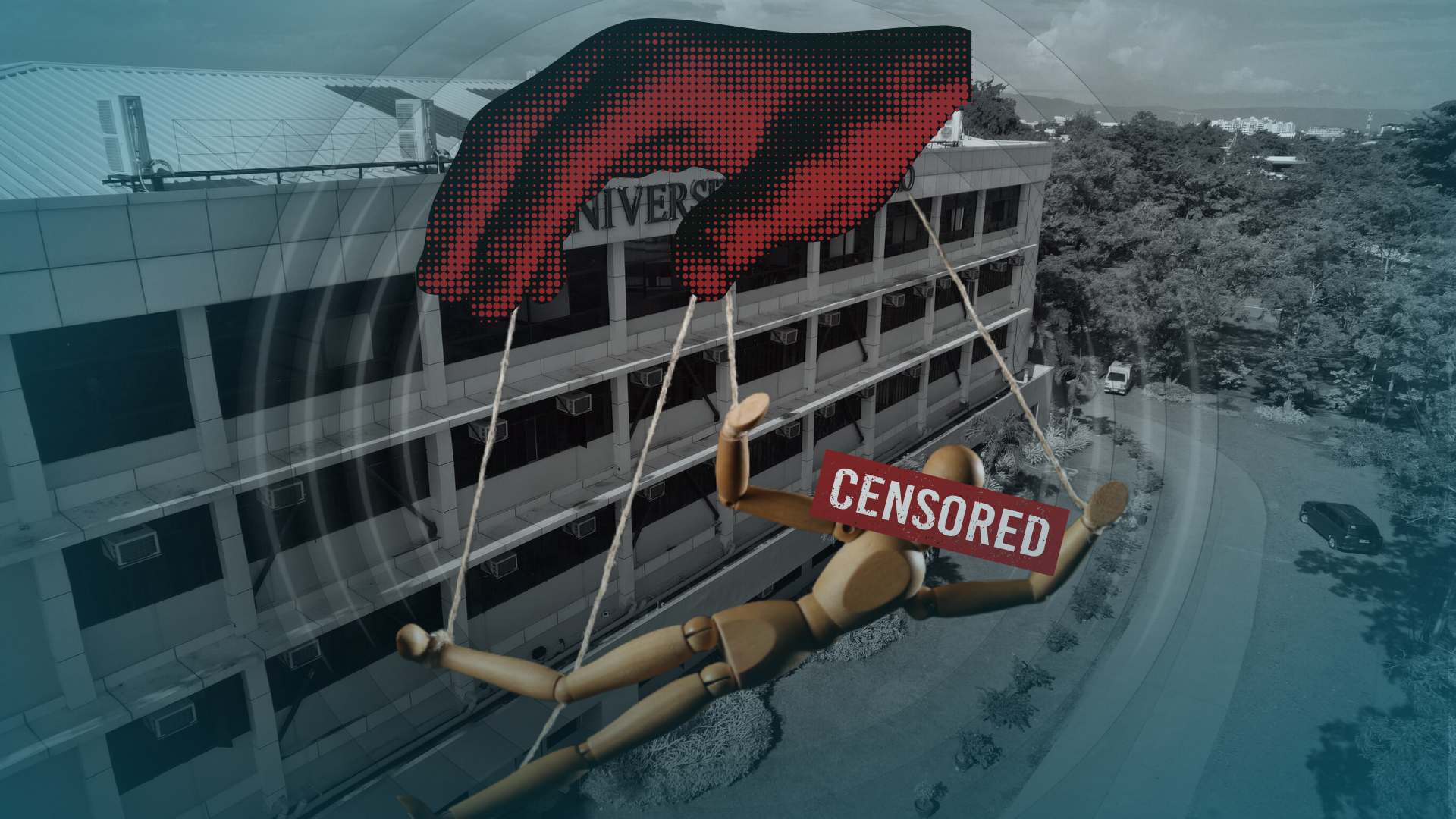
Almost seven years since the passage of Republic Act No. 11440, the law was meant to honor and protect campus press freedom — yet cases of campus repression and censorship persist. Most recently, this repression surfaced in the sudden deletion of the official Facebook page of the University of Mindanao’s (UM) Primum.
If institutions like this limit the space where campus journalists question and inform, then what kind of protection and education promised by this law are they actually providing?
Controlling beyond limits
The situation involving UM Primum surfaced after its editor-in-chief stepped down from their positions, citing restrictions allegedly imposed by the university administration on the publication’s coverage and the deletion of their official page. According to one of the publication’s writers, they were told beforehand to avoid publishing political contents as the university labels itself “apolitical.”
“Basically, the university doesn’t want the publication posting anything political because UM considers itself ‘apolitical.’ Because of that, they wanted us to limit our coverage mostly to university-related content like events, announcements, and most especially achievements,” the writer said.
For the members of the publication, however, this instruction raised concern on editorial independence and the very purpose of campus journalism. And at its core, campus journalism should not be limited to reporting school activities alone. It should also allow space for students to discuss issues that impact society and encourage critical thinking among its audience.
“However, when we were told that we should restrict what we post and avoid topics that could be considered political, we decided to step down. We were being controlled at this point,” one member stated.
Once upon a time
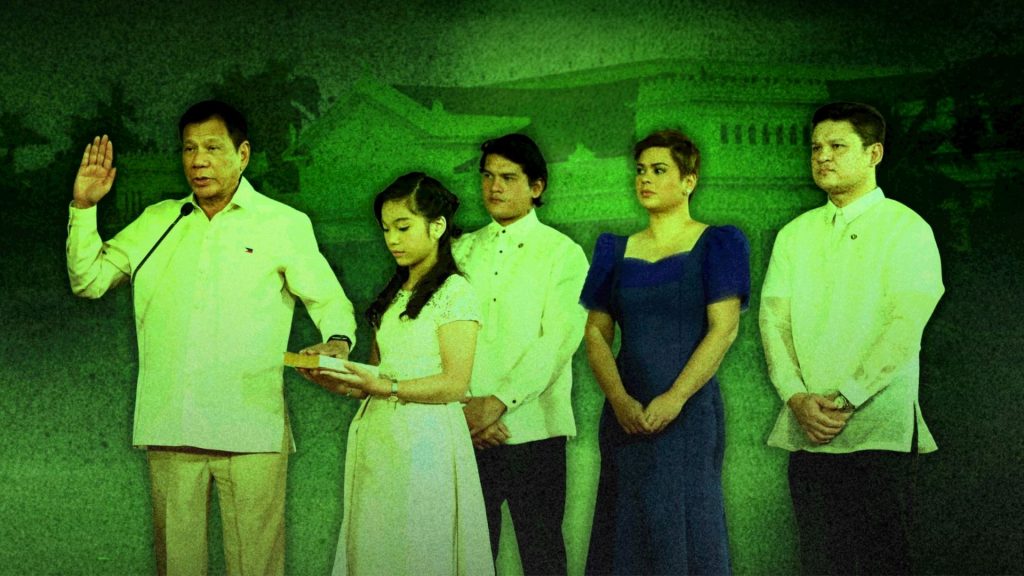
The situation began when the publication posted an article entitled “Ang Alegorya ng Mananakbo,” discussing how former President Rodrigo Duterte said in a speech back in 2021, “that being president is not a woman’s job,” which then her daughter, Vice President Sara Duterte, announced her intention to run for President for the 2028 National Elections.
Her bid for presidency sparked reactions about her father’s comment on how women cannot run for the position as women are more incapable due to “emotional setup”. This stirred dissatisfaction amongst supporters, causing backlash which then reached the administration of UM.
After the said article had been taken down days after public reactions, on March 10, 2026, posts from social media surfaced questioning why the publication’s Facebook page had been taken down. Then, editorial staffers posted statements. One of the statements made is from the former Editor-in-Chief officially resigning from his position.
And on March 14, 2026, Primum’s official page was eventually restored, posting an announcement calling for new sets of campus journalists.
Same old tale
Moreover, this situation is not just an isolated case. Many student publications nationwide face the same repression and censorship.
For instance, at the University of Santo Tomas Senior High School, concerns on campus press freedom emerged after advisers declined the approval of a National Press Freedom Day cartoon by the student publication La Stampa. The illustration, which showed a student journalist controlled by puppet strings to represent outside influence, was rejected despite revisions by the editorial team. Similar concerns had also surfaced in the same university, involving TomasinoWeb, which was instructed to remove a photo of students entering 7-Eleven in 2024.
In the same year, Today’s Carolinian, the student publication of University of San Carlos faced institutional pressure after publishing reports of proposed tuition increases. Not long after their articles came out, the publication lost access to its office on campus, adding to the challenges it has been facing, as it had also been operating without financial support since 2019.
In Camarines Sur, campus journalists from The SPARK also experienced immense pressure to retract a pre-election poll, reporting an incumbent politician trailing in the race. While the poll followed proper methodology, local officials labeled the report as “fake news,” criticizing the publication.
Meanwhile, Atenews in Davao also experienced the same after its members were subjected to rape and death threats over publishing content on International Criminal Court’s investigation into former President Rodrigo Duterte’s alleged human rights violations. This is no new to Atenews, as in 2002, one of their former editors, Benjaline Hernandez, was red-tagged and assassinated.
Together, these cases reveal a recurring pattern: when campus journalists attempt to deliver the truth, some institutions respond by restricting, penalizing, or pushing them to the margins.
Price hike for freedom
Universities often present themselves as places where students can question and learn. But if campus journalists are restricted from covering specific issues or pressured to stay within perceived “safe” topics, the promise of learning begins to crack. Over time, fear replaces learning and questioning.
These restrictions also go against the very principles that define journalism in general. In The Elements of Journalism, journalists Bill Kovach and Tom Rosenstiel explained that a journalist’s first obligation is to the truth and its first loyalty is to citizens. Journalists should have independence in covering and acting as the nation’s watchdogs. However, once journalists are told what they cannot write about, that independence begins to collapse.
This is why the call for Campus Press Freedom Act can’t wait. With a proper law, there are higher chances that real editorial independence, protection for digital publishing, sustainable funding, and accountability for those who violate press freedom are guaranteed.
More than anything, such measures can also push back against the mindset that often reduces campus journalists to “mere students,” which ignores the responsibility they carry.
Always in truth
After all, protecting the campus press should be more than just a campus issue, but a civic responsibility. A free student press trains young journalists to verify truth, challenge power, and inform others. In many ways, it is democracy on training wheels — and right now, it needs defending more than ever.
While there is National Campus Press Freedom Day that commemorates campus press freedom, recognition alone is not enough. If the right is to matter, it must exist beyond symbolism — rooted in campus culture, institutional policy, and everyday practice.
Without real protection and consistent practice, press freedom risks becoming little more than a slogan — repeatedly annually, yet easily ignored the rest of the time.