










Now Reading: Irony of peace in a nation built on theft
-
01
Irony of peace in a nation built on theft
Irony of peace in a nation built on theft

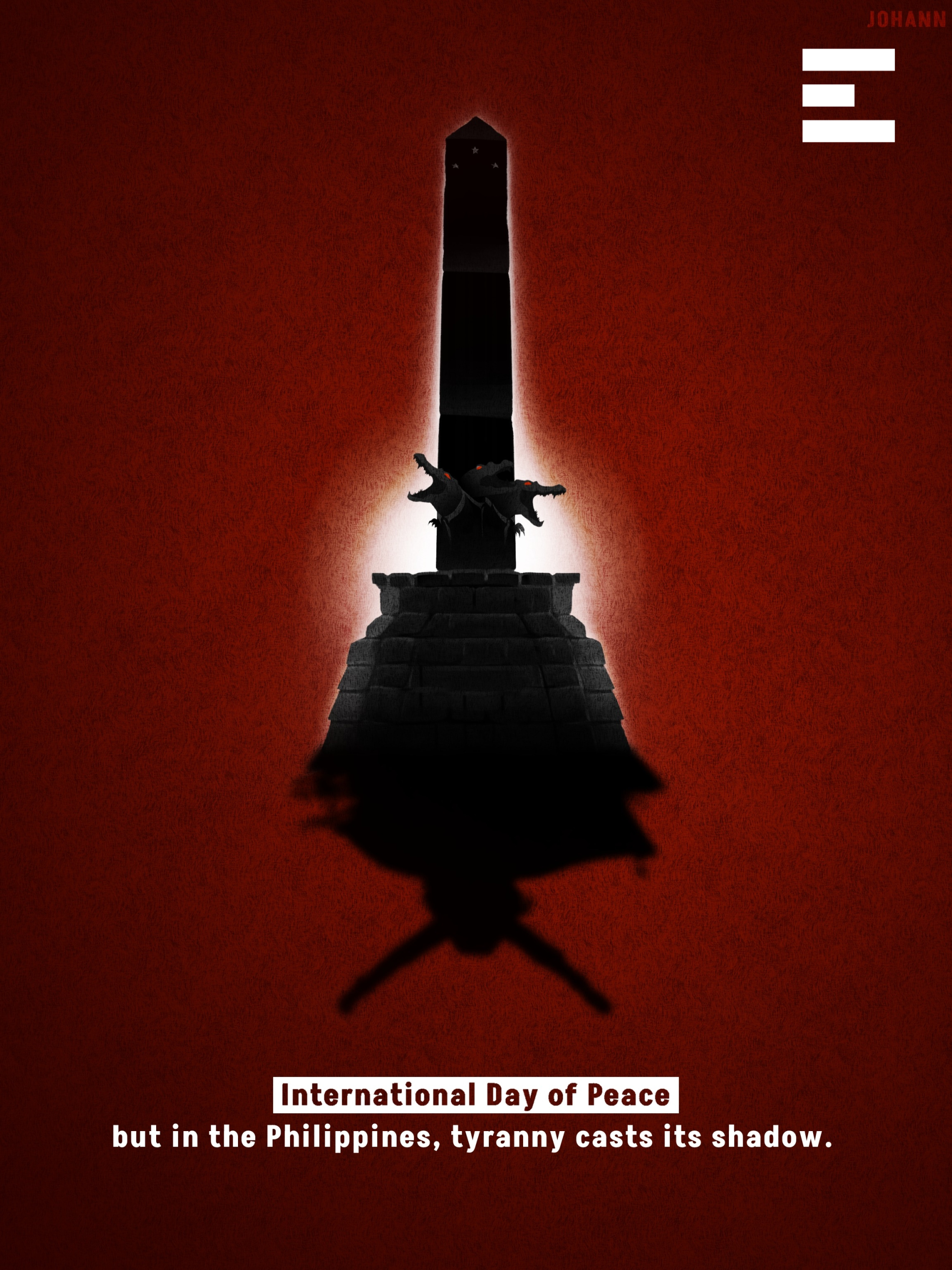
Isn’t it ironic that the world honors peace on September 21, while in the Philippines, it marks the day a dictator strangled it with his own hands?
September 21 is the International Day of Peace. In much of the world, the day is observed with speeches about conflict resolution. In the Philippines, the date has a different resonance. It marks the anniversary of Ferdinand Marcos Sr.’s 1972 proclamation of Martial Law — a regime that justified itself in the language of order while operationalizing violence through censorship, mass arrests, torture, and the systematic dismantling of democratic institutions.
This year, the shadow of that irony stretches further. President Ferdinand R. Marcos Jr., heir to a name and a legacy built on plunder, now laments corruption in public projects. In a podcast, he spoke of “kalawang at bulok” (rust and rot), expressing shock that public funds were diverted for luxury while ordinary Filipinos toiled. “How can you do this to people who are working every day of their lives? Kukunin niyo pa sa kanila ‘yun, para bumili ng Rolls-Royce?” he asked.
It is a theater of contradictions: the Marcos name now laments corruption it once perfected. Marcos Sr. pulled off what Guinness World Records calls “The Greatest Robbery of a Government,” stealing $5–10 billion, siphoning the ₱93 billion coco levy, monopolizing industries, and turning state-owned corporations into financing machines for Imelda’s extravagance. And now his son sits in the same office, pointing at corruption as though it’s an external enemy when in fact it is his inheritance.
The irony thickens when we see the Dutertes: Rodrigo Duterte, whose presidency oversaw thousands of extrajudicial killings and systematic impunity, now casts his family as the moral counterweight to the Marcoses. Vice President Sara Duterte, appointed education secretary by Marcos Jr., presided over chronically underfunded schools and allowed systemic neglect to shape the futures of generations. While Marcos Jr. cried over stolen flood-control funds, the Dutertes left rivers of blood and bureaucratic rot in their wake, all while flaunting authority as virtue.
September 21 in the Philippines becomes a hall of mirrors: the children of plunder pointing at shadows, lecturing a nation on ethics while the corridors of power reek of the very theft they inherited.
Yet the streets refuse to forget. Fifty-three years after Martial Law was declared, the country’s public squares once again pulse with the roar of dissent. Thousands march with fists raised and voices hoarse, demanding what has always been denied them: accountability and peace that cannot be dictated by the heirs of plunder.
At Rizal Park and the People Power Monument, the “Trillion Peso March” and “Baha sa Luneta” gather tens of thousands under the banners of civil society organizations, labor unions, church leaders, and political coalitions. From the streets of Manila to Naga, Legazpi, and Virac in Bicol, from Iloilo City and Cebu to Catbalogan in Samar, and from Cagayan de Oro to other Mindanao cities, parallel mobilizations echo the same call: accountability for the P1.9 trillion bled out of flood control projects over the past 15 years, money critics say vanished into ghost projects, padded contracts, and private pockets while Filipinos waded through chest-deep floods.
The date and the places speak for themselves. Luneta holds the memory of the anti-colonial struggle, while the People Power Monument keeps alive the moment a dictator was toppled. To march there on September 21 is to remind the living that memory still breathes and that the fight against corruption is part of the fight for democracy.
As Kidapawan Bishop Jose Colin Bagaforo put it, “The poor are the first to drown in corruption.” From a political science perspective, this constitutes extreme distributive injustice: resources intended to promote collective welfare are monopolized by elites, exacerbating inequality and eroding state legitimacy.
Every peso siphoned into ghost projects or luxury indulgences is a peso violently extracted from citizens who bear the cumulative burden of governance failure. Corruption, in this sense, is not only a moral violation but a structural mechanism of oppression, sustaining a facade of peace while normalizing systemic violence against the most vulnerable.
Peace in the Philippines is therefore inseparable from accountability. Without confronting the theft, impunity, and the institutional rot, calls for “unity” are hollow. Political order built on plunder cannot yield genuine peace. Authoritarian nostalgia cannot substitute for reform. As long as ghost projects siphon state resources while citizens wade through literal and figurative floods, peace will not be granted by those in power, it will be claimed by those who refuse to forget.
This September 21, the world honors peace. In the Philippines, we honor the refusal to be fooled. And if that irony stings, good. It should.





