











Now Reading: Korina, Vico, Babao, and the timeless art of looking credible
-
01
Korina, Vico, Babao, and the timeless art of looking credible


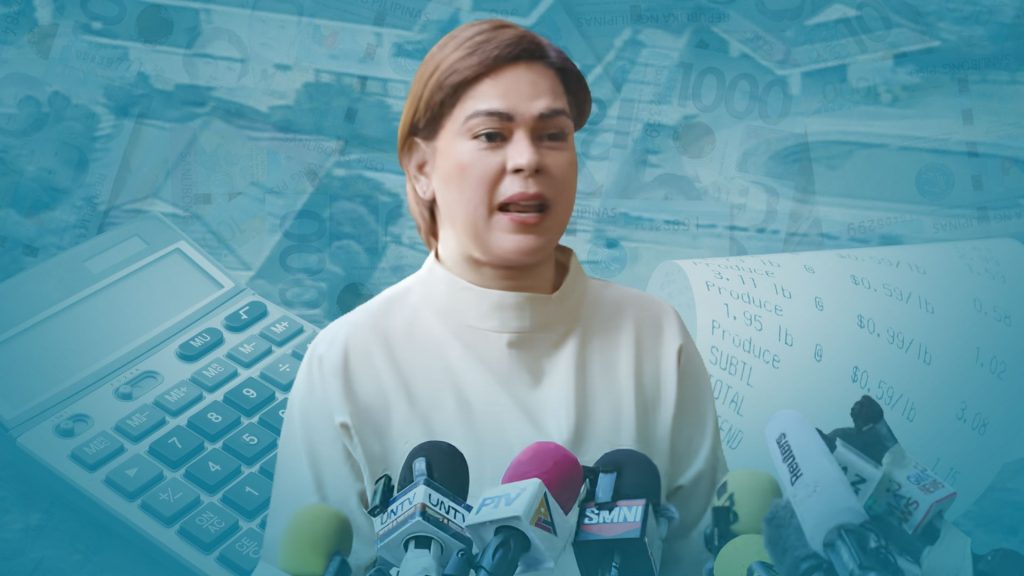
When Pasig Mayor Vico Sotto accused Korina Sanchez and Julius Babao of pocketing ₱10 million to platform the Discayas, the denials came swiftly. But whether the check was ever written matters less than the spectacle it revealed: media, not as a public trust, but as a VIP lounge where only those with money or legacy names get a microphone.
Sanchez and Babao are not hungry beat reporters scraping for stories, they are celebrity broadcasters whose airtime is its own currency. That the Discayas can spark a million-peso rumor mill shows how Philippine media works: politicians feed their chosen stars while nameless reporters bleed out in the margins.
The episode is less about rumor and more about how power scripts what the public gets to see, and how media, by choosing whose voices to amplify, manufactures consent rather than informs.
The Vico–Korina controversy, stripped to the facts
On August 21, 2025, Pasig City Mayor Vico Sotto accused celebrity broadcasters Korina Sanchez and Julius Babao of accepting “P10 million” to feature Sarah and Curlee Discaya. Sotto’s allegation, aired in a Facebook post, was less about proving a literal figure and more about questioning why contractors-turned-politicians would spend vast sums for airtime. He argued that while the interviews were packaged as “lifestyle” content, Sanchez and Babao were lending their credibility as veteran journalists to candidates, muddying the line between public service journalism and political promotion.
Both Sanchez and Babao denied the accusation. Their camps stressed that no such “P10 million placement” exists, with Babao framing his segment as an inspirational feature for YouTube and Sanchez’s team insisting their program was driven by “public interest.” An earlier producer’s statement—since deleted—had acknowledged the existence of payments for features, but without specifics. The broadcasters also pointed out that the Discaya interviews took place months before the campaign period.
How the story was framed became as contentious as the accusation itself. Sotto’s posts cast the incident as evidence of compromised ethics, emphasizing the moral obligations of journalists and highlighting the Commission on Audit’s earlier flags on the Discayas’ construction firms. The broadcasters, meanwhile, reframed the interviews as harmless storytelling, stressing transparency, a lack of edits, and equal opportunity — claiming Sotto himself was offered but declined airtime. The result was a split perception: what some saw as corruption or PR-for-hire, others defended as ordinary lifestyle programming.
The controversy reveals the power of selective framing. By foregrounding either ethics or inspiration, both sides shaped public opinion not just about the Discayas, but also about Sotto himself. To supporters, he appeared a reformist mayor calling out backroom deals. To detractors, he seemed to exaggerate or politicize media practices. The tension lay not in the broadcast itself, but in how its framing and later, its reframing filtered reality for audiences.
Understanding Manufacturing Consent from Pasig City to global theory
Noam Chomsky’s Manufacturing Consent offers a lens to see the invisible architecture of media: it does not simply report reality; it frames it. According to his “Propaganda Model,” information passes through a series of filters: ownership, advertising, sourcing, flak, and ideology before reaching the public. These filters determine which stories are amplified, which perspectives are silenced, and, ultimately, what audiences come to accept as plausible truth. While all five filters interact, in certain high-profile media moments where power, celebrity, and politics collide, sourcing, flak, and ideology become especially visible.
Ownership: Who holds the mic shapes the message
In the media, ownership isn’t just about who signs the paychecks; it’s about who sets the boundaries of discourse. Every newsroom operates within the constraints of its parent company’s financial interests, political ties, and audience market. These constraints can be subtle, but they often dictate what gets amplified and what fades in the background.
In the Philippine broadcast landscape, conglomerate ownership means editorial decisions are rarely insulated from corporate realities. Coverage of political figures unfold in a media ecosystem where network affiliations, advertising contracts, and corporate alliances inevitably color the tone, airtime, and editorial framing.
Research echoes this structural influence. A comparative study in Journal of Law and Economics found that concentrated media ownership often correlates with lower diversity of viewpoints, as editorial lines align with owners’ political or economic stakes. In practice, this means the public isn’t only receiving “the news”; they’re receiving the news as curated by those who own the megaphones.
Advertising: The invisible hand in the newsroom
When Vico Sotto pushed back against Korina Sanchez’s framing of his governance, the viral exchange was often read as a simple clash of personalities. But in the media ecosystem, advertising power can subtly shape how such encounters are covered.
TV networks and major news platforms depend heavily on corporate and political ad spending, not just during election season but year-round. A figure like Korina, whose career spans decades and whose brand is tied to both network prestige and commercial endorsements, operates within a media culture that understands the value of keeping advertisers comfortable.
In practical terms, that can mean her segments are designed to attract and retain sponsors, preferring feel-good angles over confrontational accountability. Meanwhile, Vico, who has built his political identity on transparency and reform, may be stepping into a space where the “sponsor-friendly” tone is at odds with his straightforward style.
Research supports the idea that advertisers can influence news tone. In Journalism Quarterly, research found that 90% of journalists acknowledged experiencing advertiser pressure. In this context, this doesn’t mean the interview was scripted by sponsors, but it raises the question: would the segment have been framed differently if the same networks and brands didn’t have reputational and financial stakes in Korina’s image?
Sourcing: The narratives we are given
Sourcing is far more than a logistical necessity; it actively determines whose voices echo through the airwaves and whose are muted. Reporters often lean on accessible, authoritative, or pre-packaged sources: press statements, celebrity-approved interviews, or institutional releases, unintentionally privileging those with platform and prestige.
In the Vico–Korina case, the broadcasters, armed with celebrity and institutional trust, curated their version of the story for broad reach. Their narrative dominated airtime, while those questioning the framing or probing ethical implications had to scramble for visibility. This dynamic is familiar: official press briefings often overshadow independent perspectives, corporate-backed studies outshine grassroots reports, and celebrity commentary can drown out community voices.
Critically, radio and media scholars point out that in the Philippines, celebrity figures command a parasocial intimacy—viewers feel a personal closeness that heightens their credibility and persuasiveness. This study reinforces how sourcing is not neutral; it turns access and familiarity into influence, shaping narratives even before audiences process them.
Flak: The pushback that shapes the message
Flak, organized backlash from political, corporate, or public figures, often works less like a sledgehammer and more like a smoke alarm: its noise warns newsrooms what not to touch. It can be as overt as legal threats or as subtle as advertiser discomfort.
In practice, when coverage touches sensitive celebrity-politics flashpoints like broadcasters being questioned by a reformist mayor, newsroom teams often react swiftly. Denials are issued, narratives reframed, and tone tempered, but not necessarily because of direct threats as they’re treading near fragile alliances. This preemptive recalibration illustrates flak in action: shaping stories by discouraging deviation rather than banning discourse outright.
Media critics describe flak as “soft-power enforcement,” a mechanism that encourages self-regulation in the media to avoid antagonizing powerful interests. The concept finds echoes in broader media economics research on newsroom dynamics under pressure.
Ideology: The cultural lens that filters the news
If flak is the newsroom’s early-warning system, ideology is its underlying map—the mental model that tells editors and audiences what counts as “normal,” “notable,” or “newsworthy.” It is the cultural air the media breathes, shaping which narratives feel intuitive to highlight and which are quietly sidelined.
In the Philippines, celebrity culture and deference to established media personalities form a powerful ideological current. Public figures like Korina Sanchez and Julius Babao are not just journalists; they’re woven into decades of mainstream media identity. Challenging them, even in the name of reform, can be perceived as disrespectful, abrasive, or “off-brand” for an outlet that thrives on cordial industry relationships.
This doesn’t mean there’s an explicit memo telling reporters to protect certain personalities. Rather, it’s a subtler, systemic bias: a preference for stories that reinforce shared cultural values, respect for media icons, soft-focus celebrity coverage over ones that challenge them. In the Vico–Korina episode, the prevailing ideology made it easier to frame the moment as a misunderstanding or a quirky human-interest snippet than as a pointed critique of media behavior.
Media theorists have long noted that ideology works hand in hand with ownership, sourcing, and flak ensuring the press remains within the bounds of acceptable discourse while appearing entirely free. Here, the “acceptable discourse” leaned toward protecting a media institution’s symbolic capital, even at the expense of deeper scrutiny.
When the messenger is part of the machinery
It’s one thing for a message to be biased. It’s another when the person delivering it is embedded in the very structure that benefits from the bias. In these moments, the distinction between journalist, commentator, and political operative becomes porous. Public trust hinges not just on the accuracy of what is said, but on whether the speaker’s position within the media-political ecosystem subtly influences the framing, the omissions, and the timing of the information released.
This entanglement doesn’t always manifest as overt propaganda. Often, it’s the gradual manifestation of agenda setting: which stories are amplified, which are downplayed, and whose voices are repeatedly given the microphone. A messenger enmeshed in such machinery may still believe they are acting independently, even as the structures around them reward certain narratives and penalize dissent. What appears to be spontaneous commentary can, in reality, be a product of years of cultivated alignment between personal credibility and institutional priorities.
Understanding this dynamic means recognizing that complicity isn’t always deliberate. Sometimes it’s the erosion of editorial independence under the weight of career incentives, professional loyalties, and a shared worldview with the power brokers they cover. The messenger doesn’t have to actively distort facts to serve the machinery; they only need to operate within its pre-set parameters, where certain truths are inconvenient and certain silences are strategic.
The hidden costs of a manufactured narratives
The danger is not simply that Babao or Sanchez conducted paid interviews. It is that when celebrity journalists—already cushioned by wealth and status—normalize this practice, the boundary between news and propaganda collapses.
Journalism is supposed to serve as a check against power. But when the messenger is also part of the elite circuit, what is delivered to the public is no longer information but a staged consent that tells Filipinos who to trust, who to forgive, and who to forget.
Trust in the media is the foundation that allows democracy to function; without it, politics collapses into noise where power speaks loudest and truth struggles to be heard.
If audiences cannot distinguish between paid content and legitimate inquiry, then the media ceases to be a watchdog and becomes an extension of the political machinery it is supposed to scrutinize. The erosion of this trust creates a vacuum where disinformation networks and populist demagogues thrive, because the public no longer believes in any institutional source of truth.
When celebrity broadcasters use their voice to amplify elite narratives, they reinforce a political order where accountability is optional. Investigative journalism is sidelined, and citizens are implicitly told that politics belongs to the powerful, narrated by celebrities, and consumed as entertainment. What should have been a platform for scrutiny becomes a stage for image rehabilitation.
Most troubling, this dynamic undermines the press’ foundational role as a check on power. A watchdog that trades its bark for a seat at the banquet no longer safeguards the public interest; it legitimates the interests of the powerful.
By becoming conduits for narratives crafted by elites, journalists risk shifting from holding power to account to manufacturing consent for it. In such a system, journalism ceases to function as a democratic safeguard and instead operates as an extension of political machinery. The cost is borne not only in diminished media credibility but in the erosion of democratic accountability itself.
Training ourselves to read between the lines
If the messenger can be shaped by the machinery, then the audience’s role shifts from passive reception to active interrogation. Reading between the lines is less about paranoia and more about pattern recognition, noticing not just what is present in a report, but what is absent, who is quoted, and whose perspective is consistently missing.
This requires developing a kind of narrative literacy. Instead of treating each headline as an isolated event, we start connecting dots across coverage: recurring language choices, repeated talking points, or the conspicuous absence of follow-up reporting on stories that once dominated the cycle. We pay attention to how images are framed, how statistics are contextualized, and how “balance” is sometimes achieved by equating evidence with conjecture.
Such vigilance doesn’t mean rejecting all information from established outlets; it means approaching every piece with an awareness of its possible filters. The goal is not to become cynical, but discerning. To understand that every story is the product of editorial decisions, and those decisions are influenced by relationships, priorities, and the invisible architecture of influence.
When we read between the lines, we stop consuming news as if it were raw truth and start engaging with it as a constructed narrative. In doing so, we reclaim a measure of agency in how we understand the world, resisting the pull of narratives designed to move us without our noticing.





