



Now Reading: PASSport PoWHERe?: Why there are closed doors in open skies
-
01
PASSport PoWHERe?: Why there are closed doors in open skies

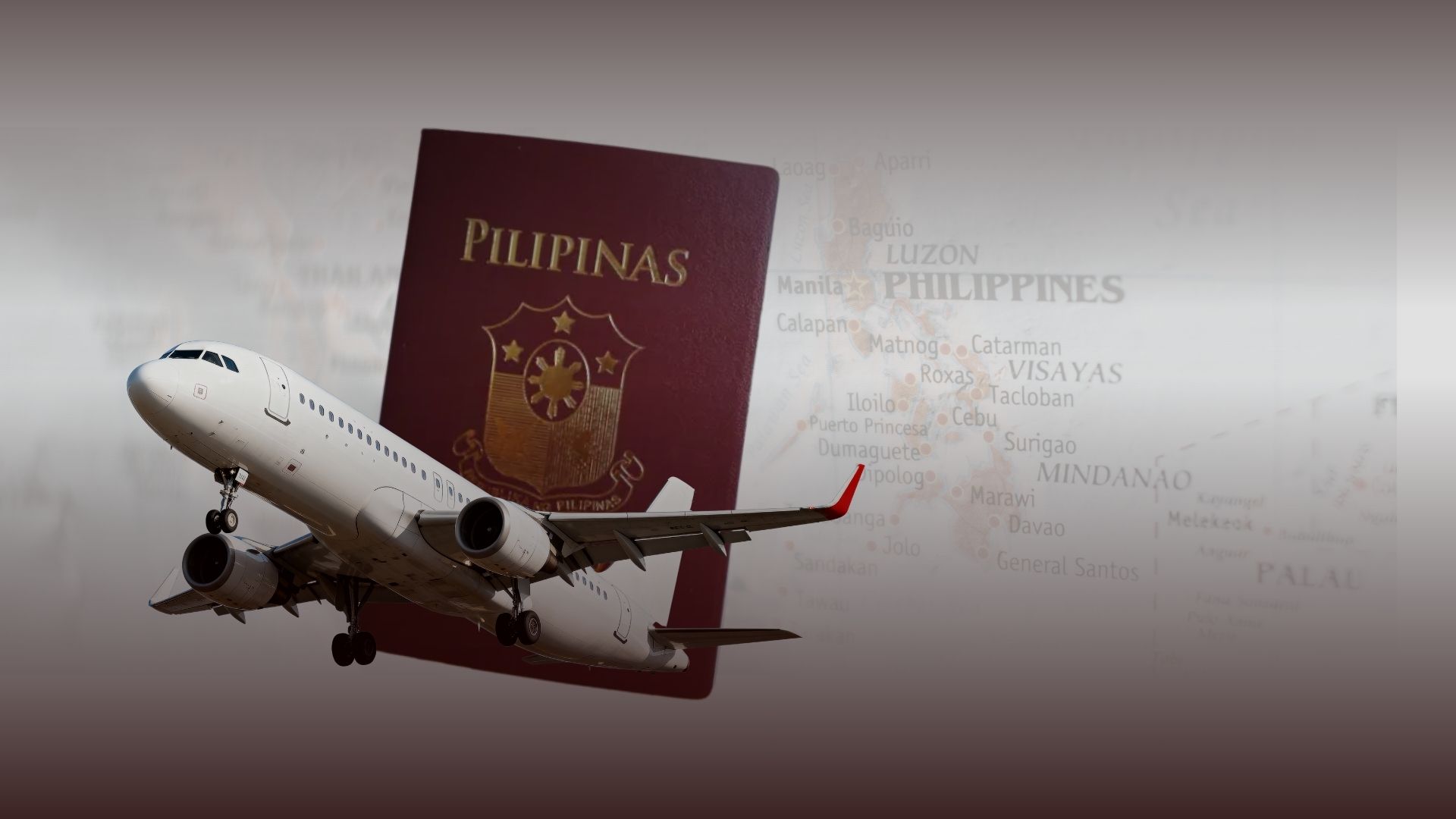
Almost every person dreams of stepping foot in different countries, having countless Instagram highlights with one for each destination, and filling their passports with stamps too many to count.
At borders, a passport is not just a proof of identity, but is a measure of mobility, opportunity, and in many ways, how the world chooses to welcome or even withhold us. This year, the Philippines once again finds itself navigating this reality… moving forward, but still a passenger in a world where open skies are not equally open for all.
The power passport power possesses
Passport power refers to how many countries a passport holder can enter without needing a prior visa. This is measured by indices like the Henley Passport Index, which ranks passports based on visa-free or visa-on-arrival access to destinations worldwide.
This also reflects a country’s diplomatic relationships, global trust, and economic standing. A stronger passport means fewer barriers: less paperwork, fewer fees, and a lower number of uncertainties. Meanwhile, a weaker passport can silently limit movement since it means stricter screening, longer waiting periods, and sometimes, even denied chances.
Passport power is both about travel and access, because it determines who gets to move freely and who must ask for permission.
Who holds the world’s most powerful passports?
In 2026, the top spot belongs to Singapore, whose citizens can access 193 destinations without a prior visa. Close behind are Japan and South Korea, each with access to 190 destinations.
European countries continue to dominate upper ranks. Citizens from Germany, France, and Italy are granted entry to nearly 189 destinations visa-free. Even traditionally powerful countries such as United Kingdom and United States have seen slight declines, now ranking 6th and 10th respectively.
Malaysia sitting on the 11th spot and Brunei at 18th highlight the visible gap between Southeast Asian countries.
At present, Afghanistan remains last, with access to only 25 destinations, showing how great the influence of geopolitics is.
The Philippine Passport: Then, now, and in between
The country currently ranks 72nd in the 2026 index, tied with Mongolia and Sierra Leone, granting Filipinos easier access to 65 destinations.
Tracing back, the country stood 63rd in 2006, climbed slightly in the late 2000s, then experienced fluctuations over the years. A noticeable dip occurred in 21 when it fell to the 83rd spot, which is its lowest point in recent history. Since then, recovery has been steady: 77th in 2022, 78th in 2023, 73rd in 2024, and now 72nd in 2026.
There is progress, but it is gradual. Out of 227 possible destinations, Filipino passport holders can access only 65 without a prior visa which is less than half of the number. Indeed, the nation is still strengthening ties, rebuilding,ding trust, and slowly expanding its reach.
Subhead title
For Filipinos, a weaker passport means more than just restricted travel, dealing with the system of extra steps, costs, and uncertainties. Yes, traveling is possible but it also comes with difficulties.
Many destinations still require visas which demand extensive documents, proof of financial capacity, and periods of long waiting and these all happen without any guarantee of approval. At the airport, there is also a high level of scrutiny.
However, having a weak passport goes far beyond tourism. Financially, repeated visa applications, processing fees, and required documents create more economic burdens. Students may also miss out on international scholarships, exchange programs, or references if there are delays or denials or when the costs are just too high.
In the context of employment, global opportunities are less within reach, especially in careers demanding urgent travels or quick deployment abroad. Even something as personal as visiting loved ones becomes complicated, as family reunification is slowed down by the lengthy process.
Power in pages and possibilities
A passport does not define a citizen, but it undeniably shapes their path.
And for Filipinos, each incremental rise in ranking is more than a statistic, but a step toward easier movement, broader horizons, and fewer invisible walls: a reminder that the ability to cross borders freely is a privilege not equally shared.
Passport power is not just about where one can go, but how far one’s country can carry them before the world asks them to stop and wait.