









Now Reading: Performativity as the final boss we can’t outplay
-
01
Performativity as the final boss we can’t outplay

Bernadette Soriano
Belonging has always been a performance; the internet just gave us front-row seats to each other’s shows.
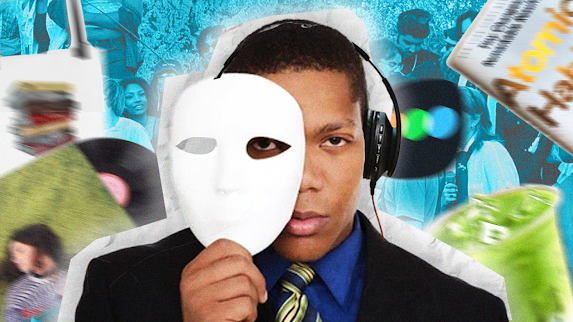
In recent discourse, the phrase ‘performative male’ has surfaced as a kind of cultural fossil — an artifact of our era’s obsession with naming and cataloging the theater of social life. The term points to a growing subset of young men who, in conscious divergence from the archetype of toxic masculinity, stage themselves in softer tones: matcha lattes in hand, Atomic Habits & 48 Laws of Power on their bedside tables, Clairo and Laufey in their playlists, wireless earphones perpetually in place, and wardrobes curated for maximum aesthetic appeal.
Yet for all its novelty, the “performative male” is less a rupture with his hypermasculine predecessor than an evolution; both choreograph themselves toward the same finale: securing the female gaze, accruing female validation.
To dwell here, however, is to risk mistaking the smaller truth for the larger one: performativity is not a male monopoly. Its sister in the cultural lexicon — the pick-me girl — reveals as much. She adopts masculine-coded traits, perhaps leaning into tomboy aesthetics, to nestle more comfortably among male peers. “I just don’t vibe with other girls, they’re too much drama,” a college sophomore in Manila tells me, punctuating her third iced Americano with a shrug. In their own ways, both archetypes are animated by the same gravitational pull: a restless appetite for external validation.
These labels do not conjure the behaviours they describe; they merely give shape to what already saturates our social atmosphere.
Maslow reminds us that belonging hovers just above food, water, and safety in the hierarchy of needs; Erikson maps its origins to early childhood, when the scaffolding of the self is built from the affirmations of caretakers and teachers; Festinger explains how we measure ourselves against the perceived performances of others — a feedback loop social media has refined into an addictive precision instrument.
The evidence is on your feed. Scroll TikTok: a twenty-two-year-old law student in Seoul filming “study vlogs” with matcha steaming quietly beside her notes; a Jakarta gym rat curating a perfectly lit “day in my life” montage; a queer teen in Toronto whose thrift-haul videos are less about the garments than about signalling allegiance to a subculture. “It’s not fake,” the teen tells me in DMs, “it’s just… there’s a certain way you have to show it, or people don’t believe you belong.”
The roots of this performativity are as much sociocultural as they are psychological. In East and Southeast Asian contexts, the roadmap is prescribed with surgical clarity: gain admission to a top university, secure a stable career, marry, and extend the family line. Desirability here is not ornament but currency. Self-curation becomes less an indulgence than a form of professional insurance. “If I don’t look like I belong in this firm, they’ll never promote me,” says a twenty-eight-year-old banker in Singapore. “And belonging doesn’t just mean competence. It means aesthetics, mannerisms, even my Instagram grid.”
The Philippines operates with its own, softer-scripted but equally potent version of this roadmap. One less rigidly codified yet deeply internalized. Here, success is a composite image assembled from fragments: English fluency, an education (or at least the veneer of one) from a prestigious school, an Instagram life calibrated to suggest both affluence and relatability. It is not uncommon for young professionals to curate LinkedIn headshots as meticulously as influencers plan travel vlogs, each image a talisman against the suspicion of mediocrity. “In Manila, your brand is your résumé,” says a 26-year-old marketing associate. “If you don’t look the part, people assume you can’t play the part.”
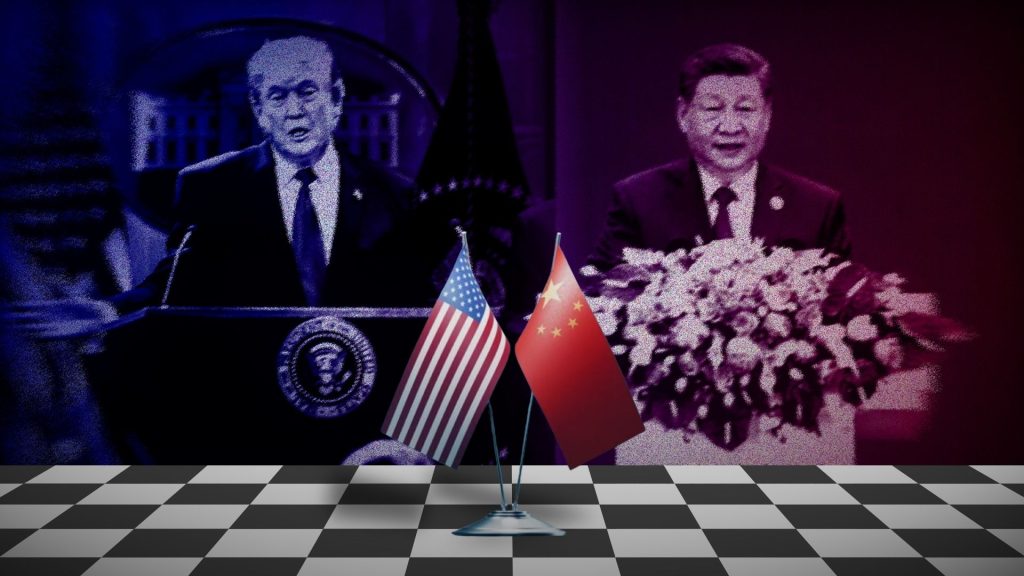
Global superpowers: America, China, and the so-called Asian Tigers, excel at codifying these conventional pathways to success. Individualism, though lionized in rhetoric, is often eroded in practice, replaced by a calculated self-fashioning designed to harmonize with the socially desirable mean.
In such environments, performance is not embellishment; it is an initiation ritual and employment contract in one.
Validation-seeking, then, is less a cultural malfunction than a structural inevitability. A young content creator in New York confesses, “I hate calling myself a creator. It’s so cringey, but if I stop posting, I feel like I will disappear.”
In Kuala Lumpur, a corporate employee admits she joined the office badminton team “not because I like badminton, but because the execs play it and it’s easier to get noticed.”
And yet, the narratives we spin around these performances are skewed by power dynamics. Male-coded performances are dissected with a sharper satirical blade, while feminist critique: hard-won, necessary, and invaluable, can, when overextended, calcify into a form of cultural gatekeeping that polices the permissible boundaries of male self-expression.
“I wore nail polish once,” says a twenty-four-year-old artist in Quezon City. “Everyone assumed I was trying to get girls to think I’m sensitive. No one believed I just liked the color.”
The irony is that even subcultures — those cherished sanctuaries from mainstream scrutiny — are not immune. The indie music scene in Melbourne, the cosplay community in Cebu, and the skateboard collectives in Berlin all operate with their own scripts, symbols, and unspoken laws. Authenticity here is as curated as in any corporate boardroom. The girl who buys a leather jacket before her first punk show is no less deliberate than the banker who buys a Hermès tie; both are fluent in the semiotics of belonging.