











Now Reading: Resident Evil Requiem is both a farewell and a new beginning
-
01
Resident Evil Requiem is both a farewell and a new beginning

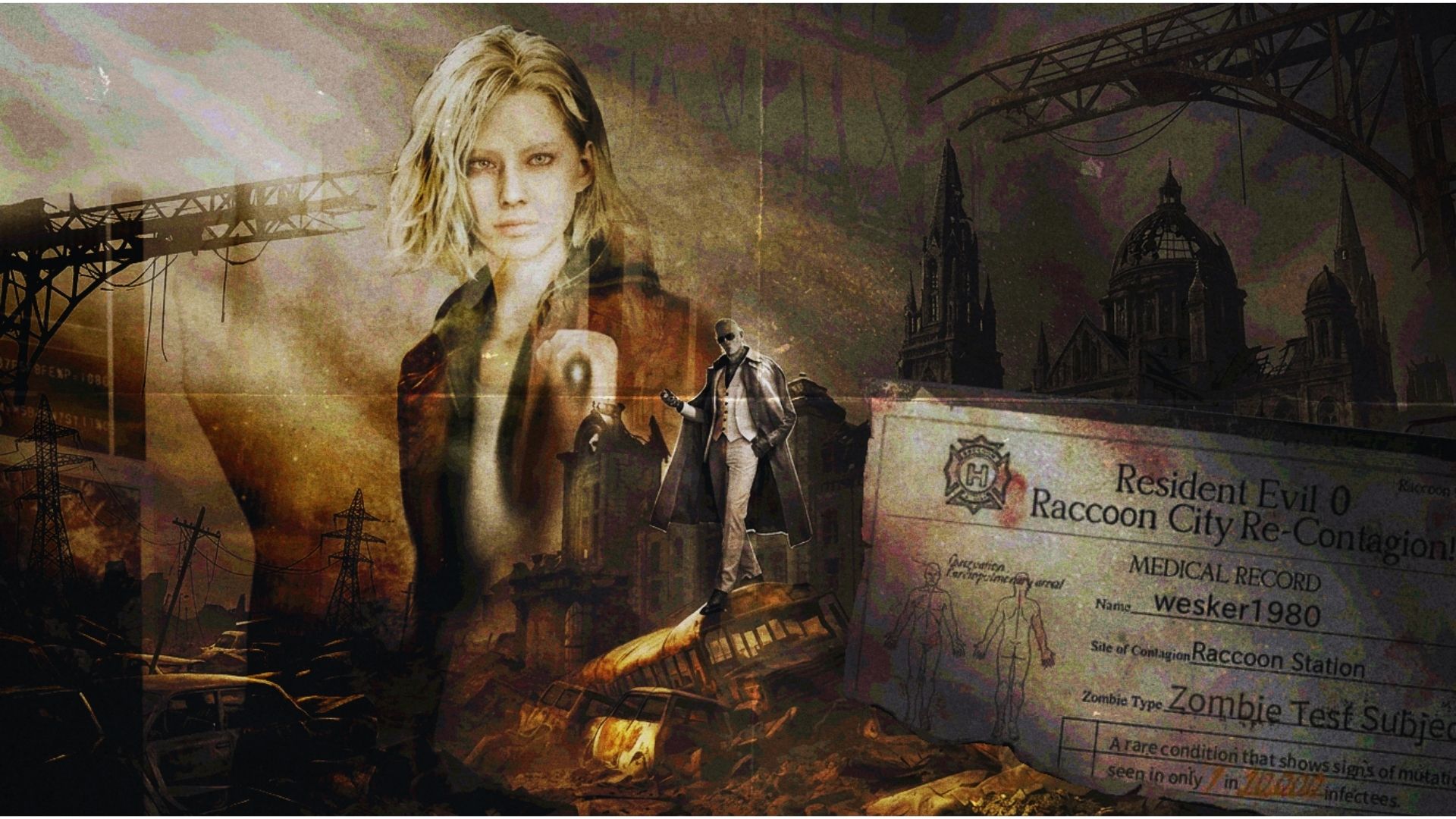
Resident Evil has always thrived on the spectacle of the impossible. A rookie cop trapped in a police station overrun by the undead; a father crossing a monster-infested village to find his daughter; and a government agent who has seen enough to know that running is rarely an option. These scenarios have defined a survival horror titan for three decades. The franchise has built its legacy by throwing people into the jaws of bioterrorism and watching them either shatter or forge themselves into something unbreakable.
Resident Evil Requiem attempts something a bit more grounded. It tosses Grace Ashcroft into that same pit of body horror, but this time, the narrative is genuinely interested in a different outcome. Instead of a superhero origin story, the game asks: what if she doesn’t become a hardened warrior? What if she simply survives?
That question is the most compelling idea Requiem puts on the table, though it is, frustratingly, a question that the game often forgets to answer.
Of course, there is more work here than just Grace’s personal arc and in this grim context, hope is not presented as a triumphant victory or a last-minute cinematic rescue. It is treated as the raw, quiet grit left behind when everything else has been stripped away, the thing that persists not because the situation improves, but simply because there is nothing else left to hold onto. It is a bold and surprisingly philosophical foundation for a Resident Evil title, one that sets a high bar for what a modern horror narrative can achieve.
Whether Requiem truly earns that ambition is a much longer conversation, and the one this piece intends to have.
Grace as a new RE protagonist
In a franchise where protagonists usually arrive either pre-hardened or shielded by plot armor, Grace Ashcroft (Angela Sant’Albano) is a genuinely refreshing choice for a lead. Her uniqueness, however, stems from more than just a lack of combat training. It lies in the layered weight of a life shaped by forces she never fully understood. Resident Evil Requiem is at its best when it allows that weight to show.
Grace’s origins are stranger than they first appear. Born an orphan, she was taken in by Oswell E. Spencer (James Clyde), the founder of Umbrella, who regarded her as a strange mixture of atonement and blind hope for his past sins. He eventually entrusted her to Alyssa Ashcroft (Jane Perry), an investigative reporter and Raccoon City survivor, during an interview he called a “requiem to those who have passed.”
Whether Spencer saw Grace as a path to redemption or merely a final vanity is left to the player. Grace grew up knowing none of this; as she took her mother’s name and moved from city to city, struggling to form connections amidst the constant upheaval of Alyssa’s freelance work. She was, in every practical sense, a young woman raised on impermanence.
Character Development after her Misfortune
The game earns its emotional core at the Wrenwood Hotel, as a scene plays that is essentially brutal in its quiet realism as Grace watches a hooded man kill her mother in the lobby where only a few minutes prior, she had suffered a panic attack while trying to call for help. Alyssa’s final words—becomes a reminder to Grace that she was “her hope”. These words would be a burden to Grace as she would spend the rest of the game learning how to carry and move forward from the trauma she carries.
This foundation strengthens the early portions of Requiem as by the time the main story begins, Grace has spent years as a reclusive FBI intelligence analyst. She is emotionally sealed off, surviving a decade of ordinary life by retreating into technical work. When she is manipulated into returning to Wrenwood Hotel to investigate, the decision feels less like a professional assignment and more like a deliberate pressing of an open wound.
Her panic feels authentic because it has a history behind it. Her hesitation in moments where a veteran like Leon Kennedy would have already drawn a weapon feels honest rather than weak. Grace has firearms training in the sense of someone who completed a mandatory course, not someone who has survived a bioterror conspiracy. And in one early scene, her reaction to a macabre discovery is not to fight or flee, but to simply stop, and in that stillness, the game acknowledges a truth most entries ignore: this situation is not normal.
By centering the experience on her vulnerability, the developers create a palpable sense of dread that is often lost when playing as a seasoned operator.The narrative grows more complicated around the midpoint. The woman who once panicked during a phone call begins making tactical decisions with surprising confidence and delivering one-liners that feel borrowed from a more assured character.
Her decision to protect Emily (Emma Rose Creaner), a blind girl she has no obligation to, shows that her empathy runs deeper than her fear. But the broader shift in her competence still happens faster than the story earns, and the connective tissue between the Grace of act one and the Grace of act two is never quite shown, only assumed.
This is where the mixed potential of Grace’s character is most apparent. The writing establishes a protagonist whose trauma is a lived condition, then stops short of fully honoring that condition across the whole game. The bookends are exceptional. The middle stretches, where Grace shifts too quickly into a capable action hero without enough shown growth, undercut what the story is otherwise building with real care.
Whether this was a deliberate creative choice or a mechanical compromise for the sake of gameplay momentum, the result is a character who occasionally feels like two different people stitched together across the length of the game.
But Grace Ashcroft remains one of the most human leads the franchise has ever produced. The frustration is not that she falls short. It is that the game can see exactly who she is, a girl shaped by Spencer’s legacy, her mother’s sacrifice, and a truth she was never supposed to find, and still chooses, at key moments, to look away from the full weight of that story.
The weight of Penance and Service
To understand Leon Kennedy’s place in Resident Evil Requiem, it helps to understand what the franchise has already put him through. By the time he arrives in Wrenwood, Leon is not simply a veteran agent showing up to save the day. He is a man who has spent nearly three decades trying to outrun a single night, and Requiem is quietly, deliberately aware of that.
It started in Raccoon City in Resident Evil 2, where Leon S. Kennedy (Nick Apostolides) was supposed to report for his first day at the Raccoon Police Department on September 29. He showed up late, hungover, and entirely unprepared for what the city had become. What followed was not a heroic origin story so much as an act of desperate survival, navigating a zombie-overrun police station alongside a civilian named Claire Redfield (Stephanie Panisello), protecting a young girl named Sherry Birkin, and escaping a city that the government would later bomb into silence.
Leon did not choose to become a hero that night. He simply refused to stop moving. In the aftermath, he was given an ultimatum by a government official named Adam Benford (Michael Donovan) to either stay silent about what he knew, or lose everything. He agreed. In exchange, they made him into something formidable.
By Resident Evil 4 in 2004, that transformation was complete. The rookie cop who arrived late to Raccoon City was now a composed, capable government agent sent alone into rural Spain to rescue the President’s daughter, Ashley Benford (Genevieve Buechner). Leon in RE4 is still human enough to feel fear, but he has learned to function through it. He quips. He adapts. He survives Plagas, cultists, and castle lords without flinching in any way that slows him down. It is, in retrospect, exactly the kind of hardening that Grace Ashcroft never had the chance to undergo.
Resident Evil 6 pushes this even further as by 2013, Leon was tasked with killing President Benford, the same man who recruited him, after President Benford was infected during a bioterror attack that Leon could not prevent. The game frames this as one of the heaviest moments in the franchise’s history, and rightly so.
Leon has spent fifteen years building his identity around loyalty, around the idea that the work he does makes a difference, and RE6 systematically dismantles that. He emerges from it intact but visibly worn, a man who keeps moving not because he believes everything will be fine, but because stopping is not something he knows how to do.
Atonement in Its Final Form
Requiem then finds Leon in the late stages of something he has been carrying since 1998 without knowing it. The Raccoon City Syndrome, a latent t-Virus degradation that has been slowly killing every survivor of the outbreak, and he is now in stage two when he arrives in Wrenwood, and the virus continues to accelerate. He knows this, and yet, he chooses to continue his work anyway.
What is notable about Leon’s role in Requiem is how deliberately the game positions him as a mirror for Grace rather than a replacement for her. He is everything she is not yet: experienced, steady, and fluent in exactly the kind of horror she is encountering for the first time. When he finds her at Rhodes Hill Chronic Care Center, dragging herself toward freedom after being abducted and drained of blood, his response is not to take over her story.
He hands her his magnum, tells her to leave, and stays behind to deal with Victor Gideon (Antony Byrne) himself. It is a small gesture with a lot of weight. Leon has spent his career being the person who handles it so others do not have to. In Requiem, he extends that to Grace without hesitation and without expectation.
Their dynamic throughout the game is one of Requiem’s quietest strengths. Leon does not mentor Grace in any formal sense. He does not deliver speeches about survival or resilience. What he does instead is show up, consistently and at significant personal cost, at each point where Grace is closest to being lost. He shoots the mutated Emily when Grace cannot bring herself to, absorbs the moral weight of that decision, and still tries to console her afterward.
He collapses just outside PANDORA at stage three of his syndrome, barely alive, and Grace comes back for him. The exchange between them in the waste disposal unit, where he admits his resolution to make a difference is just continued atonement for Raccoon City, is one of the most honest moments either character is given in the entire game.
That word, atonement, is doing significant work in Requiem. Spencer sought it through Grace. Leon has been chasing it since 1998. Grace finds herself inheriting both without asking for either. The game is at its most thematically coherent when it allows all three of those threads to exist in the same space, and the final sequence in ARK, where Grace uses Elpis to cure Leon’s sickness before the platform gives way beneath them–feeling like the franchise is finally letting one of its longest-running characters to exhale.
Leon’s evacuation at the end of Requiem is quiet by design. He is not given a triumphant final moment or a clean resolution. He reassures Sherry Birkin that he is cured, approaches Grace one last time to offer hope about Emily, and walks off to be evacuated. For a character who has been running since 1998, it reads less like an ending and more like someone who has, for the first time in a long time, done enough.
The Precedent Grace Didn’t Know She Had
It is worth pausing here to note that Grace is not the first person in the franchise to carry an unwanted biological legacy into adulthood. Sherry Birkin (Eden Riegel) was infected with the G-Virus as a child during the Raccoon City outbreak, vaccinated just enough to halt her mutation, and then quietly absorbed into government custody as a high-value research subject.
By Resident Evil 6, she had been shaped into a DSO operative, her body’s unusual resilience became a tool that the government found too useful to leave alone. Sherry survived Raccoon City the way Leon did: not by choice, but by refusing to stop.
In Requiem, Sherry serves as Leon’s support operative, her own syndrome progressing in tandem with his, her role confined largely to remote briefings and research. It is a quieter appearance than longtime fans might hope for, but it is not without purpose.
Her presence as a Raccoon City survivor quietly underlines the stakes of the syndrome plotline, and her parallel with Grace, two women defined by what was done to their bodies without their consent, gives the game’s thematic through-line an additional layer it does not always stop to acknowledge explicitly.
Concept of Elpis
Now for most of Resident Evil Requiem, Elpis functions as a MacGuffin. It is the thing everyone is chasing, the password nobody has, the locked door beneath the ruins of a city that the government bombed into silence twenty-eight years ago. Gideon believes it is a weapon. Zeno believes it is a source of power. The Connections buried it under Raccoon City and lobbied for the Sterilization Strategy specifically to keep it hidden, going so far as to ensure the assassination of President Benford when he threatened to expose the truth. For a virus, Elpis casts an extraordinarily long shadow.
Which makes its reveal all the more quietly devastating. It is not a virus at all.
What follows is where Requiem makes its strongest case for Grace as a protagonist worth caring about. Faced with PANDORA’s console and asked to input a password to release Elpis, she does not guess blindly or defer to Kennedy.
She chooses to believe in two things simultaneously: her mother’s last words and Spencer’s stated regret. She inputs “Hope.” And Elpis, the thing the entire game has been building toward, turns out to be an antiviral agent, designed to undo all virus-based infection. Spencer’s blind hope was never a tool for power. It was an apology.
That recontextualization is the game’s most ambitious swing, and it lands. Everything that felt like a conspiracy thriller scaffolding suddenly reveals itself to be something far more personal: a dying man’s attempt to undo, in some small measure, the catastrophe he set in motion.
Spencer founded Umbrella. Spencer created the viruses that destroyed Raccoon City, infected thousands, and sent ripples of bioterror across three decades of the franchise’s history. And in his final years, the best he could manage was a cure locked behind a password, entrusted to a child he gave away to a good woman, hoping that somewhere down the line, that child might understand what he could not bring himself to say out loud.
The decision to make Elpis an antiviral agent rather than a weapon is the most consequential creative choice Resident Evil Requiem makes, and it is one the game earns completely. For thirty years, the franchise has been a story about viruses spreading, mutating, and destroying.
Every antagonist has chased biological power. Every protagonist has fought to contain it. Elpis inverts that entirely: the most powerful thing Spencer ever created was not a new way to infect, but a way to undo infection entirely.
The implications are significant. Six vials of Elpis are recovered from PANDORA before ARK collapses. One cures Leon’s syndrome. One is secured for Sherry. The rest remain unaccounted for, at least within the events of the game.
Whether Elpis represents a genuine turning point for the franchise’s world, a world where the accumulated damage of decades of bioterrorism could theoretically be reversed, or simply a narrative device that will be conveniently complicated in a sequel, remains to be seen.
But as a symbolic conclusion to Spencer’s story, it works. The man who built the box also left something at the bottom of it. It just took a girl who had no reason to believe in him to reach in and find it.
What’s Next for Resident Evil
Resident Evil has survived by reinventing itself more times than most franchises get the chance to try. The original game built survival horror on fixed cameras and limited ammunition. RE4 dismantled that entirely and invented a new genre template in the process. RE7 stripped everything back to first-person claustrophobia and made the franchise feel dangerous again. Each reinvention came with its skeptics, and each one ultimately expanded what Resident Evil could be rather than diminishing what it had been.
Requiem feels like another one of those moments. Not because it is a perfect game, but because of what it is clearly attempting to be.
And for three decades, Resident Evil’s emotional core has been reactive. Characters survive. Characters escape. Characters contain the damage and move on to the next outbreak. The franchise has always been quietly interested in trauma, but it has rarely been willing to sit with it long enough to let it mean something.
Requiem changes that posture, however imperfectly. Grace’s arc, Leon’s syndrome, Sherry’s quiet parallel existence, Spencer’s posthumous apology encoded into an antiviral agent; all of it points toward a franchise that is becoming interested in consequence in a way it has not been before.
Elpis as a narrative device opens doors the series has never had access to. The accumulated biological damage of thirty years of outbreaks, the survivors carrying dormant infections in their bodies, the unresolved question of what healing actually looks like in a world that has been through what this one has — these are threads Requiem introduces without fully pulling. Whether the next entry chooses to pull them is the most interesting open question the franchise has posed in years.
As for who carries the story forward, it is genuinely too early to say, and that uncertainty is more exciting than frustrating. Grace ends Requiem in a place no Resident Evil protagonist has occupied before: not triumphant, not broken, but quietly rebuilding. She has a desk with her mother’s photo on it. She has a daughter. She has a report to file. The domesticity of that ending is not a diminishment as it is the franchise acknowledging, for perhaps the first time, that survival does not end when the credits roll.
Whether Grace returns as a lead, steps into a supporting role, or passes the baton to someone new, her presence has already shifted something in the franchise’s DNA. She has demonstrated that Resident Evil can hold space for a protagonist who is not defined by combat mastery or tragic backstory repurposed as motivation, but by the slower, messier work of figuring out how to keep going. That is a template worth returning to, regardless of whose name is on the next title card.
Leon, meanwhile, ends Requiem cured but not finished. His atonement arc has found something resembling resolution, but the franchise has never been particularly interested in letting its veterans rest for long. Sherry’s syndrome is cured, her role in the larger story still underwritten in ways that feel less like a conclusion and more like a placeholder. Chris Redfield’s involvement, arriving just in time to send the Hound Wolf Squad without appearing onscreen himself, suggests the broader ensemble is being held in reserve rather than retired.
The pieces are on the board. Where they move next is an open question, and for once, that feels like an invitation rather than an uncertainty.