






Now Reading: Sex education is education!
-
01
Sex education is education!

Bry
A key to open-mindedness is education itself, but what is the purpose of knowledge if it is continuously stigmatized?
Sex education—a controversial topic among Filipinos. It is often described as against the Bible or something that corrupts the youth. But, these are personal beliefs that are aligned with religion and conservatism that halt progress on the country’s education and other sectors, including politics. Sex education is a topic that Filipinos should be more open about rather than condemning it just because it involves private genitals or reasoning it out in a religious context. The people are already suffering from naivety and ignorance, yet open-mindedness was still seen as a threat in this underdeveloped nation.
In recent social media posts, some Filipinos tend to criticize a topic about maintaining proper hygiene of genital parts. If looking through the validity of the subject, it is harmless enough because it teaches proper knowledge about taking care of genital parts. In fact, this is education that DepEd is trying to implement to avoid naivety and ignorance among students. The Philippine education system has already failed in the past, yet some Filipinos continue to stigmatize simple hygienic acts.
Moreover, sex education teaches safe sex and introduces the concept to people without risking their lives over curiosity. The Philippines is one of the countries that has a significant number of teenage pregnancies. Back in 2022, the highest proportion of teenage pregnancy was 78.3% among girls aged 15-17 years old. Teenage pregnancy also increases the poverty rate in the country since these adolescents are indulging in activities that they are not familiar with, such as sex took their lives to the trench. Therefore, sex education can act as a prevention in order not to repeat the same incidents all over again. Children and young people should be taught about their bodies, how to form healthy relationships, and make responsible decisions.
Another thing is that one of the benefits of sex education is the prevention of Sexually Transmitted Diseases (STD/STI) and HIV/AIDS. These diseases are passed through direct contact with bodily fluids such as semen, milk, and many more. It is often unprotected sex that leads to the transfer of these diseases from an infected person to another. But there are instances where it is also hereditary from a mother-to-child scenario or even an infected hospital needle used on another person, but these instances are rare. As a result, people who have these diseases are affected drastically in their health, leading to mortality and illness. At the end of 2024, there are an estimated 214,500 Filipinos who are living with HIV, and only 40% have surpassed it. Therefore, these numbers indicate the blissfulness and ignorance of Filipinos when it comes to safe sex, since some of our population is against sex education.
Since the Philippines is a Christian country, most of the Filipino folks are against the implementation of formal sex education in the Philippines. Filipino conservatives will argue that the Holy Bible does not accept it because of “explicit contents” that would corrupt people and lead them to commit sins. Right-wing party-lists also uphold traditional values and culture; that’s why it is disagreeable. There are also cases where some educators lack training or are uncomfortable with discussing sex education with the students because it is explicit, and the students would only laugh at it or even the instructor themselves.
In reality, sex education teaches people how to be responsible, make better decisions, and learn about their bodies in an educational setting rather than risking their lives to satisfy curiosity. Involving religion just means that it is a belief, not a factual argument. Conservatism only aims for traditional values, not the benefit of all. Given the fact that the number of sex-related cases such as STIs, HIV/AIDS, and teenage pregnancies continued to increase in number, this must be the time to act to truly protect the Filipinos from the real dangers, such as the harsh reality out there where they can be taken advantage of without the proper knowledge, as simple as sex education. It is a personal choice whether to stigmatize humanly topics such as proper hygiene of the genital parts, safe sex, and preventive actions towards diseases such as HIV/AIDS and STIs.
Sex education is a right to begin with— an education to be given at a young age. It is a need that the nation is nurturing the youth to become productive and responsible citizens of the Philippines. The Department of Education has already welcomed this concept in its Comprehensive Sexuality Education (CSE) back in 2018, which is taught in the basic K-12 education. It is covered by subjects in MAPEH, Edukasyon sa Pagpapakatao, Science, and Araling Panlipunan. It is also covered in the Responsible Parenthood and Reproductive Health Act of 2012, also known as R.A 10354. It mandates age-appropriate sex and reproductive health. Therefore, there is no point in being against sex education when the education system already welcomes it.
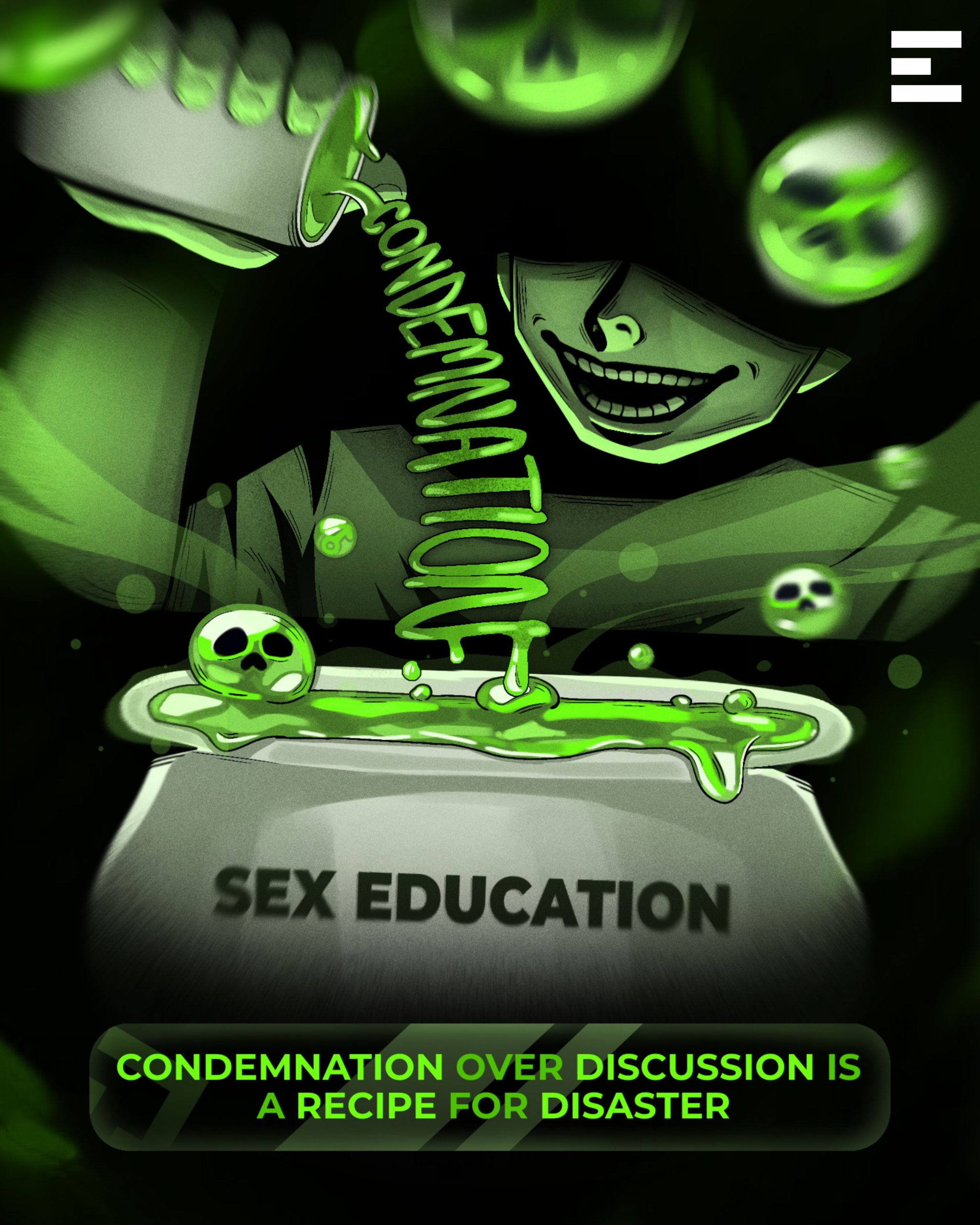
Stigmatization of sex education is a common problem among Filipinos because some of them are not open to the idea at all and often hide behind absurdity. Sex education is necessary, an education that will nurture Filipinos to be knowledgeable about their bodies and sex-related consequences if it is not precautions are not practiced. It should be discussed openly without hate and condemnation. The Department of Education should also improve present sex education-related projects and campaigns to cover the ones in the rural areas. Stop condemnation; sex education is an asset!