




Now Reading: Thanks to JournQuest, I rediscovered the leader I almost forgot to be
-
01
Thanks to JournQuest, I rediscovered the leader I almost forgot to be

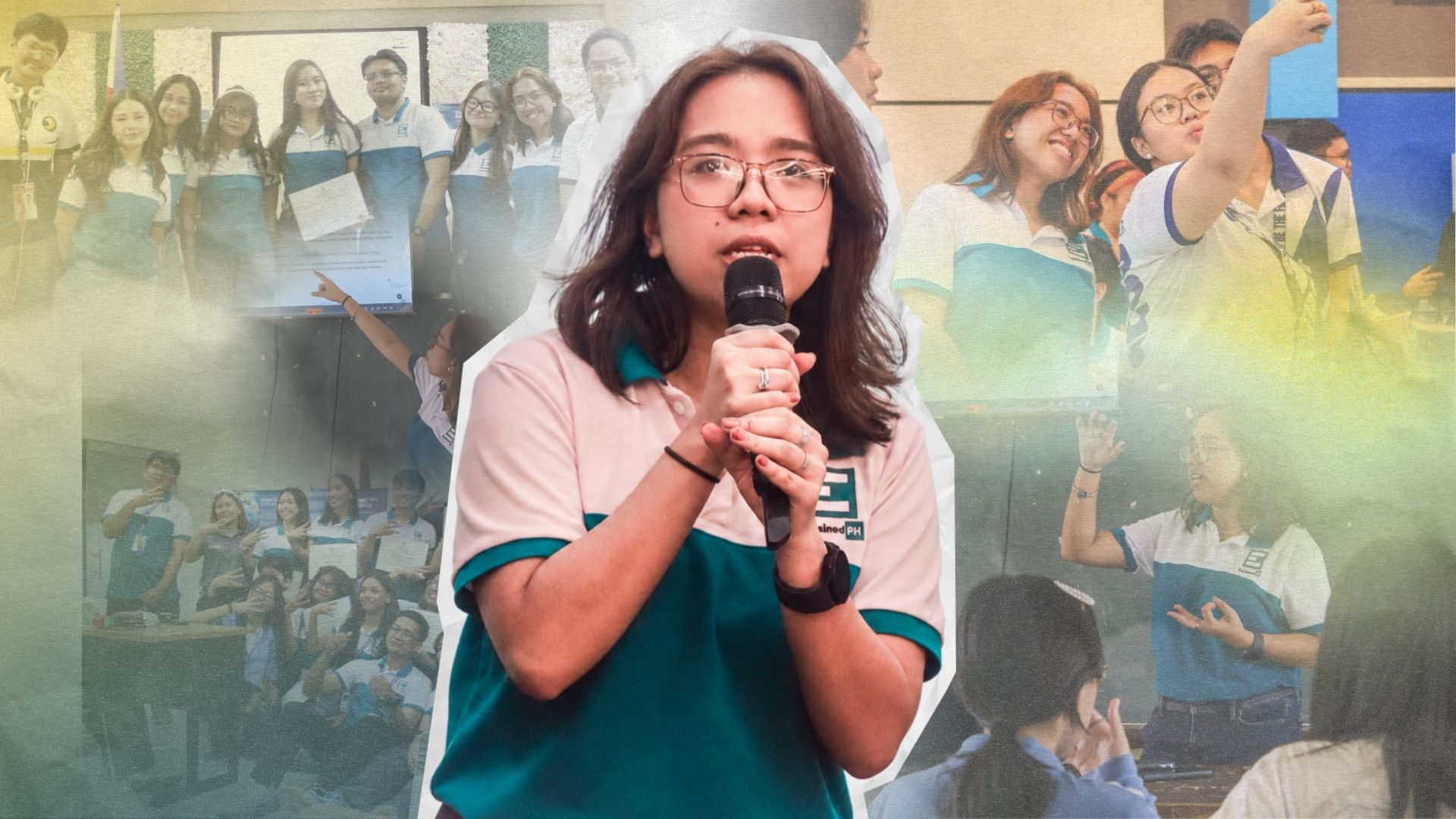
Zea Domingo
To be a leader is to be a human to the humans you lead.
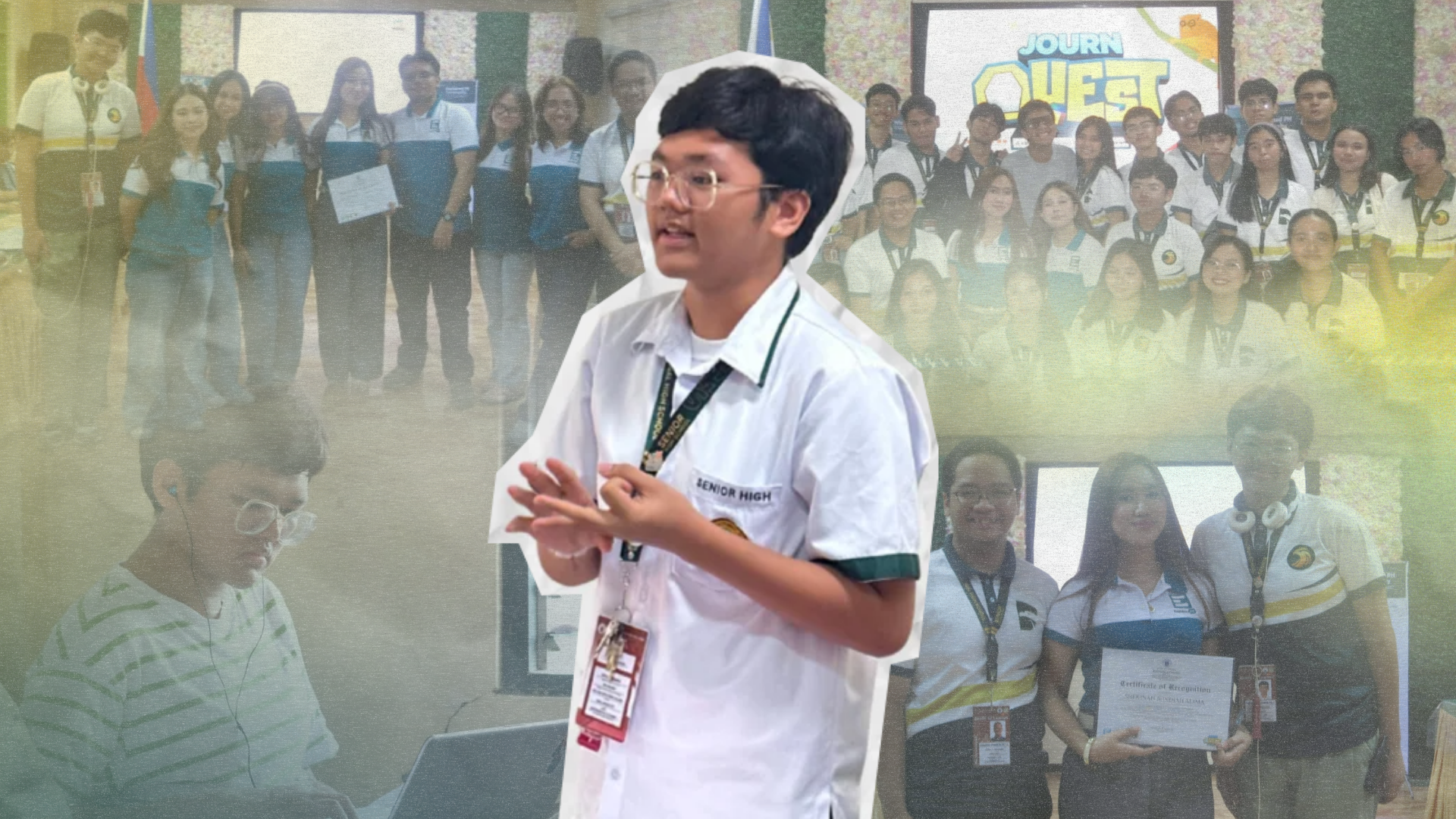
From the 10 days journey I had with Explained PH, touring different cities and regions around the country, it was not the skillset that I have honed — it is my way of communicating and connecting with my fellow campus journalists.
More than teaching me to be a better leader, JournQuest taught me how to be a better human first.
Before the tour, I was the stereotypical editor who only aims to do good. My co-editors can testify, and I, myself, must admit, with the multiple publications I [have] handle[d], my mind was programmed to think that success is always measured by figures: the numbers must be high, the reactions must reach a certain threshold, and the engagement must be on an upward trajectory.
Even Explained PH was not safe from my keen sight. Every night, looking at the page’s professional dashboard has been my routine, almost passing as my bedtime fairytale. Every month, I trace and track the reach, the engagement, the views. Every day, I looked for pitches and newspegs that would make us go “boom” and viral. Well, the common denominator was as simple as: there should always be visible outputs and visible results.
However, after what I saw in Manila, Davao, Cagayan de Oro, and Cebu, I realized that figures will remain figures for as long as they can. But it is the cultural experience and consciousness that sets apart normal reporting from journalism — two words: be human.
We, as journalists, must focus on not what we prove on paper, but what we can stand for in practice.
In my almost one-hour car ride on my way home to Marikina, I looked out the window and reflected on all the sentiments. It felt like I was finally sitting with everything I had seen, heard, and felt throughout the tour. It felt like unpacking an excess baggage I didn’t know I had.
Then it hit me hard — it was never just about doing good, but also about being good — to our fellow journalists, to our co-editors, and to the masses we serve.
That’s what’s missing in the new world of media. We are so hyperfixated on successes so much that we forget about the heart of journalism, the stories that matter — mga kuwentong may kuwenta. Leaders must do good, but they must also be good.
As a campus journalist for over a decade, I have seen grit, grievances, and good graces of what journalism, as an industry, can bring.
Journalism will make us question, “Is this really worth it?” It will [and should definitely] make us outraged. It will make us sad. It will make us cry. It will make us beg on our knees — for the strength to keep going when everything, even everyone, tells us to stop.
But despite all the rollercoaster of emotions, in the end, journalism should make us have a fully painted smile on our faces. Not because the work is easy, but because we know that, in some way and some form, that work matters to the community.
And perhaps, that was the turning point for me.
The campus journalism community — which I saw with my own very eyes during JournQuest with the Explained PH Executives, Editors, Staff, and Volunteers — showed me that people are beings with stories, struggles, emotions, where no figure could ever, ever, quantify. It showed me that people are not numbers to be managed [either macro- or micro-] nor machines programmed to produce day after day with quotas and KPIs to reach.
Manila Bureau taught me to be calm amidst chaos despite the logistical lapses, to and from, to just let it be and reset; Cebu Bureau made me feel like I was in my second home, reminding me that belonging can be fostered even in not-so familiar places [although, Cebu will always have a special place in my heart]; Davao Bureau showed me the strength of even a small team who continue to show up, that camaraderie will go a long, long, long way; and our quick detour to Cagayan de Oro reminded me that stories are not always found where we intend to look for them, but where people genuinely allow us to see them.
After experiencing all of that humanity and kindness, I had to ask myself over and over again: “How can I ever compare these people side-by-side to mere numbers?” It is an insult. It is disgusting to think of. It is absolute stupidity and naivety in a sense. And that became the biggest lesson I took home.
These young campus journalists inspired me to become a better human being so that I can become a better leader.
I want to be someone who does not funnel anger into the way I command. I want to be someone who does not expect to be obeyed just because I hold a higher editorial position. I want to be someone who does not pull the trigger whenever plans do not go their way. I want to be someone who treats people as people. Period.
These young campus journalists reminded me that real respect for a leader cannot — and never be — be demanded; it is cultivated by character, consistency, and compassion. And most importantly, they taught me that the best leaders are not those who stand above people, but those who stand with, and alongside, them.
Journalists, well, human beings in general, do not need a leader who constantly pulls the strings. We must always remember: people are human before they become writers, editors, reporters, or members of an organization. They get tired; they get frustrated; they lose a lot of self-confidence; they need all of the reassurance or even a sense of recognition, a validation, a confirmation.
Just like me — one of the editors-at-large of Explained PH, who have experienced the “better” world of journalism after JournQuest — everyone is also carrying a pile of problems that strains their shoulders. [Yes, we don’t need to compare who has more problems than who, or who stresses out more. It is not one or the other.]
The bottomline is, we will never know what people are carrying. And honestly, we do not always have to know.
The least that we can do, as better leaders, is choose to be more patient with them, to be gentler with our words, and to give them room to breathe. Them being tucked under our wings of command does not mean we have to neglect the thought that they are persons of their own.
At the end of the day, we — no matter the position and role in the organization — executives, editors, staffers, and volunteers — are all dealing with things we do not put on paper, personal battles we do not broadcast in our meetings or monthly kumustahans, emotional damage [caused by whatever or whoever] we have no choice but to live with.
Sometimes, we need to sit down with them and ask what happened. Or the situation calls for us to step in. And there are also moments where there is nothing we can fix. All we can really do is stay, listen, and let them know that they do not have to carry everything alone.
Thank you, Explained PH, for making my eyes wide open. To the Volunteers, thank you for reminding me how young the youth journalism landscape can be — so innocent, so pure. To the Staffers, thank you for making a long, tiring day of speakership lighter. To the Editors, thank you for sacrificing sleep just to coordinate with the venue(s), partner publication(s), and everyone behind the scene(s).
And of course, to the warm and welcoming Executives who I was with throughout the unforgettable tour, to Bea, Margie, Daiven, Prash, and Sheki, thank you for making every city feel a little more like home [no angry man], for letting me be the human that I am [no puppet master].
For quite some time, I have lived a sad life. I have lived a life so “practical,” so “productive,” so consumed with getting things done that maybe, I forgot to look around and appreciate the people beside me. And after JournQuest, it helped me awaken my senses and realize that I never want to be blindsided by my own obsession with productivity [again], to the point that I forget the people who make the journalism worth doing.
And maybe, just maybe, that is all we can really give each other sometimes…a little more understanding, a little more grace, a little more compassion, and a little more space to be human.