






Now Reading: Some peaks aren’t the pinnacle
-
01
Some peaks aren’t the pinnacle

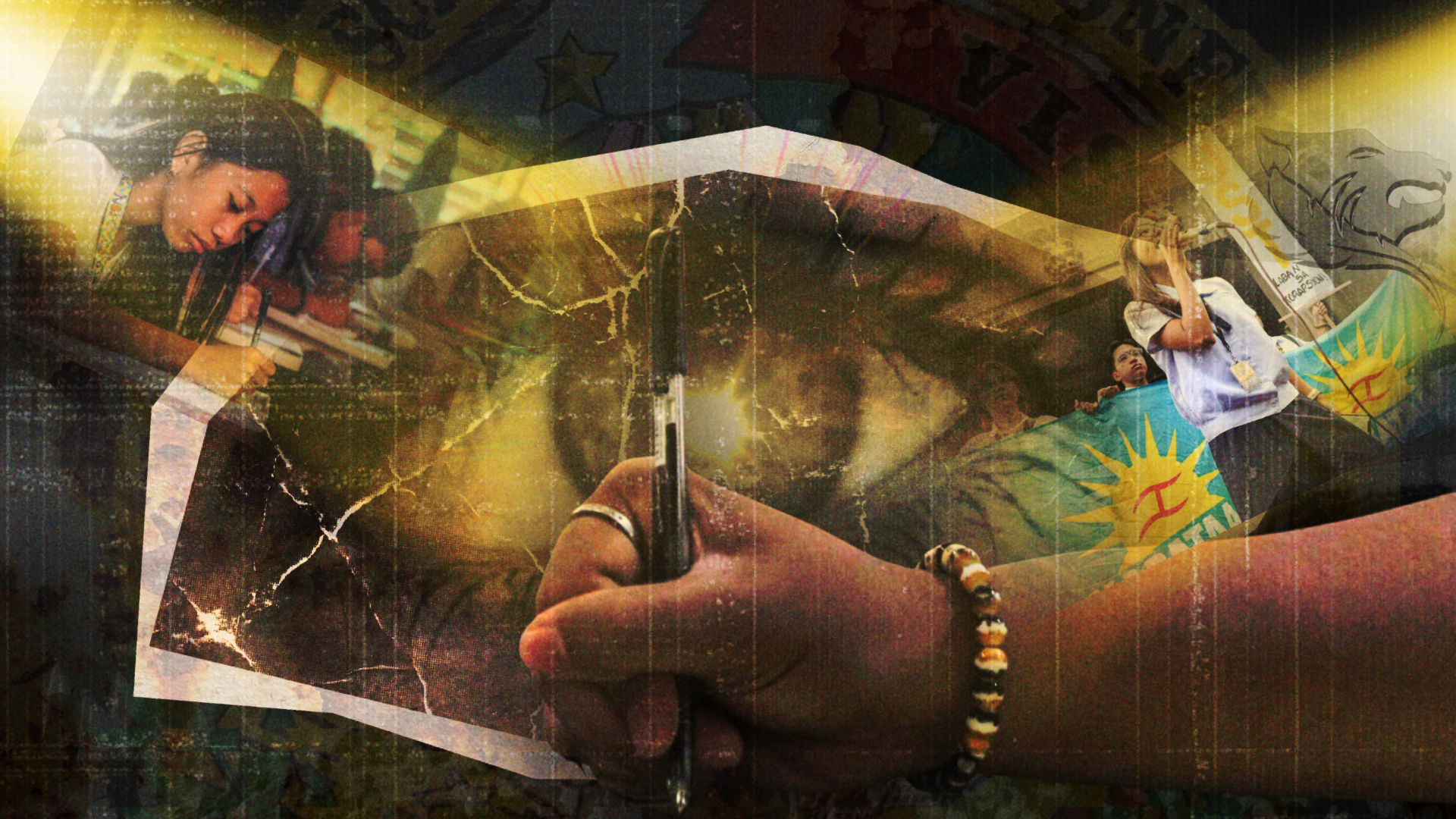
I’ve always dreamed of stepping into the national arena. As someone who started writing at an early age, it was my perfect defining moment of success. Almost a decade in campus journalism, and I never got the chance — always almost, never enough. That’s when I realized NSPC is just a milestone, not the pinnacle of my journey.
Deemed as the highest competition for elementary and secondary schools in the country, the National Schools Press Conference (NSPC) is notorious for its prestige. To represent your region is one thing, but to win among all equally talented journos is another. It stands as a beacon of perseverance and commitment to truth-telling. This year, NSPC 2026 just concluded in Ormoc City, Leyte, which holds the theme “Mapanuri, Mapanindigan, at Mapanagutang Pamamahayag.”
But what does it really mean to be critical (mapanuri)? Is it by spotting errors during proofreading? Is it making sure tenses and grammar are consistent? Is it distinguishing between a straight news story and a feature? Real critical thinking exercises discernment and judgment. Campus journalists must not simply be passive receivers of information; we must be able to actively shape it. The Elements of Journalism, a book written by Kovach and Rosenstiel, noted that the first obligation of journalism is to the truth. “All truths – even the laws of science – are subject to revision, but we operate by them in the meantime because they are necessary and they work,” they wrote. This begins with the verification of information and arranging it in a way that makes sense. Without critical thinking, malicious information could easily thrive, and truth-telling becomes a funny concept.
What about conviction (mapanindigan)? It is exhibited when we question whether what we are writing deserves to be on the front page of the newspaper. It is practiced when we reject spoon-fed ideas and give value to our prerogative. The cornerstone of our conviction is editorial independence, or the principle of autonomy to make content decisions. Last year, La Stampa, University of Santo Tomas-Senior High School’s official student publication, faced censorship over its illustration for National Press Freedom Day. Recently, scribes of Primum (University of Mindanao) resigned from the editorial board over the imposition of coverage restrictions. Censorship and meddling of school administration must stop at the campus press level. If we can’t let our students voice out, who will train them to do so? Where is the right platform? Campus journalism exists for a reason to bolster students’ convictions.
These two concatenate into our accountability (mapanagutan) as writers. We must stand by our principles, and nothing can be wagered against it. We must resist the temptation of plagiarism and the unethical use of artificial intelligence. Transparency starts at the grassroots competition level. Not long ago, a teacher from Central Luzon aired concerns over plagiarism in RSPC, and this isn’t the first time for the Schools Press Conference. It is important we also hold ourselves accountable for our shortcomings and blind spots, because it is only then that a great journalist is born.
We must remember that NSPC, just like any competition, is just a fragment of what journalism truly asks of us. By nature, a competition ought to declare someone who wins and someone who learns. Journalism doesn’t work that way. Most of the time, there’s no recognition, medal, or even acknowledgement. In worst-case scenarios, it could land you in a threat or backlash for pushing an agenda that people aren’t ready to hear. It feels like working in silence, but bearing a loud impact. Nevertheless, we deliver, and we hold the line because journalism and the truth aren’t performative, but purposeful and advocacy-driven.
It’s not to say that journalism competitions harbor no value. These competitions are an invaluable training ground for critical thinking, competence, discipline, and patience. Professional reporters and journalists started in these competitions, which gave them an edge in their current profession. Marjohara Tucay, a community journalist, shared her path from fulfilling stints in the Philippine Collegian (Kulê) to being part of Altermidya Network. They focus on diverse communities and cover scoops that mainstream media don’t always air. Campus journalism, in itself, is imposing a challenge on what we can offer after we receive a medal and certificate. Our passion and advocacy must not be tucked away along with our skills.
NSPC might be a mountain to climb, but in reality, it is a view to enjoy, much like it is an understatement to call it a journey, but an experience. While its apex could give assurance of their writing prowess and talents, campus journalists must realize that the top of a mountain is the bottom of another. It’s never the finish line, because campus journalism will always require continuous effort from us, and there’s no getting away from it. It is a commitment in and of itself; a vow towards community immersion and engaging in journalism that truly serves the people.
The real pinnacle of campus journalism isn’t settling for what seems the end; it is striving to widen our horizon. Most importantly, it is believed that journalism never sleeps, even if the competition ceases. Looking back, I’d say being with ExplainedPH and several organizations defined who I truly want to become as a journalist — not confined to local and school events — I seized the chance to weave stories and create a tapestry of narratives. I got to expand my perception from campus to community, and write stories that matter to a larger audience.
Behold, our passion must not be conditional. We must pursue stories that are hard to tell, easy to mess up, yet worthy of our readers’ time. We must ask unconventional questions that people are afraid to ask. We must investigate deeper than what our eyes could witness. We are asked to do better every time. After all, this is where campus journalism is built on, because bigger journalism and bigger opportunities await those who lead their heart back for the people.