





Now Reading: The anatomy of a rally: From Martial Law to today’s streets
-
01
The anatomy of a rally: From Martial Law to today’s streets

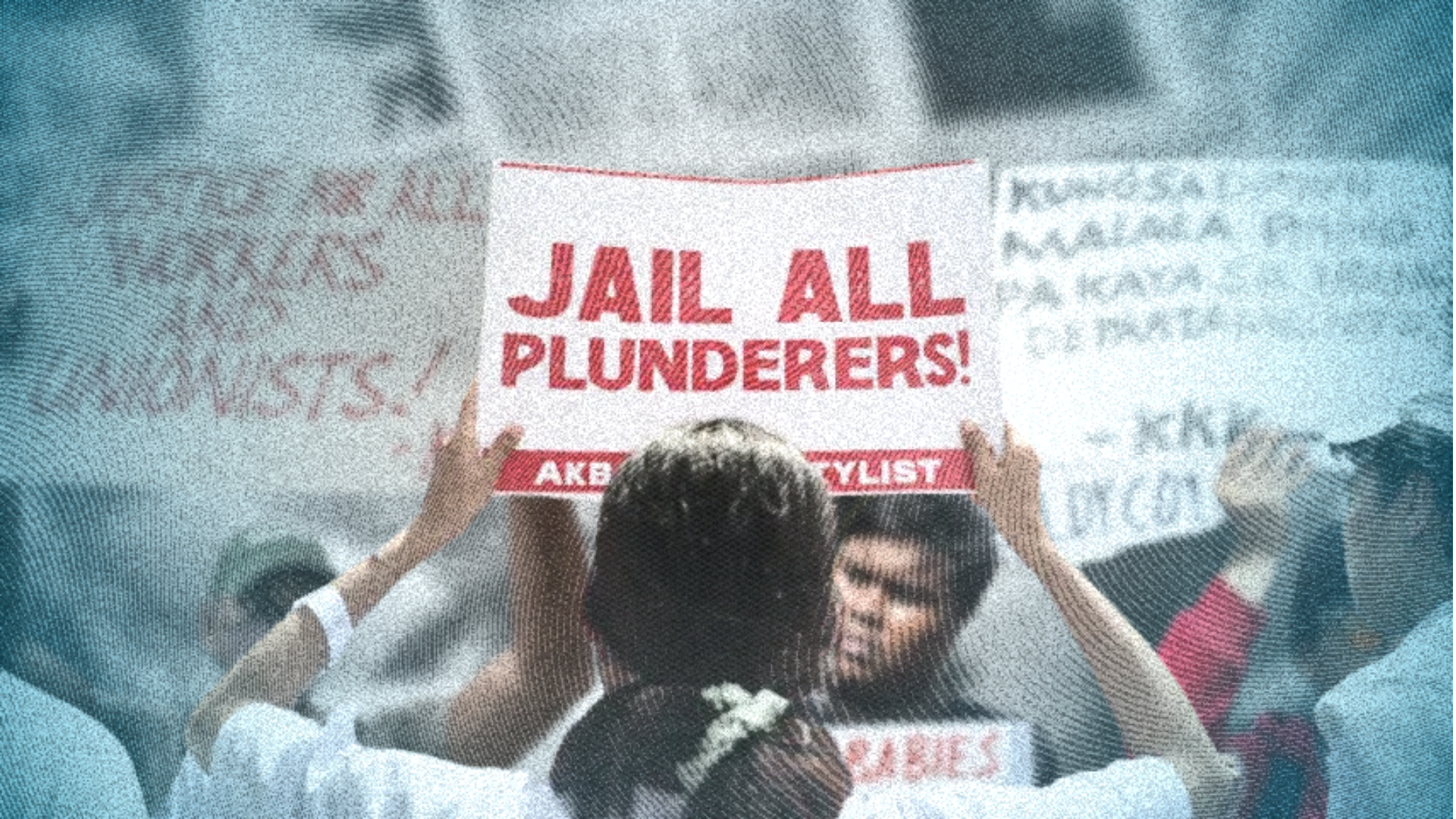
From Martial Law to the present, the rally has never been a mere convergence of bodies. It is choreography: the repetition of steps rehearsed against silence. It is an archive: a memory written not on paper but on asphalt and lungs. It is defiance: a pulse that refuses erasure. In chants etched onto cardboard and in voices rising above the din of traffic, Filipinos stage democracy again and again, proving that protest is both heartbeat and history.
The physics of gathering
In the Philippines, rallies rarely erupt in the heat of the moment. They do not spill into the streets without lineage; rather, they form as disciplined responses, sharpened across decades of silencing and resurgence. The Marcos dictatorship (1972–1986) marked the most brutal crystallization of this formation. Public assembly itself was outlawed. Amnesty International’s estimates remain chilling: 70,000 imprisoned, 34,000 tortured, 3,240 killed. The Human Rights Violations Victims’ Memorial Commission preserves these numbers not as sterile data, but as engraved reminders of a generation forced to measure every word spoken in public against the possibility of disappearance. Silence then was not indifference; it was insurance against annihilation.
Yet repression never wholly extinguished dissent. It displaced it into smaller, coded spaces. Oral histories gathered by the Task Force Detainees of the Philippines (TFDP), a religious human-rights group formed in 1974, describe how clandestine communications threaded through banal language: “bring an umbrella” meant “meet here”; “eat at the corner” meant “the meeting is safe.” Detained activists recall how humor itself became survival: jokes circulating through prison cells, ridicule aimed at guards, even laughter in courtrooms where outcomes were foregone. As sociologist Randy David once observed, irony functioned as a shield, allowing dissenters to mock power even as they were bound by it. The scholar Amy Forbes, studying journalists under Marcos, shows how women columnists in particular relied on satire, allegory, and fairy-tale motifs to circumvent censorship, layering critique beneath the veil of play. Humor here was not frivolity but counter-speech: what detainees themselves called “mental oxygen.”
To study a rally, then, is to trace these compressed freedoms. Political scientist Benedict Kerkvliet once named this texture “everyday politics,” where opposition is smuggled into gestures, routines, and whispered codes. When people finally converged in the streets, what appeared as chants and placards were condensed archives of repression. Symbols standing in for sentences, chants in place of manifestos, bodies substituting for the words they could not risk speaking aloud. James Scott’s notion of “hidden transcripts” is apt: years of underground murmurs surface fleetingly in public space before power seeks to shut them down again.
And yet, the archive of repression has not remained fixed in the past. Today, the struggle over rallies is also the struggle over memory itself. As the Human Rights Violations Victims’ Memorial Commission insists on documentation, disinformation machines work in reverse, erasing or whitening abuses. A 2021 Ateneo University study showed that Filipino youth, on average, possess only middling skills in identifying fake news, leaving them vulnerable to the flood of revisionist content that saturates their feeds. Al Jazeera reported, on the eve of Ferdinand Marcos Jr.’s inauguration, how social media platforms had become engines for myth-making, recasting dictatorship as “golden age.” Scholars Aries Arugay and Anna Baquisal note that these algorithmic distortions bleed directly into political participation, shaping youth engagement in the 2022 elections. Democratic-erosion.org bluntly frames the outcome as “revisionism in social media and Philippine democracy.”
The paradox is stark: while archives preserve the brutality of the past, the digital present threatens to overwrite it. In this context, every march becomes not only a protest but a public fact-check. When descendants of desaparecidos raise framed portraits in Mendiola or Liwasang Bonifacio, they re-inscribe truth against algorithmic erasure. The rally becomes a classroom, an archive, memorial all at once—oral history carried through megaphones, transferred to memory cards, uploaded as testimony.
In this sense, rallies are not spontaneous noise but sedimented history: an embodied record of silencing and resurgence. Each placard carries the ingenuity of those who once whispered in code; each chant carries the irony that once shielded prisoners; each body in the street carries the insistence that memory will not be deleted. To march is to refuse forgetting. And in refusing to forget, democracy breathes.
The emotional backbone of protest
A rally is never only a grievance; it is solidarity woven into a ritual. A University of the Philippines study on youth political action once described this as “emotional scaffolding”—courage drawn not from the lone marcher but from the nearness of others. It is why gatherings so often begin with songs hummed in unison, prayers whispered hand in hand, or rice eaten straight from banana leaves. To an outsider, these gestures may seem peripheral, but for those who march, they are the marrow of trust. They make courage collective.
The pattern echoes across generations. Protesters at the ABS-CBN shutdown in 2020, students staging climate strikes, or families who return each September to mark the anniversary of Martial Law lean on the same grammar of emotion. A placard or a flag is more than a sign—it is a prosthetic of feeling, amplifying grief until it becomes visible. In Rappler’s 2022 coverage of the International Day of the Disappeared, relatives gathered at Bantayog ng mga Bayani to offer songs and poems for their missing kin. Some carried photographs so large they nearly covered their torsos, collapsing the distance between past and present so the dead seemed to march alongside the living.
Judith Butler calls this the “politics of appearance”: the act of showing up, of being seen, as itself a form of argument. That phrase resonates in every memory. In August 2023, VERA Files described families who came with portraits, flowers, and stories, their voices weaving grief into testimony. By 2024, as CoverStory reported, torchlight accompanied the chants of “Surface the disappeared!” and Edith Burgos, now 80, was still telling the story of her son Jonas—her persistence proof that mourning does not end, it transforms.
The rituals of protest are as much about visibility as they are about endurance. The Philippine Star noted in 2025 how relatives held up photos of their missing loved ones at a march, vowing not only to remember but to keep demanding justice. To lift a placard in a crowd is to say: I appear so they may appear.
Youth activists continue to carry these memories forward. An Asian Journal of Social Science study in 2023 found that young Filipinos braided online and offline practices, sustaining movements not only through ideology but through affect through bonds of feeling. To chant the name of someone you never met, or to sit beside a grandmother narrating her loss, is to inherit memory as responsibility.
These gestures—humor as shield, prayer as anchor, song as weapon—are not ornaments to the march but its core scaffolding. They explain why every rally, whether in España, Mendiola, or outside Congress, feels less like a burst of anger than like a rehearsal of memory. To march is not merely to oppose; it is to turn grief into rhythm, silence into chorus, absence into demand.
Every rally insists that what disappeared must surface, and what was silenced must be heard.
The language of the streets
Where Martial Law produced silence, post-EDSA protests reinvented language. Slogans such as Makibaka, huwag matakot! (“Struggle, don’t be afraid!”) They are not simply chants but speech acts crafted for survival, pared down to their essential syllables so rhythm can travel faster than fear. In the turbulence of a street, a phrase cannot be cumbersome; it has to be brief enough to echo, sharp enough to pierce, and collective enough to bind. A 2017 Ateneo study on political communication underscored this pragmatism, noting how short slogans act as carriers of clarity amid noise and dispersal.
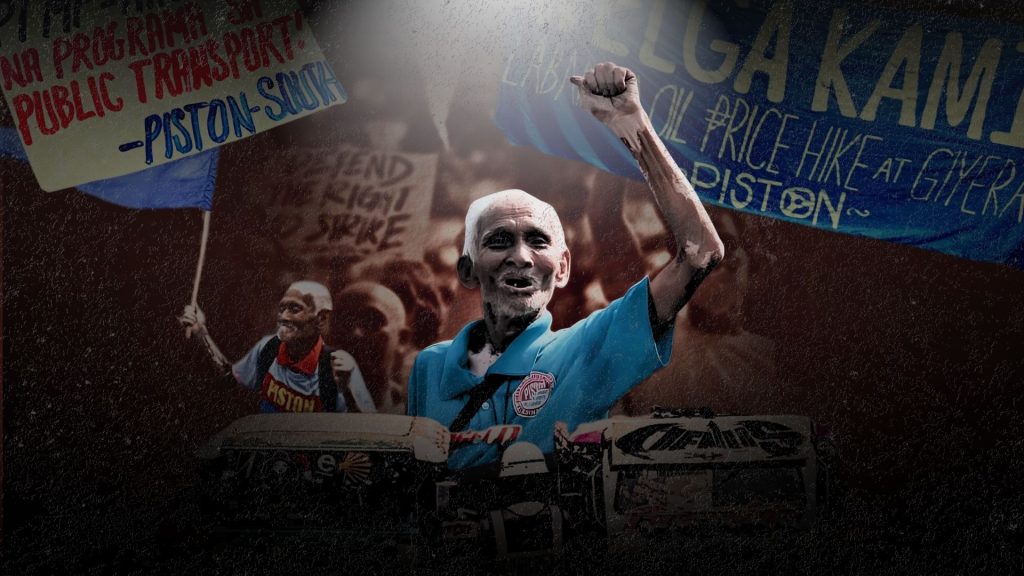
But vocabularies are not static. The 1980s’ emphasis on “freedom” and “democracy” reflected the era’s unfinished struggle against dictatorship. Today, different words come to the fore: “jobs,” “climate,” “rights.” Rather than diminishing the older lexicon, these newer terms extend it. They reveal how protest agendas have become interlaced: labor with environment, gender with economics, history with governance. When jeepney drivers rallied in 2021 against the modernization program, their signs carried both the immediate demand for livelihood and critiques of systemic inequity. “We’re not against modernization, what we are against is the system,” one placard read—a slogan that compressed layers of economic, cultural, and political tension into a single line.
Language adapts not only in content but also in form. Under Martial Law, humor circulated in whispers, its subtlety a shield against censorship. Today, the same instinct reappears in memes, TikTok skits, and livestream captions. A clever pun on a placard can migrate online within minutes, gaining reach far beyond the protest perimeter. Far from trivial, these digital mutations keep protest speech legible to younger publics. As political sociologist Nicole Curato observes, the migration of dissent into online platforms does not dilute deliberation but diversifies it, multiplying the spaces where critique can appear.
The overlap between physical and digital is now routine. Students marching in climate strikes or academic walkouts carry placards while simultaneously broadcasting hashtags. The chant becomes both sound and signal, reverberating across streets and timelines. In this sense, protest discourse is no longer only oral but hybrid, layered across formats: spoken, written, and streamed.
Across decades, what endures is the recognition that language in protest is not ornamental but instrumental. A slogan is not merely an expression but a condensation: an argument shrunk into rhythm, a demand compacted into a phrase. From Martial Law’s whispered slogans to jeepney drivers’ layered critiques, from chants on campus steps to viral protest memes, dissent has always required economy of language. In that economy lies its force. The capacity to be remembered, repeated, and reassembled across generations.
Rallies as living archives
Each rally is also an archive—ephemeral yet enduring, fragile yet alive. The Human Rights Violations Victims’ Memorial Commission reminds us that memory is not confined to museums or monuments; it is carried in the bodies walking side by side, in survivors narrating pain into microphones before students who inherit their vigilance. At every march, testimonies travel further than books or plaques can: the cadence of a voice, the tremor in a survivor’s hand, the silence that follows a name spoken into the air.
Rappler’s coverage of the 50th year of Martial Law made this plain. Survivors stood before crowds in Mendiola, in Quezon City, in provincial plazas, telling stories not as relics of the past but as instructions for the present. They spoke of cells without windows, interrogations disguised as “tea parties,” of years lost to detention. Their voices rose above placards and chants because they refused to let memory be confined to the brittle edges of history textbooks. To listen on those streets was to feel history refuse ossification: alive, uncomfortable, insistent.
But archives are precarious things. Surveys by WR Numero in 2023 found that while 56.5% of Filipinos said they viewed Martial Law positively, over 20% held the opposite view, and nearly a quarter admitted uncertainty. Those numbers reveal more than opinion—they show the vulnerability of memory itself, frayed by decades of revisionist rhetoric and amplified by algorithms that privilege spectacle over fact. In this climate, rallies function as counter-archives. Every chant competes with a TikTok clip, every testimony against a Facebook post. The streets become classrooms where memory collides with myth, and where remembrance is both a struggle and a performance.
That tension is also generational. In 2024, during a Bantayog ng mga Bayani event hosted by the Bedan Advocacy & Consciousness Enhancement Society, survivors recounted their ordeals before students who had only ever encountered Martial Law as a contested page in a textbook. The students did not merely listen; they documented, recorded, and asked questions. Exhibits of yellowing newspapers, faded photographs, and legal documents sat beside the speakers, extending their stories into physical reminders. In these exchanges, the archive moved from static monument to breathing practice: history kept alive in the intergenerational act of storytelling.
And it is often the smallest gestures that carry the most weight. A grandmother holds aloft a placard bearing her brother’s face. Children chant names of desaparecidos they never met, the syllables heavy in their young mouths. Torches are lit, prayers are whispered, songs are sung. As Rappler documented in 2022, such rituals collapse time: the dead appear to march alongside the living, and grief is transfigured into resolve. What might look like mere repetition is in fact rehearsal, a way of ensuring that democracy is practiced, not simply possessed.
To call a rally an archive, then, is not a metaphor. It is literal: every body on the street is a vessel of memory, every chant a line in an ongoing chronicle, every placard a page in a history still being written. These archives are not kept behind glass but enacted in motion. And because forgetting is always possible, the act of marching, chanting, and appearing becomes as vital as the archive itself.
Democracy in the Philippines has never been a finished monument. It is a rehearsal, renewed each time bodies return to pavement. The archive lives not in stone but in footsteps, in voices raised together, in the fragile but enduring conviction that to remember is already to resist.
The anatomy revisited
To dissect a rally is to confront multiple anatomies at once: the choreography of bodies in motion, the architecture of emotion, the compressed vocabulary of the street, the fragile archive of memory. A rally is an organism scarred by Martial Law, reshaped by each generation, adapting to crises as they come.
Authorities often dismiss rallies as obstruction, as noise, as wasted time under the sun. Yet to stand at one is to hear democracy’s pulse. The chants that ricochet off the flyovers of EDSA, the placards lifted against the Cebu sky, the songs that break out in Davao’s humid streets. These are not accidents of noise. They are echoes of generations who refused silence, who learned to turn grief into demand, absence into presence.
Across the archipelago, the geography of protest folds into the geography of the nation itself. In España, students march ankle-deep in floodwater; in Negros, sugar workers’ widows hold portraits of the slain; in Cagayan de Oro, climate strikers sit cross-legged on asphalt as jeepneys rumble by. Each is a fragment, but together they sketch a map of insistence: fractured yet resilient, bruised yet unwilling to vanish.
The anatomy of a rally, then, is the anatomy of the Philippines itself. Its heartbeat may falter, its voice may be drowned out by engines or algorithms, but it endures endlessly, rehearsing its right to be heard, its right to appear, its right to exist.





