









Now Reading: Thinning isn’t always winning
-
01
Thinning isn’t always winning

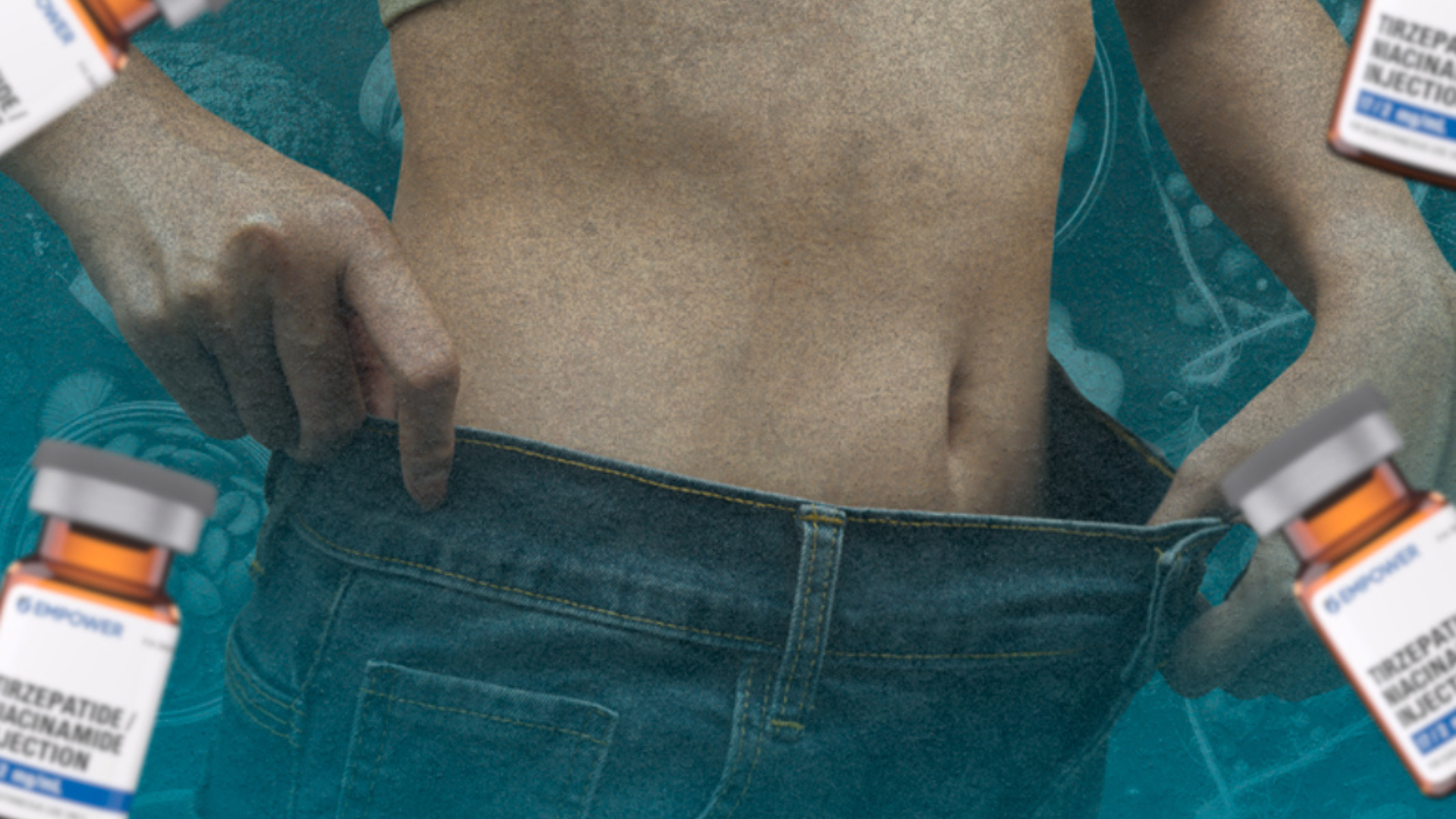
Social media has altered our standard of beauty and health. It strips away personality that pushes us to relentlessly chase a standard that will never be met – fair skin, thin body, and barbie arms. However, in this era where thin may be credible, perhaps, it isn’t always a win.
Pre-pandemic data from the World Health Organization (WHO) revealed that obesity stands as a public health crisis with more than a billion people who are obese in nearly every nation and prevalence of obesity marked at 11% for men and 15% for women, a systematic review said. But, some things changed; the pandemic encouraged healthier habits. From diet to changing sedentary habits, studies have shown a pattern of positive changes prompted by lockdowns. This shows behavioral changes in seeing weight beyond beauty and aesthetics but the foundation of a healthier body.
Come 2023 when weight loss medicines caught fire, so much so that Science named glucagon-like peptide-1 (GLP-1) drugs 2023’s breakthrough. Known as GLP-1 agonists, these drugs for diabetes mimic the GLP-1 hormone that triggers insulin release. Its key function is appetite suppression, making an impression of feeling full to induce weight loss. Additionally, in an article released by Philippine College of Endocrinology, Diabetes, and Metabolism, the landscape of diabetes management changed with GLP-1 agonists, the author, also stressed that while some things in life may sound too good to be true, “tirzepatide may be the exception”
Common GLP-1 drugs include brands such as Ozempic and Mounjaro, with generic names Semaglutide and Tirzepatide, respectively. Oprah Winfrey, Kate Winslet, Lizzo, and Eric Stonestreet are among international stars who admitted they are on said medications.
In the Philippines, Ozempic and Tirzepatide have gone viral on TikTok, explaining their weight loss journey under that medicine. There is no apparent threat in this, but the real danger lies when it is merely reduced as a cosmetic accessory.
What people often overlook is the fact that medical doctors prescribe GLP-1 drugs after thorough assessment, not simply out of gut, feeling, or fervor of losing weight. It is neither meant to be a supplement or a beauty product, nor it is something that is recklessly recommended as if it is just a piece of candy.
In the UK, 82 deaths were linked to GLP-1 agonists, 22 of them targeted for weight loss, and 60 for treating type-2 diabetes. The first case in the UK tallied when a 58-year-old nurse succumbed to death after two doses of injections of tirzepatide. Although the medication was medically prescribed, her death certificate noted “the use of prescribed tirzepatide” as a contributing factor.
However, blaming people who use it won’t change anything, raising awareness and medical literacy does. People who gave in to these medicines without seeking medical advice could have also fallen off the shining and shimmering advertisement and promotion that values profit over public health. Insidious campaigns creep into people’s desperation when the market sees health with a price tag.
All of these seem to repeat themselves from the 90’s. In the pursuit of chasing desires, rather unconventional medication was born: the rainbow pill. It is composed of amphetamines, diuretics, and laxatives, said to induce weight loss. Despite its bright color, things turned gray when a series of deaths were linked to it, eventually leading to its removal from the market.
Ultimately, these weight loss regimens are making their way back to the market, in the guise of everything, but safe drugs. At the end of the day, any drugs, used without supervision or medical intervention, is far less from treatment. It disregards healthcare and practices harm, rather than healing.
History sure has an awry past with foods and fats, even linking it to simply lack of discipline and willpower. This positive toxicity that you can be fit just because you are disciplined is far from reality. This is better explained by food insecurity where individuals lack access to safe and nutritious food to sustain a healthy living. The Philippines is a food insecure country, harboring its food resources from imports. It is ironic that an agricultural country juggles itself from uncertainty of healthy food on the table. In the very essence, food insecurity is not simply inability to eat food, it is taking away nutrition from every bite we take. Additionally, it also requires stronger food policies to curb obesity in the country such as improving labelling standards, tighter marketing and advertising laws, and regulation for sugary and processed foods.
Hence, it takes more than just willpower to lose weight. As defined by WHO, obesity is a “chronic, relapsing disease” that arises from genetics, behavioral patterns, and broader environment. Losing weight is largely influenced by biological, psychological, and environmental aspects. Proliferation of misinformation may eventually lead to body dysmorphia, a mental health condition that eats up one’s confidence and is replaced by excessive worrying on their appearance.
Social media standards have wrecked perception of ourselves, specifically women, as reflected in a survey with most females and young adults 18-24 using such medications. True to itself, it is still reflected on how we treat health that we’re still in search of the “perfect, magical, instant” weight loss savior.
Truly, self care is part of becoming, adulting, and living life – meditation, bathe using our favorite body wash, make our breakfast, and take a simple walk or jog to keep our body fueled. It keeps us excited waking up and gives us confidence whenever we look at the mirror. While it holds true that we value self autonomy, when it risks health, there is a need to raise awareness about it.
If it reaches to a point that it puts our health at risk, it is no longer self-care, but neglect. Using such medication without consultation is not control or empowerment, but a gamble on health. We cannot wager our organs, our body, our sanity in exchange for the glory of thinness. Afterall, a better version of oneself is neither compromised nor threatened, but one that is responsibly pursued and sustained by health.