



Now Reading: Why Lady Bird feels like looking in the mirror
-
01
Why Lady Bird feels like looking in the mirror

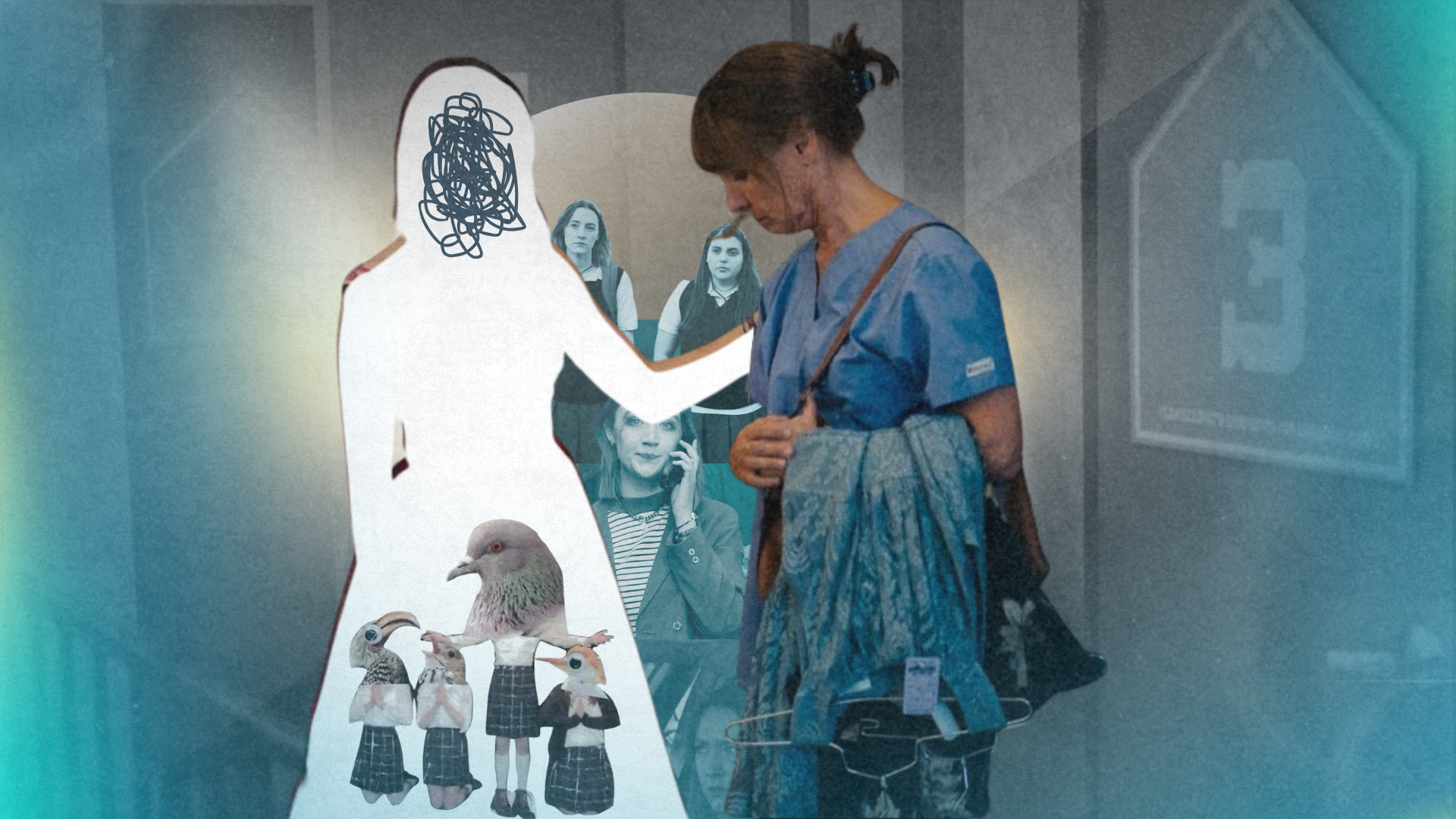
Have you ever desired to escape? Not just from a certain situation, but from the person who shaped you and the hometown that never felt like you belonged?
When we were younger, and perhaps still do, some of us often dreamed of leaving our hometown, as if stepping outside would finally make us someone else. As scary as the unfamiliarity would be, we often think it would be better than the familiar streets and the weight of people’s expectations that come with them.
If any of this resonates with you, then the film Lady Bird might hit deeper. A solo directorial debut from Greta Gerwig, the film receives countless compliments as it deeply connects with audiences by capturing some of the most realistic coming-of-age struggles of a teenager, particularly focusing on the intense mother-daughter relationship.
The self-absorbed and impulsive protagonist, Christine “Lady Bird” McPherson (played bySaoirse Ronan), embodies the daughter who makes foolish decisions while trying so hard to look cool and fit in, perfectly nailing the quintessential angsty teenager.
More than just the constant bickering with her mother, the film dissects an authentic portrayal of a young adult struggling to find her own identity through its exploration of subtle elements and scenarios that embody powerful symbolisms, making it feel so raw and sincere.
Sometimes, leaving feels like home
Some of us live in houses that never quite become homes. Within their four corners, the warmth we long for is nowhere to be found, replaced instead by a quiet weight that becomes our only form of comfort.
“Do you think I’m from Sacramento?”
This initial dialogue comes from the protagonist screaming about how badly she wants to be dissociated and untied from her birthplace.
Her mother, Marion (played by Laurie Metcalf), being as dismissive as she is, flippantly responds, “You are from Sacramento,” indirectly stating that there should be nothing to be ashamed of. Following this is a scene where Lady Bird and Marion are inside the car on their way home after visiting colleges on the East Coast. In a blink, they shift from bonding over music to arguing about universities.
As Lady Bird expresses her desire to go somewhere where “culture” is, such as New York or somewhere on the East Coast (an idea her mother immediately dismisses), Marion encourages her to attend a local, more affordable state school like UC Davis. The scene shifts into a heated quarrel, voices sharp and restless. The air feels heavy, and the tension between them increases. In that sudden weight, the protagonist, already exhausted from all the constant brawling, makes an impulsive act of jumping out of the moving car.
The weight of Marion’s voice isn’t just the effect of her yelling, but carries a heavy control that drives Lady Bird’s silence, which transforms into fire and rebellion. Even without directly stating the words, one thing is certain: she is not only trying to escape her birthplace but also the invisible walls built by her mother’s suffocating control.
While Marion’s love is crystal clear, it’s often expressed through harsh criticisms, making it hazy and sometimes invisible. From the unnecessary remarks about her child’s weight and appearance to life decisions and her voice, though perhaps intended to push Lady Bird toward “the best version of herself,” these comments seem to have had the opposite effect on her growth, acting less like encouragement and more like a constant barrier she desperately wants to escape.
The dad we all wanted to have
In contrast to Marion’s personality, Lady Bird’s father, Larry (portrayed by Tracy Letts), embodies the personality of one’s dream dad. A loving, understanding, and kind father figure who quietly shields his children from his own burdens, such as depression and unemployment.
Often seen as the ‘Mr. Nice Guy,’ he is the type of father who keeps giving, even when he has already run out of things to offer. Contrary to big gestures, he plays his role beautifully by making the audience yearn for a father who would readily take out loans and secretly help his daughter with college applications.
This dynamic between him and Lady Bird serves as a silent compass, allowing the protagonist to navigate her own path while he quietly works behind the scenes in his own way. Watching Larry reminds us of the quiet people in our own lives who carry burdens silently yet still manage to offer support. It makes us realize how often we overlook the quiet love that doesn’t ask for recognition but keeps us moving forward anyway.
Christine Lady Bird’s autonomy
A symbolism that deserves to be highlighted in this film is the way Lady Bird resists conforming to the identity given to her by her parents and society. This can be seen when she auditions for a theater play and is called by her birth name, Christine, where she promptly corrects the casting director by asserting, ‘It’s Lady Bird.’
The exchange that follows:
“Is that your given name?” the director inquires, probing the unusual moniker.
Lady Bird’s response is both confident and telling: “Well, I gave it to myself. It’s given to me by me.”
This self-naming act is her own way of telling people that she’s still a work in progress, that she is indeed her own self, and no one can take that away from her.
This was only one of the few scenes wherein Lady Bird makes a powerful declaration of her identity. Not in a big, scandalous way, but rather as a quiet affirmation. And you must also notice: whenever she’s arguing with her mom, Marion always uses her birth name, as if she’s emphasizing the divide between their contrasting visions for Lady Bird’s future.
Lover’s lover
When Lady Bird’s first love interest, Danny O’Neill (Lucas Hedges), reappears after she caught him kissing another man, it shows a different side of the protagonist. Even when their relationship did not end well, as it involved cheating, when Danny whispers and begs her to keep his secret of being homosexual, Lady Bird’s response leaves both him and the viewers in awe.
Danny’s vulnerability shatters Lady Bird’s tough facade. Witnessing his fear, she readily promises to keep his secret. As he leans into her, sobbing, she holds him. While his sobs intensify, she remains still, absorbing the “unusual idea” of Danny being homosexual.
The scene shows Lady Bird’s growth, hinting that even a character who’s initially portrayed as selfish and self-absorbed can gradually understand and connect with the world around her, considering other people’s feelings for once.
How privileged people perform
Enter Kyle Scheible (Timothée Chalamet), a character who encapsulates the pretentious intellectual. His aloofness isn’t just stated; it’s performed in the way he leans against a wall, cigarette dangling, delivering lines about criticizing cell phones while using one, also referring to himself as opposed to consumerism while his actions sometimes betray his stance.
This contradiction between his words and his reality highlights a somewhat performative perspective, especially when he truly comes from a well-off family.
She got away
Greta Gerwig masterfully nails the film’s ending by bringing Lady Bird’s journey full circle upon leaving her hometown. Not to further the drama between her and her mother, but rather for Lady Bird to finally realize and embrace her appreciation and love for her parents, particularly her mother, whom she often rejected.
As Lady Bird tries to settle down in her new dorm, in an unfamiliar place, she discovers an envelope Larry had tucked into her luggage, containing handwritten letters from her mother. There are many crumpled pages, as if Marion was trying to write the perfect letter that could ever exist.
As her father explains, Marion hadn’t given the letters to Lady Bird for fear of any errors that might lead the protagonist to judge her writing abilities. But those salvaged letters finally open the protagonist’s perception, as if she finally understands her mom for the first time. After many years of bickering and miscommunication, she finally has an idea of what her mom truly thinks of her, with
Marion finally addressing her as Lady Bird, not as her expectation of Christine.
Also, one noticeable and important thing to appreciate about those letters is the header: Marion finally using “Dear Lady Bird,” as if acknowledging and accepting her daughter.
This also leads to a powerful scene where Lady Bird attends a party and, for the first time, introduces herself using her birth name, Christine. Although, in true Lady Bird fashion, among the first items checked off her bucket list is a hospitalization due to excessive alcohol consumption (a common experience for freshmen and a part of the “culture” on the East Coast).
Yet, after getting drunk and being hospitalized, Lady Bird decides to attend Sunday Mass. Afterward, she calls her parents, and finally having the courage, she utters the words her mother longed to hear:
“Hi, Mom and Dad. It’s me, Christine. It’s the name you gave me; it’s a good one.”
It’s a subtle way of saying that she finally accepts her identity.
Becoming Lady Bird
In the end, Lady Bird feels like more than just a coming-of-age film. It feels like looking in a mirror we didn’t know we were staring into all along.
Greta Gerwig successfully shows that growing up isn’t just about running away from home, but also
learning to see it differently once we leave. It reminds us of the stubbornness, the reckless choices, and the yearning to escape, but also the quiet love that lingers beneath misunderstandings.
Like Lady Bird, may we all come to realize that one’s identity is not just given but also chosen. And sometimes, it’s also shaped by the people we resist and the places we once wanted to run from. Because maybe the most honest picture of growing up is not rejecting where we came from, but finally accepting it without caging ourselves to be defined solely by it.