





Now Reading: Why the heart keeps chasing the “almost”: People’s attraction to confusing love isn’t just for the plot—it’s psychology.
-
01
Why the heart keeps chasing the “almost”: People’s attraction to confusing love isn’t just for the plot—it’s psychology.
Why the heart keeps chasing the “almost”: People’s attraction to confusing love isn’t just for the plot—it’s psychology.


The first time I met him, I didn’t even bother to think—rationality simply slipped out of my skull.
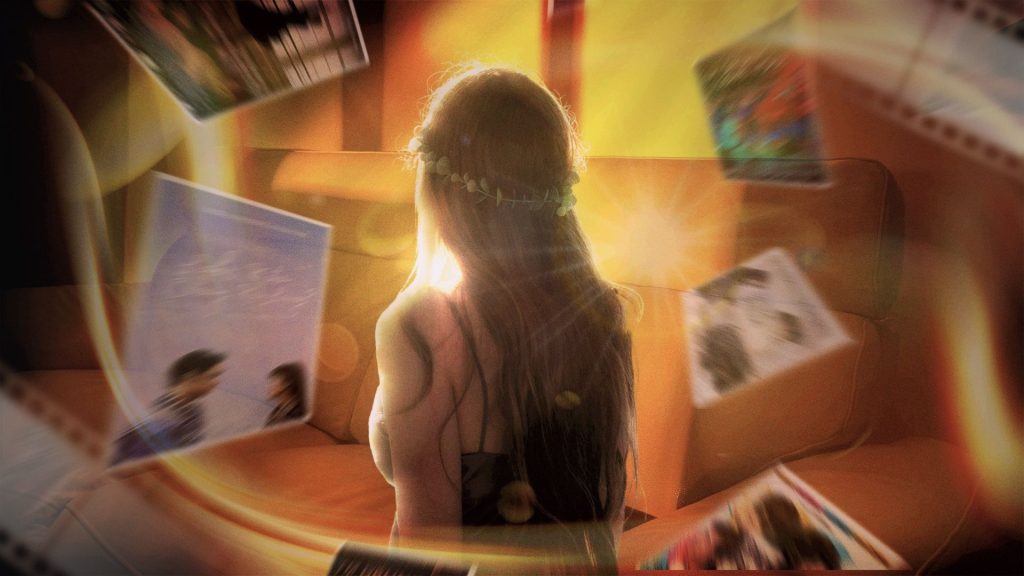
I barely noticed how my stomach churned as if the butterflies inside were racing for a finish line. His smile felt like an invitation into the wild with no warnings and no instructions—and suddenly, I understood how easy it is for the heart to run toward anything that resembles warmth and sunshine.
Like anyone else, I wanted to love and to be loved.
But also like everyone else, my mother never taught me how to save myself from drowning in a love I tasted for the first time—with the wrong person, at the wrong moment, and under the most confusing circumstances. It felt like riding a rollercoaster while staring at him and listening to his deep, alluring voice.
He was the kind of boy who made uncertainty feel romantic. One glance across the room felt like an unhinged promise, one reply felt like a breadcrumb, and every mixed signal felt like a reward I needed to earn to claim the grand prize.
And the grand prize was always him and his attention. There was a thrill in chasing someone who never clearly chased back: like following a map with no coordinates but still hoping for a destination.
But at the end of the day, what was there? Nothing.
A heart that chases arrows rarely finds a landing place.
That’s when the questions began. I knew I deserved clarity. I knew the situation wasn’t healthy.
So why was I still here? And why did it feel like almost everyone my age was doing the same thing?
The Mind of a Rollercoaster Love
Older generations often look at us with bewilderment. They learned love through direct courtships, handwritten letters, and clear intentions. Meanwhile, we built an entire vocabulary for “almost” relationships: situationships, talking stages, mutual understandings, mixed signals, ghosting, red flags, and love bombing. Love became less steady and more thrilling. It became less defined and more addictive.
The real question is: why does my generation gravitate toward confusion instead of stability? Why do hearts that crave love find unpredictability so irresistible?
When I tried to understand my own choices, I realized that science—particularly psychology—had been quietly explaining everything I felt.
Neuropsychology offers insight into why confusing love feels so intense. Psychologist Dr. Maika Steinborn explains that many people today confuse love with infatuation. What we often label as “love”—especially the confusing, inconsistent kind—isn’t love at all. Steinborn refers to it instead as the romantic pursuit.
Unlike love, which is shared and nurtured, romantic pursuit is about chasing. It is about longing for something just out of reach.
Therefore, I realized that I wasn’t loving him.
I was just pursuing him.
This kind of confusion often happens when we mistake potential for connection, or attention, for affection. According to the National Institutes of Health (NIH), inconsistent love mirrors the neurochemistry of gambling. It activates the brain’s reward system, flooding it with dopamine—the chemical in our brain responsible for pleasure, motivation, and desire.
Dopamine isn’t happiness itself. It’s anticipation. It’s the rush that tells your brain, “This is so good, so addicting. This might be worth it so let’s try again.”
So when affection finally arrives after periods of emotional distance or mixed signals, the reward feels overwhelming. The brain starts craving the high, not the relationship.
Slowly, uncertainty becomes intoxicating.
Thus, this inconsistency works like a slot machine: you never know when the reward will come, which makes it more addicting when it finally does. The cycle of neglect and affection trains the brain to wait, hope, and endure.
This is what psychologists call the push-pull mechanism. It is a loop of rejection, obsession, and temporary reunion. The emotional whiplash creates intensity, which we often mistake for passion or chemistry.
But his stare and touch’s intensity is not intimacy. And confusion will never be love.
Attracted to Red Flags Since Birth?
For the longest time, I blamed myself for being drawn to his inconsistency. I told myself I was broken—incapable of loving and being loved the right way. I believed that if he never chose me fully, it must have meant I was never enough to be pursued.
But I was wrong.
Because all along, it wasn’t solely my fault.
Psychotherapist Joe Hudson explains that confusing love is often conditioned, not chosen. It is shaped through early life experiences, societal expectations, and emotional survival patterns that teach us to associate intensity, inconsistency, and emotional highs and lows with affection. In other words, what feels familiar to us doesn’t always come from desire. It often comes from conditioning.
As children, we love our parents instinctively. We need their care, their approval, their presence—not just emotionally, but for the sake of survival. So whatever form of love or connection is available to us, it becomes our only blueprint and standard.
If love came inconsistently—sometimes warm, sometimes distant—we learned to adapt. We learned to wait, to perform, to chase. And our bodies learned that this must be what love feels like.
Over time, survival and instinct often gets mistaken for affection.
So I know right here and right now that now that I have grown a little older, I didn’t just fall for him randomly. I was drawn to someone who mirrored what my nervous system already recognized as love. And love is programmed inside my brain as unpredictability, emotional distance, and moments of closeness I had to earn.
Hudson explains that this conditioning affects us deeply in adulthood. It shapes who we are attracted to and what we tolerate. The things we believe we must do to be loved—waiting, enduring, proving, shrinking—become the very things we reenact in our relationships.
We don’t chase people because we lack self-respect. We chase them because our bodies believe that love requires pursuit.
That’s why telling someone to “just love yourself” often feels impossible. If love was never modeled as something safe, consistent, and freely given, how could we suddenly know how to give it to ourselves?
Understanding this didn’t erase the pain, but it softened the shame. I wasn’t addicted to red flags because I was broken. I was repeating what I was taught—what once helped me survive.
And maybe healing doesn’t start with blaming ourselves for the patterns we fell into. Maybe it starts with recognizing that confusing love was never love at all—it was familiarity asking to be unlearned.
When the Heart Learns to Stop Chasing
The first time I met him, my heart ran without thinking. It chased warmth, sunlight, and the promise of being chosen, even when there were no directions and no guarantees. I mistook speed for certainty, intensity for intimacy, and motion for meaning.
But I am beginning to understand now that not everything that makes the heart race is meant to be followed.
Some loves are rollercoasters because they were never built to arrive anywhere. Some butterflies are not signs of safety. They are signals of alarm we were never taught how to recognize.
And some invitations into the wild are not adventures—they are warnings we didn’t know how to read at first.
I didn’t stay because I was foolish. I stayed because chasing felt familiar.
Because my heart had learned, long before him, that love was something you ran after, something you earned, something you waited for at the finish line.
But clarity should not feel like a prize. Love should not feel like a test. And warmth should not disappear the moment you stop chasing.
So maybe the question is no longer why I stayed.
Maybe the better question is why we were taught to confuse chaos with connection in the first place.
And maybe healing begins not when the heart finds someone new to chase, but when it finally learns how to stop—how to breathe, how to choose stillness, how to land somewhere safe.
This time, if love comes again, I hope it doesn’t feel like a race.
I hope it feels like home.