




Now Reading: Under a spectrum aglow, a poem is to be known
-
01
Under a spectrum aglow, a poem is to be known


Kyla Edquilane
Humans may be understood as living forms of poetry. Like a written verse, each person bears meaning to the eye and layers yet to be unveiled. Poems may be bound by meter and rhyme or maunder freely beyond structure — and so too do humans exist in a plurality of thought, feeling, and response to the world, shaped by the innumerable hues of our neural architecture.
Every third week of January, the Philippines draws consciousness to the beauty of a free verse wrought by distinctive ways of behaving, perceiving, and socializing with others. National Autism Consciousness Week, an annual observance cultivating benignant awareness of Autism Spectrum Disorder (ASD), unfolds on its 30th year beneath the banner of “Mula Kamalayan Tungo sa Gawa: Pag-unlad ng Autism-OK Philippines” (“From Awareness to Action: Developing an Autism-OK Philippines”) raised by approximately 1.2 million Filipinos wired within the spectrum.
At the pulse of its advocacy, this year’s keeping resolves as a poem penned in joint becoming. It invites us, as readers, to perpend the lines of the poem’s dream, heed the voice from which it is composed, and thereupon rewrite a more inclusive society for those whose stories it undertakes to dignify.
Ripples of metaphor
What is autism? For those who have never felt its cadence firsthand, how can it be conveyed so as to venture past the clinical and reach the heartbeat of lived experience?
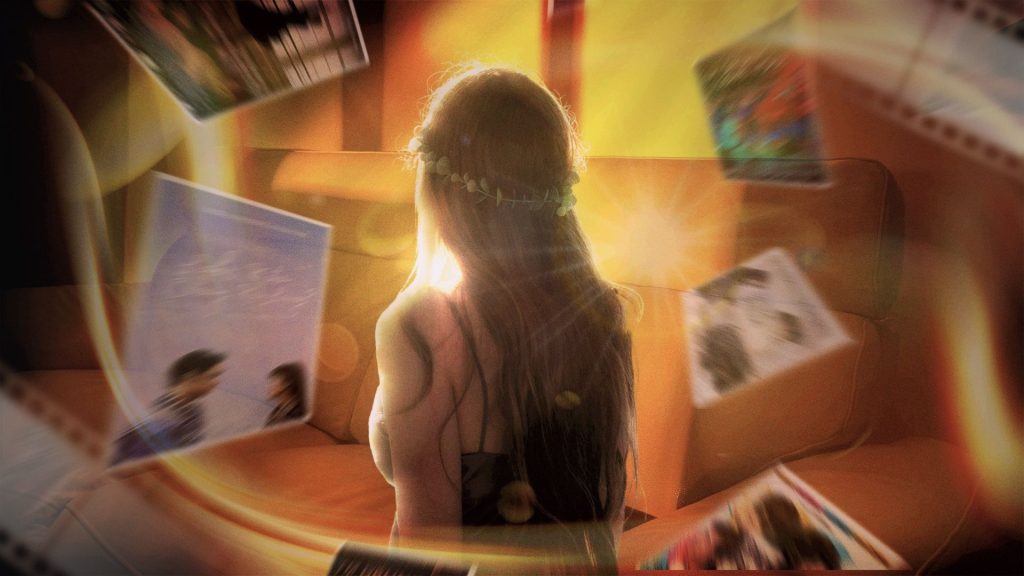
One might come to see that autism is a metaphor written into the margins of life’s book — a breaking-away grammar of being that reshapes the way the tale is told. It is a prism: where the world radiates as a single, unremitting beam to those at large, it is refracted into manifold intensities for those on the spectrum. Sometimes, sounds grow sharper, textures speak louder, or patterns crystallize with unmistakable clarity — or all of these at the polar end. It is a different tempo. Processing social, sensory, emotional, or informational input may require augmented support, while focus, routines, and areas of interest may steadily accentuate over time.
As rendered through metaphor, autism is not a flaw in language but an expansion of it; it affirms that multiple modes of interpreting, depending, and belonging coexist within the same shared reality.
A tender paradox
Autism itself is a paradox of strength and struggle. It is factually and markedly regarded that autism is associated with executive dysfunction, which makes navigating change, transitioning between tasks, or inhibiting ingrained responses more complex. Nevertheless, emerging research also suggests that the same neurological configurations may foster heightened persistence and acute attention to detail. This enables individuals to immerse themselves deeply in a skill or concept toward astonishing levels of mastery, and wherefore explains the remarkable aptitudes often observed in people with autism in domains such as memory, visuospatial processing, music, arts, or mathematics.
The recognition that repetition and reduced cognitive control can nurture creativity prompts us to reconceive traits long confined to the nomenclature of limitation. We are, thus far, somewhere midway in learning to hold both sides of this radical paradox at once — yet we gain a mile forward by reorienting our perspective from the hurdles neurodivergent individuals face to the avenues where they flourish most fully.
Personification made humane
This week, our screens awaken with paragraphs of poignant insights and truths that resonate in both mind and heart. It is imperative to internalize that this is a collective charge across government, institutions, families, and communities alike — a pledge to educate ourselves that must outlive the days of celebration and take root in how we personify the causes we so ardently champion.
A fact endures that even as the nation formally accepts developmental disabilities in its landmark statutes, extant health and disability policies remain ill-equipped to comprehensively serve the rights and needfuls of the neurodiverse population. Freestanding bills like the National Autism Care Plan are still in the pipeline. Hence, we personify empathy when we walk beside people with autism in their continuing quest of carving out a place in legislation. We personify flexibility when we extend our compassion to their families, who quietly shoulder immense labor and love. We personify receptivity when we seek to understand the professionals — speech-language pathologists, occupational therapists, and others — who empower these individuals to their fullest potential and autonomy. Above the rest, we personify awareness when it goes inseparable from the unlearning of misconceptions that have long triggered abashment and exclusion.
Autism is not a phase, nor is it an oversight in upbringing, nor is it a deficit of talent or purpose. In delineating what autism is not, we build a space to esteem what it is — it is but another wavelength of sensing, thinking, and communicating, with its own illimitable abilities and inherent brilliance.
In the closing of stanzas, we are urged to read the lines more patiently and carefully each day — analogous to meeting people where they are, not where society impels them to be. Living is an anthology, and humans live as a kaleidoscope of poetic expression — those on the spectrum simply redefine the wonder of ‘being’ made vivid by difference.