






Now Reading: EDSA Unfinished: A victory still being written
-
01
EDSA Unfinished: A victory still being written

1986 marked the start of the bloodless revolution, convincing the world that dictators could fall without a single bullet being fired.
But it didn’t die when Marcos left, only, it just gave birth to a system where the same type of people still get a spoonful of power while the streets bear the weight of the revolution’s promises that are yet to be fulfilled.
Half won
The EDSA Revolution successfully killed a dictatorship, but couldn’t kill what made it possible. 40 years after the dictator Ferdinand fled the landscape of power, the Marcoses remain in Malacañang despite the weight that their family placed on history.
They are seated over the shadow of their stolen wealth, amounting to approximately $10 billion. As it rests secured under false names in Swiss banks, it is proof that the EDSA revolution only won half the battle.
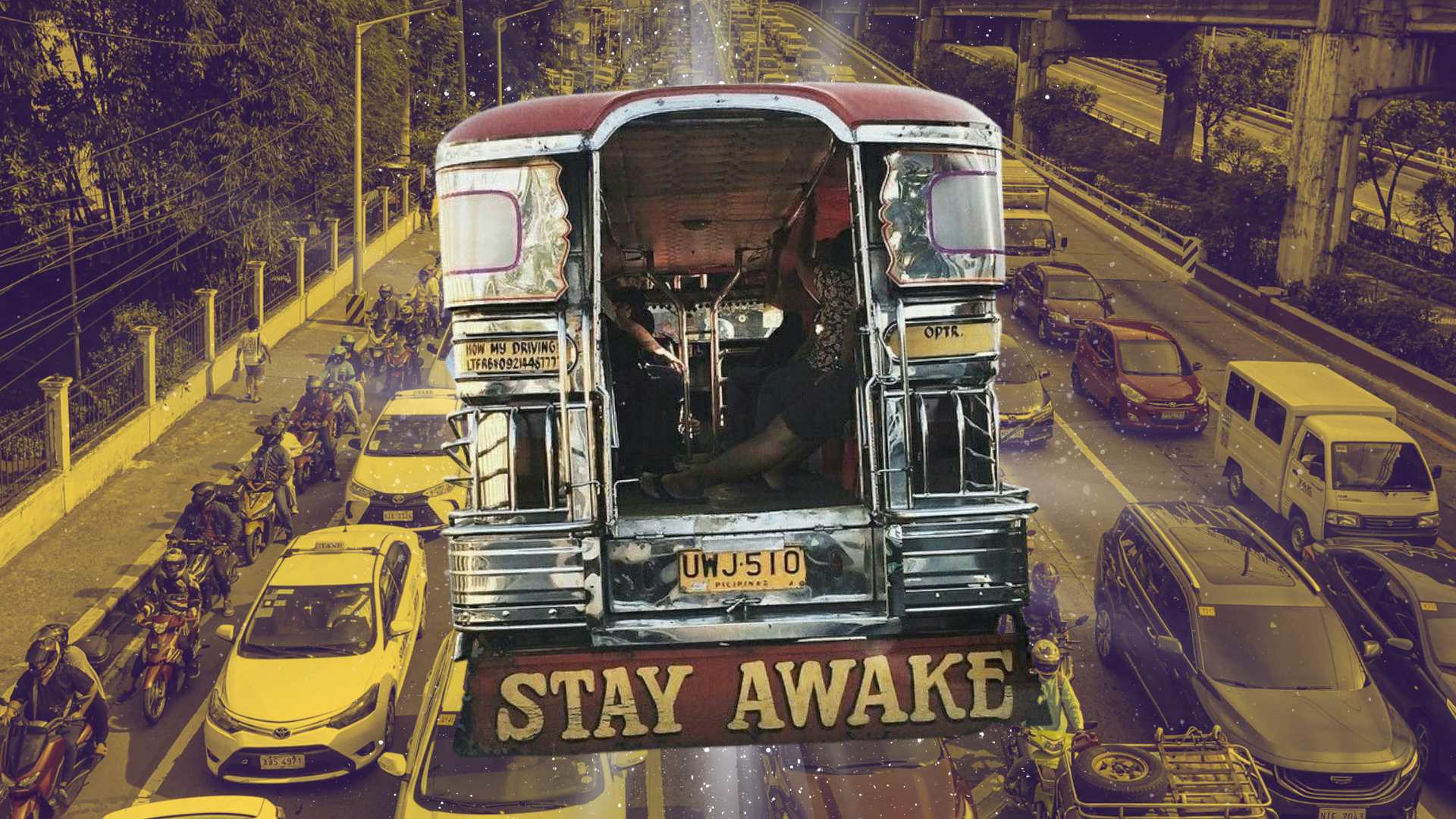
From February 22 to 25, 1986, Epifanio de los Santos Avenue (EDSA) gave Filipinos the chance to reclaim democracy. However, today, it is just another crowded highway that suffers from endless traffic.
But to understand what this road ended, we have to return to where it began.
Beginning of the end
Following the declaration of Martial Law by the former President Ferdinand E. Marcos, democracy was taken away. Marcos quickly closed the Philippine Congress, and power was placed in his hands.
As most newspapers were shut down, and Marcos’ major political enemies were jailed, it sent a clear message to anyone who was thinking of resisting his ideology. It only worsened as the Philippines had one of Asia’s worst human rights violations with:
- 3,257 known extrajudicial killings
- 34,000 cases of torture
- 737 disappearances
- 70,000 incarcerations
- 2,520 tortured and mutilated
Victims were electrocuted, beaten, raped, and even submerged in a toilet full of urine. Yet the pain was hidden behind denial. Marcos justified his declaration by pointing out the lawless violence of the Communist Party of the Philippines and the Muslim Independence Movement. Yet, he was the real threat to peace and order himself.
When the nation had enough
Fear of Martial Law had continued until it reached one tipping point: a bullet.
When Marcos’ most prominent opposition, Benigno “Ninoy” Aquino Jr., was assassinated, it was his death that caused outrage among Filipinos. With Ninoy’s proactive advocacy of overruling Marcos by denouncing the latter’s intent to build a garrison state, being critical of the administration’s overspending in infrastructure, and facing him head-on through running for president, Ninoy was Marcos’ nightmare come true.
In his death, more than one million Filipinos marched to mourn for 11 hours. His grieving wife, Corazon Cojuangco-Aquino, served as the fire to ignite a nation by being a powerful symbol of opposition through boycotting Marcos supporters, initiating peaceful protests, and launching a nationwide campaign of civil disobedience.
Marcos tried his best to win back the people and held a snap presidential election. However, he faced Corazon Aquino, a widow who had turned grief into a movement. She stood against the dictator with Salvador “Doy” Laurel as her running mate, despite her lack of political experience.
Though the election was known as the most corrupt and deceitful in Philippine history, as the count of the Commission on Elections and the National Movement for Free Elections showed great differences from one another.
Soon after, this discrepancy was the final straw for Filipinos, whose votes and voices can no longer be ignored.
Tank vs. rosaries
When Marcos’ Defense Minister, Juan Ponce Enrile, and Armed Forces Vice-Chief of Staff command Fidel V. Ramos, withdrew support, the revolt started. After all, as Enrile and Ramos headed institutions centralizing power, their withdrawal meant that the military was no longer united behind Marcos.
They barricaded Camp Crame and Camp Aguinaldo in preparation for an armed attack by Marcos, setting the stage for a standoff between a ruler and his people. It became clear to Filipinos that if even Marcos’ top generals were leaving, he was not invincible anymore.
The Church stood beside the crowd, urging believers in democracy to act. Radyo Veritas aired this call for aid, assembling thousands of Filipinos on the streets of EDSA. Nuns were kneeling in front of tanks, only carrying a rosary and faith in their hands. Decades later, though, nuns and priests empower Filipinos, once again, in rallies against corruption during the current administration, proving that they are as vital today as they were in 1986.
Ordinary citizens braved bullets, tanks, and the fear of tyranny. It all paid off, though, as
Corazon won, and Marcos was forced to flee, marking an end to years of dictatorship.
Same faces, new seats
Now, the dictator did fall, but the system that allowed people like him to rise is still standing. At the end of the revolution, many of Marcos’ cronies remained seated in power. And years later, political dynasties dominate not just local but also national politics.
The pain and trauma associated with Martial Law remain a burden many Filipinos continue to carry until now. Yet with another Marcos back in power, it raises the question of whether the lessons of the past have been fully remembered.
With how Bongbong Marcos garnered over 31 million votes in the 2022 elections, while his closest rival, then-Vice President Leni Robredo, got 15 million, it seems like the lesson was not clear the first time.
As Bongbong Marcos put it, “There may have been abuses, but they were never a part of the policy of my father’s administration. Although there were individual abuses, I cannot see how his administration per se can be liable for that.”
It’s a reminder that accountability from Martial Law remains unresolved, and why the work of EDSA is far from finished.
Even with democracy, Filipinos still rally to the streets for transparency and accountability because abuse and self-interest never left when the dictator did. At the end of it all, it is just another Marcos in Malacañang. In 2025, the Trillion Peso March was a movement for a fight against corruption, drawing thousands of Filipinos. As religious organizations also assembled for the same advocacy, it proves that People Power is alive in the streets, in the voices, and in the courage of Filipinos.
With the Trillion Peso March Part 3 set on Feb. 25, it’s a wake-up call for leaders that their citizens are watching and acting.
EDSA isn’t over yet
With another Marcos as the presidential head, Filipinos clearly gave the Marcoses another chance. Yet EDSA’s work continues – its purpose was never just to remove a dictator but to restore the people’s power.
Make no mistake: one wrong move now could bring the whole nation alive, just as EDSA once did.