







Now Reading: I-sisi
-
01
I-sisi

The youth is always told to clean up their own mess, it is supposedly to teach independence and responsibility. But when they act otherwise, there will be corrective measures. So why raise eyebrows when a nation is tried for failing to deliver justice? The Philippines isn’t any different. It is not too young to understand, just too prideful and immature to face accountability.
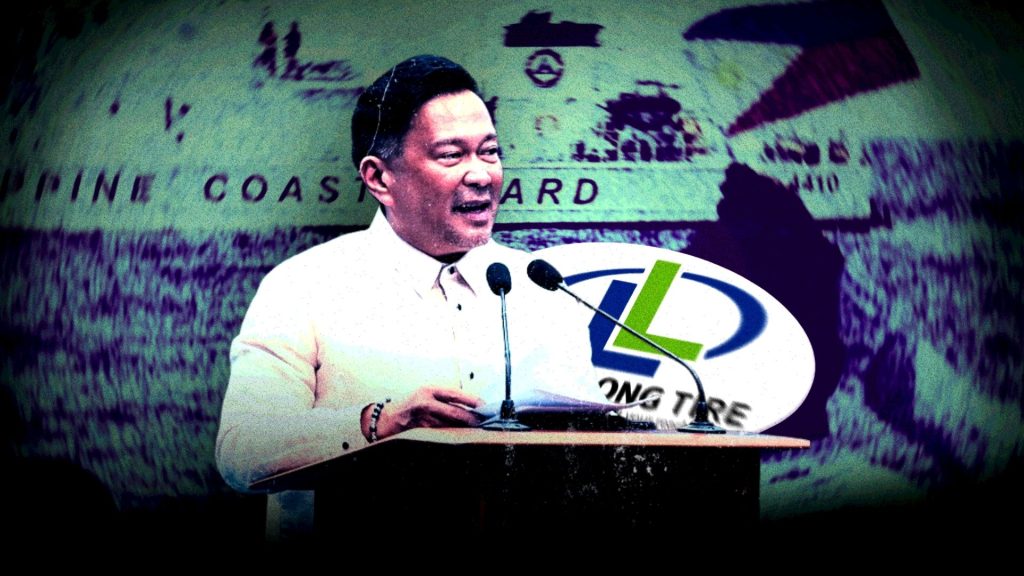
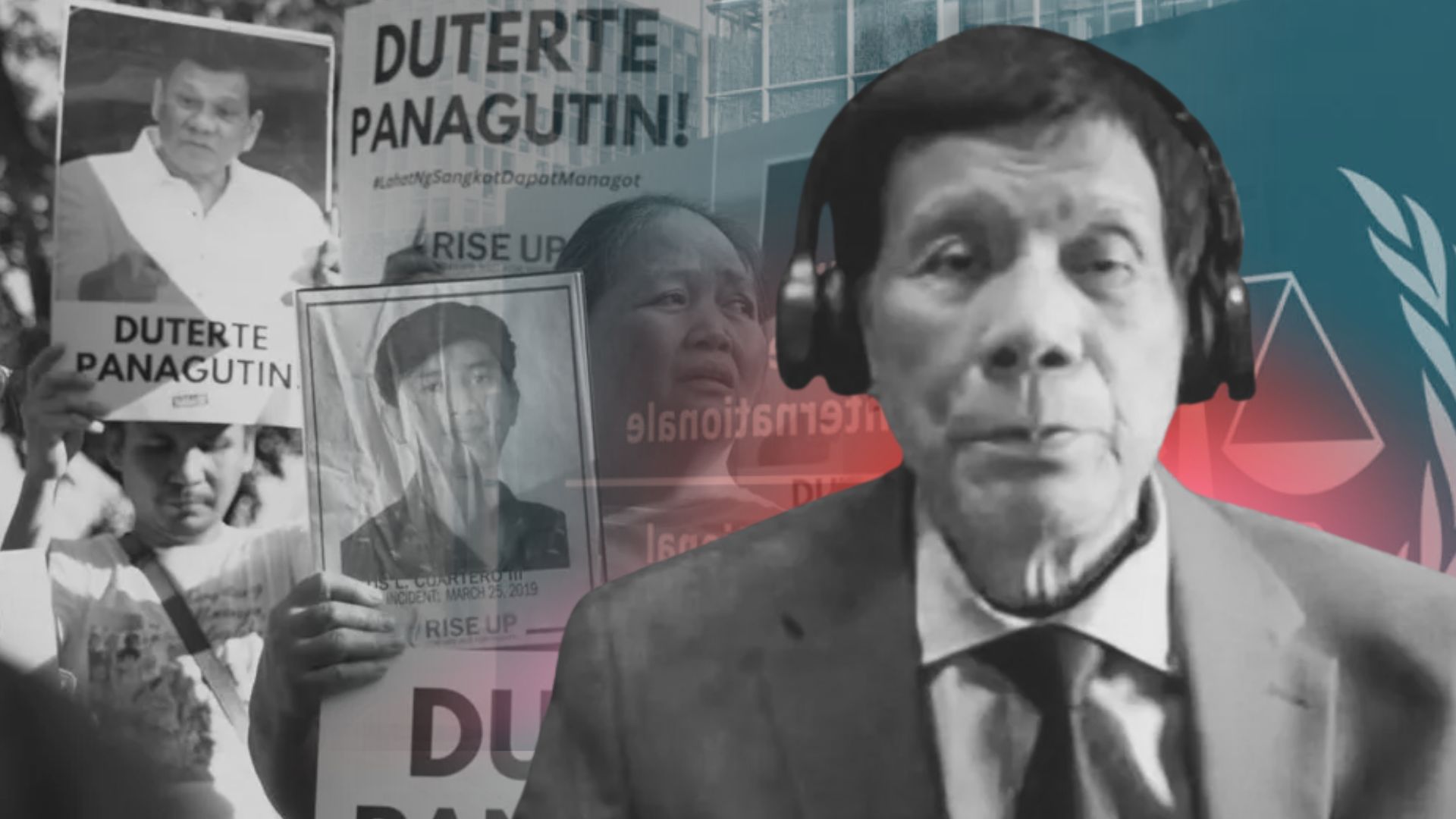
Days before Rodrigo Duterte’s confirmation of charges before the International Criminal Court (ICC) on February 23, the court named Duterte’s accomplices in the inhumane war on drugs. In the document released: “[They] shared a common agreement to ‘neutralise’ alleged criminals through violent crimes, murder.” Among officials named were Camilo Cascolan, Oscar Albayalde, Isidro Lapeña, Vitaliano Aguirre II, and members of the Davao Death Squad (DDS). Notably, Senators Ronald “Bato” dela Rosa and Bong Go were also pinpointed.
Fellow senator and Senate minority member Robin Padilla expressed his sadness for the fate of his two ‘friends’. Feeling depressed, Padilla worried who would accompany him as a Duterte supporter in the upper house. Additionally, he appealed to the government, noting that as a sovereign country, the Philippines should not allow Filipinos to be prosecuted by foreigners.
These kinds of arguments set off danger as they invalidate the veracity and legitimacy of the court to simply appeal to emotion. If he wants to be under Duterte’s thumb and be his lackey, then why not just say it instead of jeopardizing the quest for justice against Duterte? Clearly, his arguments are founded on personal feelings rather than legal and rational reasoning. The only thing shielding the Philippines and the acceptance of ICC trial is not a matter of sovereignty, but a matter of pride and delusions that Duterte cronies are perpetuating.
On another occasion, Senator Bam Aquino hinted that EJK cases must be litigated in the Philippines, as this is the place of the crimes. They say, “Justice is more meaningful where the crimes happened.” Unfortunately, this isn’t a fairytale. The laws of the land are fragile in holding the criminals accountable. Moreover, Antonio Trillanes IV also opposed Aquino: “This is personal to us na mga nag-file ng kaso; nag-alaga ng mga testigo; at nangalap ng mga ebidensya para [sa] hustisya na di maibibigay dito sa Pilipinas kahit gaano mo pa paikutin.”
While it is a valid point to consider that the Philippine justice system should be strengthened and improved to actually cater to its people, the statement is merely a political stunt for longevity. Perhaps Aquino learned the tactics to stay longer in power by dodging bullets, but it is as if he is courting both sides. “Senator Aquino’s statement, well-meaning as it may be, ignores the global implications of these charges and the fragile hope currently held by the victims’ families,” added lawyer Mel Sta. Maria.
The stance of the likes of Padilla and Aquino, though coming from different political alliances, erodes the trust people are supposed to give for a fair trial. This trial is a thin straw, perhaps the last, some families are desperately holding on to. Such remarks make it insensitive and inconsiderate to the lived experiences of Filipino victims of EJK. Their struggle for justice in the Philippines already seemed impossible, but the ICC gives them a chance to regain their dignity and truly uncover the truth behind the atrocities of the administration.
Whoever shares the same perception as them must realize that they cannot continue to demand that EJK cases be tried here because it was the very system that failed the victims and their families. It was the very system that ignored its people and praised the influential. When the jurisdiction was in the Philippines, they couldn’t even budge, let alone bring justice, but now they are arguing as if the Philippine justice system is all-encompassing. Stop the clownery. The law must not be weaponized for its loopholes, used for its convenience, or become a mechanism to free a monster.
In a nation whose power is clenched in violence and liability is a funny concept, whoever sets the agenda matters. The Philippine judiciary system is saturated with the influence of Duterte, his manipulative power, and his iron fist. Should the trials be held locally, the whereabouts of the victims, witnesses, and other figures can be easily identified, posing safety risks on their end. Also, the involved families here are from the urban poor; hence, they are more likely to give in to threats, intimidation, and extreme pressure.
Let us be clear. Just because Duterte is being tried in the ICC does not mean we are giving up our nation to foreigners; it would be more insane to give up the desperate call of the Filipino people. We have to be reminded that ICC is respectful of our jurisdiction and sovereignty as they work through complementarity. ICC could have discontinued its probe if the Duterte administration had investigated the incidents and worked for a common goal. But because Duterte is exuding himself as a macho man with overflowing bravado, no prosperous and significant truth-seeking has been rolled out. From the ICC prosecutor Fatou Bensouda up to the present Karim Khan, they stressed that the Philippine government failed to provide a thorough investigation.
Whatever happens, this trial mirrors the aggregation of blood, sweat, and tears — not of the elites, but of the Filipino masses tired of going on the circle of impunity. It is about time for justice to let loose of its wings. Power was able to get him and his allies miles away from accountability and consequences, but the evidence makes the distance gleam with even a little bit of hope. After all, there is a long road to run, but no place to hide in the face of moral and upright law.