








Now Reading: Ngayong EDSA, Student Ka— Hindi “Student Lang.”
-
01
Ngayong EDSA, Student Ka— Hindi “Student Lang.”

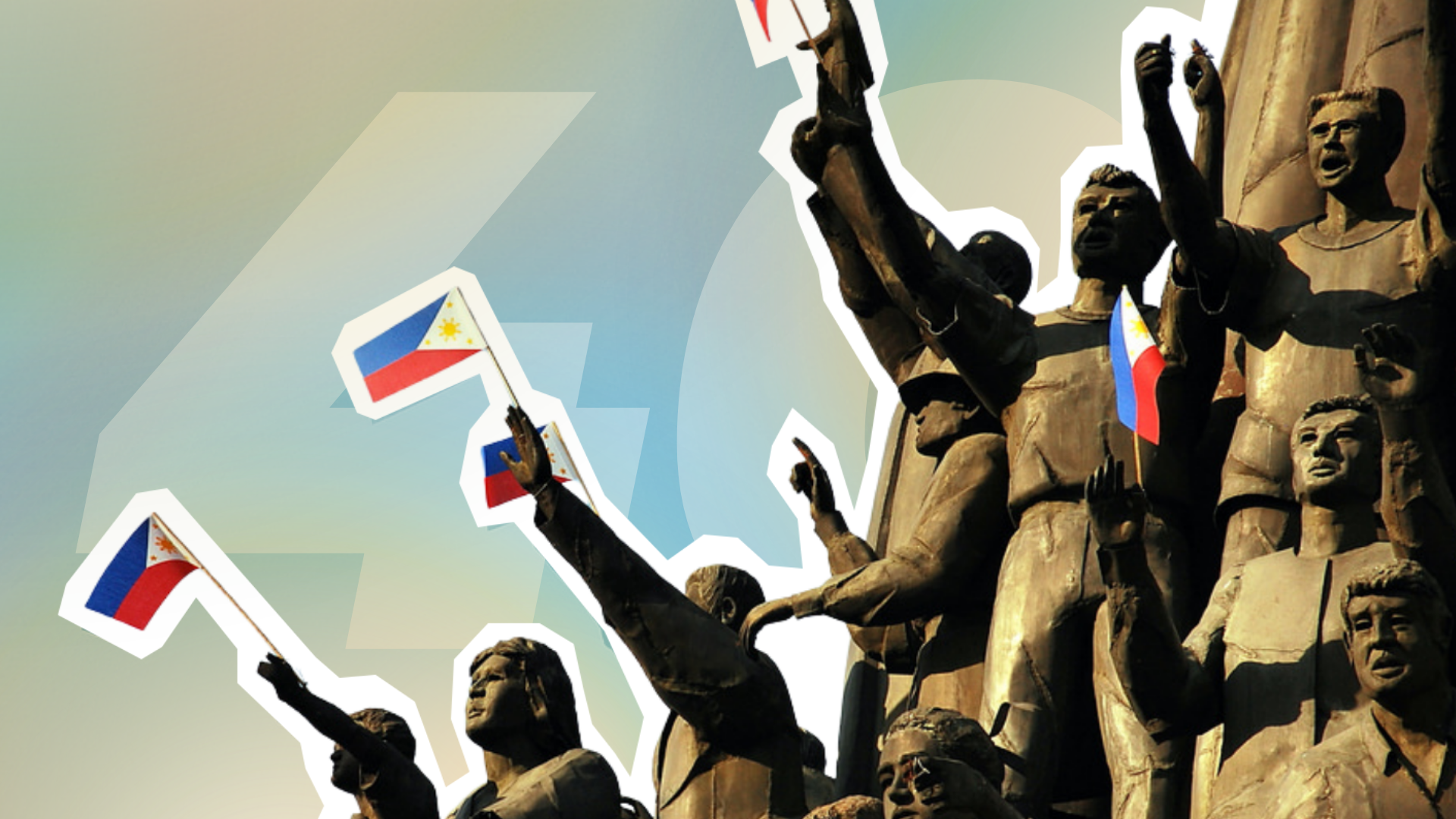
Wednesday, February 25, marks 40 years since Filipinos ousted a kleptocratic dictatorship from their fragile seats of power. In 2022, the same family that once fled from Malacañang returned to the presidency through a landslide vote. Today, one may ask the question if the 1986 EDSA People Power Revolution has maintained its significance despite the jaded historical truth amidst the unchecked cycle of unquestioned power.
Often, when discussing the Philippines’ Martial Law Era in retrospect, we deal with figures: 11,103 tortured and abused, 2,326 killed, and unclear estimates of victims still missing— although numbers themselves pose as factors to its importance, data never underscores the lived sufferings of the stories behind these statistics.
Whether it be the case of Archimedes Trajano, a 21-year-old student who was brutally escorted and murdered after questioning the capabilities of then Presidential Daughter Imee Marcos, or Activist Loretta Rosales who has lived to continue telling the tale of the various human rights abuses under Marcos Sr.’s regime, the yearning for accountability persists in pursuit of closure— EDSA is not only about the lives once lived but the lives still living in the shadow of a violent, oppressive era.
These individuals, labeled as enemies of the state, were mere students who craved change; today, many youth coalitions such as Spark Kabataan, Kabataan Partylist, and even school papers face a similar fate: their freedoms are confronted with hostility, silencing, and violence over their expression of discontentment with the current status quo.
Still, Filipinos’ patronage of seniority has bred a toxic culture of Utang na Loob, one where youth are forced to submit to elders on a whim; unfortunately, this dynamic has breached into present-day politics, where ballots become promissory notes to politicians labeled “Tatay” or “Nanay.”
Thus, the adage, “student ka lang,” has never been more obsolete— there is no lanyard, ballpen, and yellow pad that does not come with the dream of better opportunities beyond a country that is youth-focused but not youth-centered. EDSA is a living testament to how students, historically and contemporarily, have proven that even youth have a vital role to play in advancing efforts against historical revisionism, despite Filipinos’ tendency to dismiss youth in important discussions.
Thus, we implore that everyone join in commemorating the 40th anniversary of the EDSA People Power Revolution not only in honor of those who fought but also the youth who persist in the fight— let their laban be not in vain. Together, as Filipinos, we enjoin everyone in the spirit of truth, morality, and the true essence of nationalism as we remember the significance of EDSA.
Dahil ngayong EDSA, at kahit kailan, student ka— hindi, “student lang,” at iyun ang dapat nating ipaglaban araw-araw.