









Now Reading: How Labor Day is just like any other day for these workers in Iloilo
-
01
How Labor Day is just like any other day for these workers in Iloilo
How Labor Day is just like any other day for these workers in Iloilo

Gabi Rizal
The first of May is meant to honor the hands that build, the backs that carry, and the hearts that refuse to give up. But somewhere between the speeches and the greetings, it quietly becomes what it has always been for many: just another day of work and the rhythm of survival.
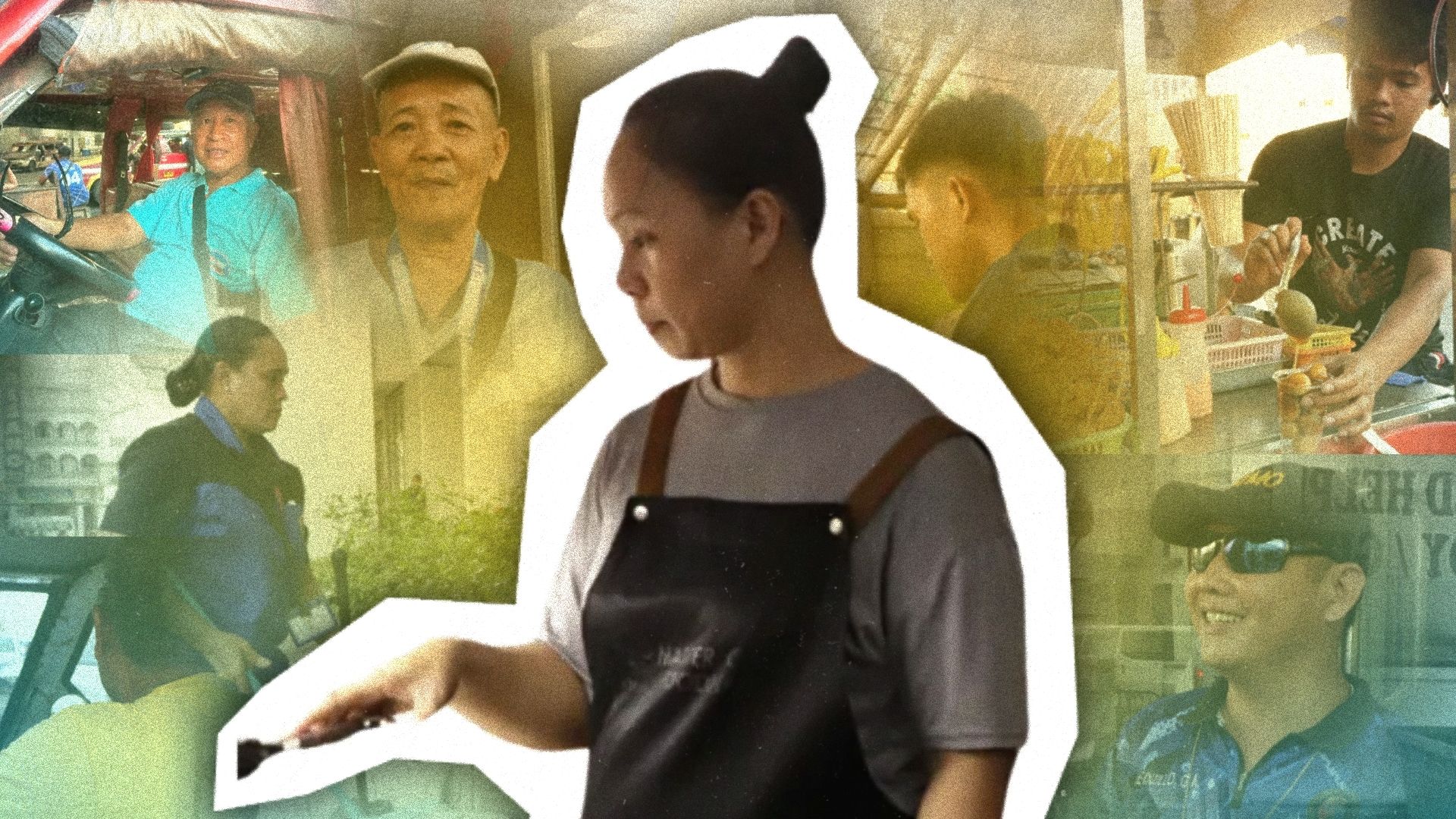
And in the bustling streets of Iloilo, where jeepneys weave through traffic in the roads, vendors also line the sidewalks as their voices blend with the roar of engines. Street sweepers sweat hard because of exhaustion and officers stand in the heat to oversee order in the city.
Different roles and different roads, but all are driven by an unwavering reason: their love for their families, and this is the kind of love that wakes you up early, even when your body begs you not to and the love that keeps you going, even when the day feels heavier than yesterday.
The ones who bring us places while chasing a destination of their own
They drive people to where they need to be. But deep down, they are also trying to arrive somewhere better.
“Gapangita gid paagi para makakwarta (I really find a way to earn money),” Edgar says, 59, where fatigue is etched in his voice. For ten years, he has been navigating the same roads, hoping that somewhere along the way, life will loosen its grip for him and for his family.
The same goes for Excel, 65, who once worked far from home as an OFW in Abu Dhabi. When he returned in the country , he bought a jeepney: a symbol, perhaps, of finally coming home. But home has its struggles, too, especially with the oil crisis this year. “Sang nagtaas gid ang krudo, nangalawhaw gid ako kay ang ginakita namon daw dira na lang gakadto (When crude oil prices hiked up, I was devastated because the money we earn would just go straight for gasoline expenses)…” he shared.
Meanwhile, for Tan, 53, has lived many lives in one. A construction worker, truck driver, bakery helper, karga tapas, and now, a bus driver carrying not just passengers, but the weight of providing for five children.
And then there is Rene, 41, a taxi driver in the past twelve years who now raises two children on his own through his jeep. Those years behind the wheel have taught him many things, but what keeps him steady is simple and that is the thought of going home to his kids in their boarding house and feeling their embrace that makes everything worth it.
The vendors selling to survive and surviving to keep selling
On the sidewalks and in the markets, survival is laid out in small portions.
Rosalyn has been selling bichokoy and buchi for twenty years. Before, she would walk from place to place, carrying her good. “Kung pwede lang magdouble ang income… kay sobra na kamahal kag kapigado sang panahon subong (If it’s possible to double the income… because everything is just too expensive now),” she shared.
However, like for other workers, life does not pause so they need to hustle extra hard and for one to be able to sell something, it needs many hands. This is the case for a rice retail business where Luz Agnes, 72, is helping her daughter. Twenty years in, and she is still there: a proof that labor does not retire when responsibility refuses to. Their business is not just about her sacrifices and her daughter, but also the hard work of her son-in-law who works as a seaman.
Nearby, in a food house nearby, there is Nene. Five children wait for her at home, and that alone is enough reason to never stop. Before this, she worked in a boutique, ironing clothes, earning only when there was something to press and to smooth out.
Now, even if she has to spend most of her lunchtime working because of customers swarming in, she does not mind because she is doing this for her family.
Outside, Christian, 26, stands by his street food stall, the smoke rising and disappearing into the noise of the road which used to be different for him. He once drove a truck and he still dreams of going back to that life. But for now, this is where he is in the cart of his daily grind and this responsibility of feeding a wife and two children.
And the others whose stories also carry the same weight
Outside the terminal market, Rosemarie works as a cleaner for seven months now. Every drop of sweat, every grip of the broom, and every strength she exerts to clean carries a story she does not always say. She is doing this for her daughter and grandchild who kept returning to the hospital due to hydrocephalus, and she chose to work on Labor Day, not because she wanted to, but because double pay means a little more chance.
Standing near them are George and Junior, who work as police auxiliary officers with their families as their source of strength. George, 44, has two children where one is an incoming college student. He does what he can to make his salary enough for the three of them.
At the other side of the road is Kim, 21, who once sat in a classroom, dreaming like any other student. But distance and expenses pulled him away from his studies when he was a freshman and now, he works but still hopes to save up to be able to go back studying.
They still labored on Labor Day
While the world pauses to recognize their worth, they continue moving, working, and enduring. This shows that Labor Day was about the resilience of those who show up even if it’s hard.
In the drivers who keep going despite rising costs.
In the vendors who stretch every peso into something enough.
In the workers who choose labor over rest because someone, somewhere, is depending on them.
Just like any other day, they wake up and choose to continue. And maybe, that is the most honest form of heroism we rarely talk about but always live alongside.