







Now Reading: An AI-powered city in the Philippines? Davao is making it happen
-
01
An AI-powered city in the Philippines? Davao is making it happen
An AI-powered city in the Philippines? Davao is making it happen

Lynxter Gybriel Leaño
In many cities, Artificial Intelligence (AI) still feels like a distant concept, something confined to tech companies or futuristic discussions about “smart cities.” But in one Philippine city, that future is slowly taking shape in real time.
From traffic systems that can respond to road conditions, to biometric monitoring in public spaces, Davao City is steadily integrating AI-driven technologies into its governance and public services as part of its broader digitalization push.
Local officials say these developments are part of a long-term vision to transform the city into a hub for AI in the country.
According to Hon. Bonz Andre Militar, Davao City Councilor, the city is seeking assistance from experts to realize the AI efforts as he passed several landmark ordinances for digitalization.
“To make this transition successful, we need the help of experts. We need partners who know how to train people for future skills and digital systems,” Militar stated.
He emphasized that Davao City Mayor Sebastian Duterte has expressed support for integrating AI in the city which enabled the removal of slow processes, end of long queues, and improved accessibility among its people.
Currently, the city council has given final approval to a measure that will incorporate artificial intelligence-based biometric monitoring into the city’s security operations. The proposal, authored by Hon. Militar, calls for the installation of smart identification systems in major public facilities and transit gateways, including ports, airports, terminals, government establishments, parks, and other gathering places.
Militar likewise pushed for the adoption of AI in the city’s traffic operations in which the proposed smart traffic management system would use AI and surveillance technology to assess road conditions in real time and automatically regulate signal cycles.
Additionally, the councilor clarified that making use of AI should not worry Dabawenyos as it will not replace human labor but instead, become a tool that will help workers do more.
He added that the LGU aims to foster an employee-friendly workplace through the adoption of digital technologies which would help reduce manual workloads.
Grasping AI knowledge
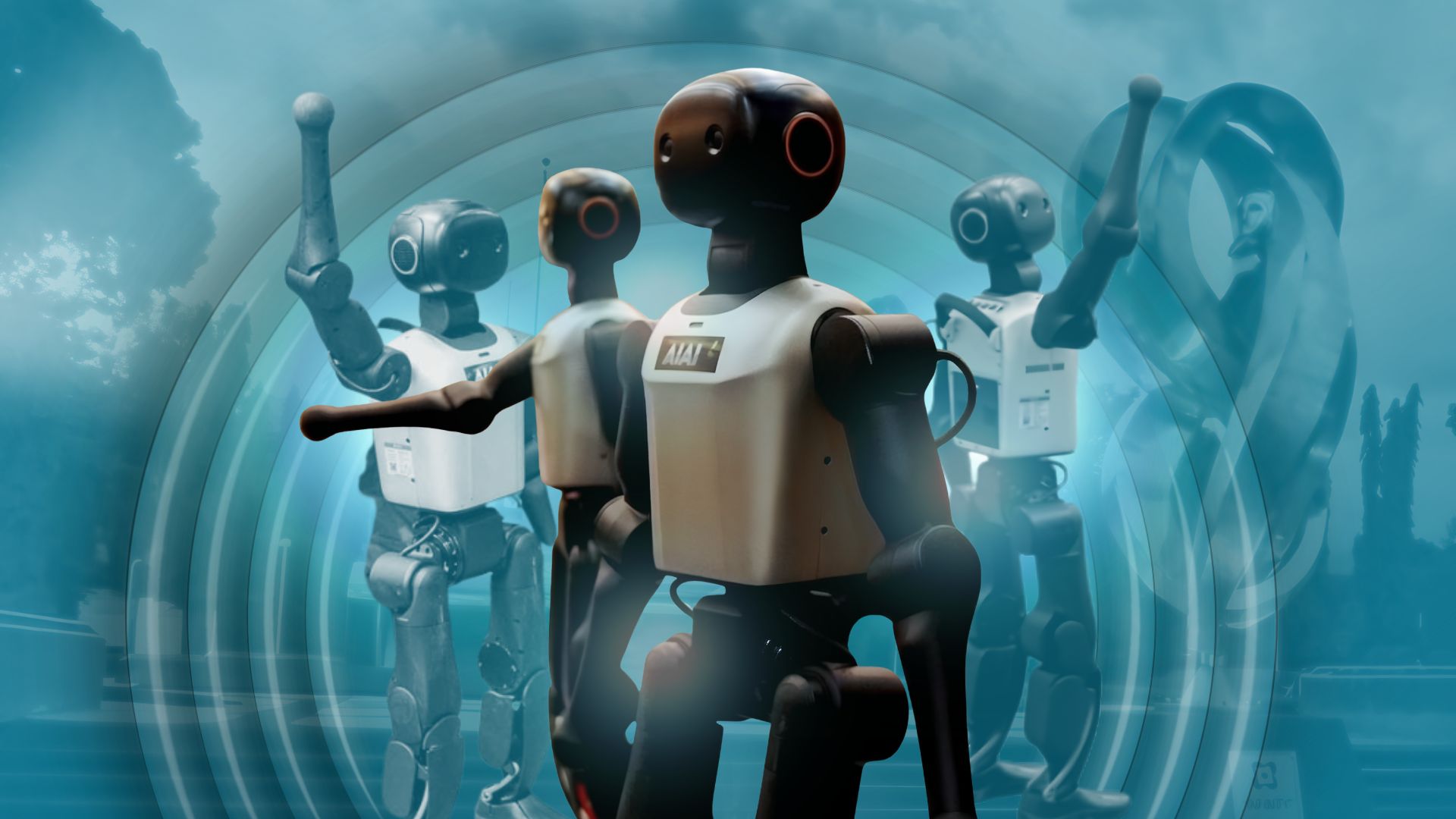
During the Sangguniang Panlungsod session on June 2, two AI robots were introduced which danced to a Michael Jackson song that can translate up to 200 languages and answer selected questions.
Powered by lithium batteries, the machines require approximately one hour of charging and can operate continuously up to four hours. In addition, a single unit costs ₱1 million excluding the software development and customization costs. The manufacturer expects that the production costs will decline in the future as the technology will be more widely adopted.
Meanwhile, Dennis Franco M. Layug, president of the Manila-based company East West International Educational Specialists, Inc., assured that their AI usage focuses more on human-centered AI since it is intended to support human workers rather than replace them.
“We want Davao to have the skill sa paggawa po ng AI platforms, yun po yung pinu-push ni Councilor Militar to upskill, be skilled, and recruit the Dabawenyos para po sa Davao po dito magsisimula ang mga AI platforms,” Layug shared.
Furthermore, he said that the program seeks to cultivate a culture of innovation in Davao City by encouraging residents to become developers and creators which will contribute to the city’s digitalization goals.
DOST’s AI research hub
On the other hand, the Department of Science and Technology (DOST) has launched the National Artificial Intelligence Center for Research and Innovation (NAICRI) last February 26 which will feature AI systems and applications developed by the said department.
“NAICRI will serve as the Philippines’ central hub for AI (artificial intelligence) research, advanced computing, and innovation — designed to provide continuity, coordination, and governance beyond individual projects and funding cycles,” DOST Secretary Renato Solidum Jr. cited.
A few of their innovations include Nexus for AI Research and Applications (NAIRA) which will provide government agencies, researchers, business owners with computing resources and AI models; and Democratized Intelligent Model Exchange Repository (DIMER) that supports the development of AI solutions such as in agriculture and disaster monitoring.
DOST emphasized that NAICRI will spearhead national AI research initiatives and strengthen partnerships with academe, government, and industry.