











Now Reading: EcstaSEA: Scientists drug salmon to probe drug pollution effects
-
01
EcstaSEA: Scientists drug salmon to probe drug pollution effects
EcstaSEA: Scientists drug salmon to probe drug pollution effects

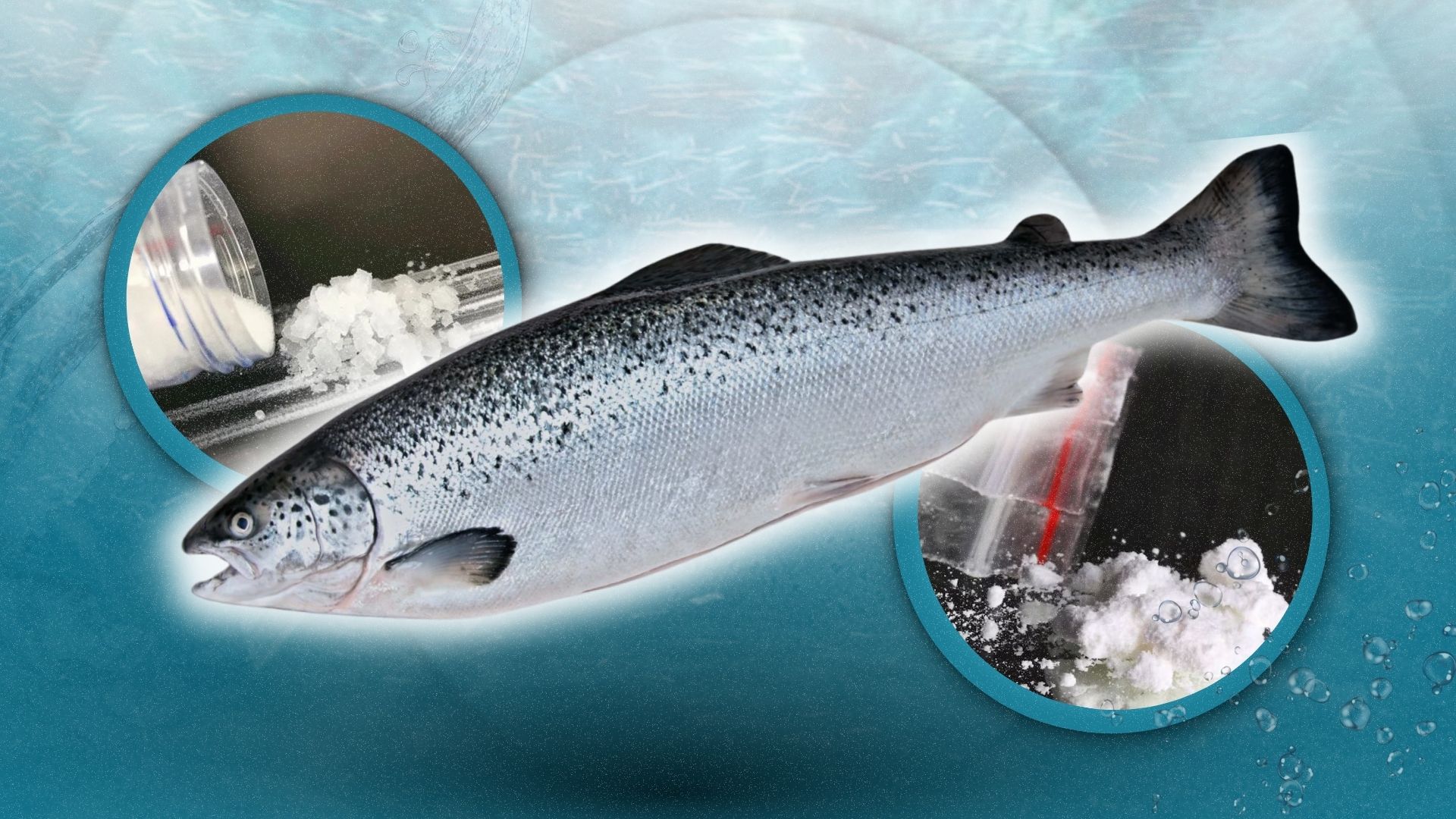
The uncanny reach of drug pollution now extends beyond humans to wildlife, where even fish are exposed to the chemical afterlife of narcotics. As these drugs contaminate the sea, aquatic life drowns in ecstasy.
Researchers from the Swedish University of Agricultural Sciences simulated the effects of drug pollution in a real-life setting by releasing tagged Atlantic salmon into Lake Vättern, the second-largest lake in Sweden, with implants that slowly released cocaine, benzoylecgonine, or one with no chemicals at all. The doses matched what fish could encounter in heavily contaminated waters, and their movements were tracked for two months.
The study, published in the journal of Current Biology, shows that pollution can alter how animals use their habitats in the wild which suggests that contaminants may reshape ecosystems through behavior as much as through toxicity.
Rewired Connections
Young salmon normally roam widely after release before settling into safer, familiar areas, but strangely, the drug-exposed fish did not follow this pattern.
Notably, salmon exposed to benzoylecgonine swam up to approximately 200% farther each week than the control group and ultimately dispersed about 32 kilometers from the release site, compared with roughly 20 kilometers for untreated fish.
In a natural ecosystem, this extra movement is abnormal, because wandering farther increases energy use, raises exposure to predators, and disrupts the process of establishing stable feeding and resting grounds.
With this rewiring in the brain, it shows how both drugs, cocaine and benzoylecgonine, affect dopamine signaling in the fish’s nervous system.
As such, the absorption of these chemicals from water may subtly alter how fish make decisions and may affect movement, predator–prey dynamics, and migration patterns.
Drugged tISSUES
In humans, cocaine is known to produce euphoria, heightened energy, impulsivity, and reduced perception of risk by interfering with dopamine reuptake in the brain.
Although fish do not experience a “high” in the same sense, the same chemical interference may push them toward bolder, less cautious behavior. Given the build-up of chemical residues in animal tissues, they may lead to lasting neurological issues that scientists are only beginning to understand.
Like a scar that hints at a deeper wound, this may be only the first sign of a problem that could linger for generations, with emphasis on waters where aquatic life and human activity are tightly intertwined.
Scientists still do not know the long-term consequences of these drugged animals for survival or reproduction, particularly in wild-born fish.
However, what is clear is that many aquatic organisms in human-impacted waters are already living in a soup of active chemicals, and science is only starting to uncover how deep this invisible pollution can configure animal behavior as well as even affect human health since aquatic creatures like fish are a large demographic of human food consumption.