









Now Reading: Who Gets to Define Womanhood?
-
01
Who Gets to Define Womanhood?

Mark Reginald Lim
From online debates asserting that “biology determines womanhood” to counterclaims that gender extends far beyond assigned sex at birth, the question of who qualifies as a woman continues to spark intense controversy across social media.
Despite the heated discussion on social media platforms, these debates are not simply about individual opinions. Questions about who is recognized as a woman influence various aspects such as public policy, healthcare access, legal protections, sports participation, and everyday social interactions. Understanding the different frameworks used to define womanhood can therefore provide important context for a discussion that extends far beyond social media comment sections.
But beneath the surface of these exchanges lie much older and deeper academic and social arguments about gender, identity, and the very definition of womanhood.
These debates are a disagreement over criteria that define womanhood. Some individuals will argue that womanhood is determined primarily by biological traits such as chromosomes, reproductive anatomy, and sex assigned at birth. For others, such definitions are too narrow, pointing out that there are social, cultural, and personal dimensions of gender that shapes how individuals experience and understand themselves. Consequently, discussions about trans women often become debates about whether womanhood should be defined by what is between their legs alone or by a broader understanding of gender identity and social recognition.
The definition of womanhood through biology is widely contested in various disciplines, including in feminism and gender studies. This shows that gender can be understood as both a biological and social concept that is shaped by lived experience, culture, and recognition. Some claims, womanhood is beyond anatomy and physiology alone, cis and trans experiences complicate simple definitions, and these discussions matter in real-world discussions about inclusion and exclusion. This matters because how society defines “woman” affects dignity, rights, and belonging in everyday life.
Modern gender debates have been shaped by decades of feminist and queer theory. Simone de Beauvoir argued that “one is not born, but becomes, a woman,” challenging the idea that biology alone defines womanhood.
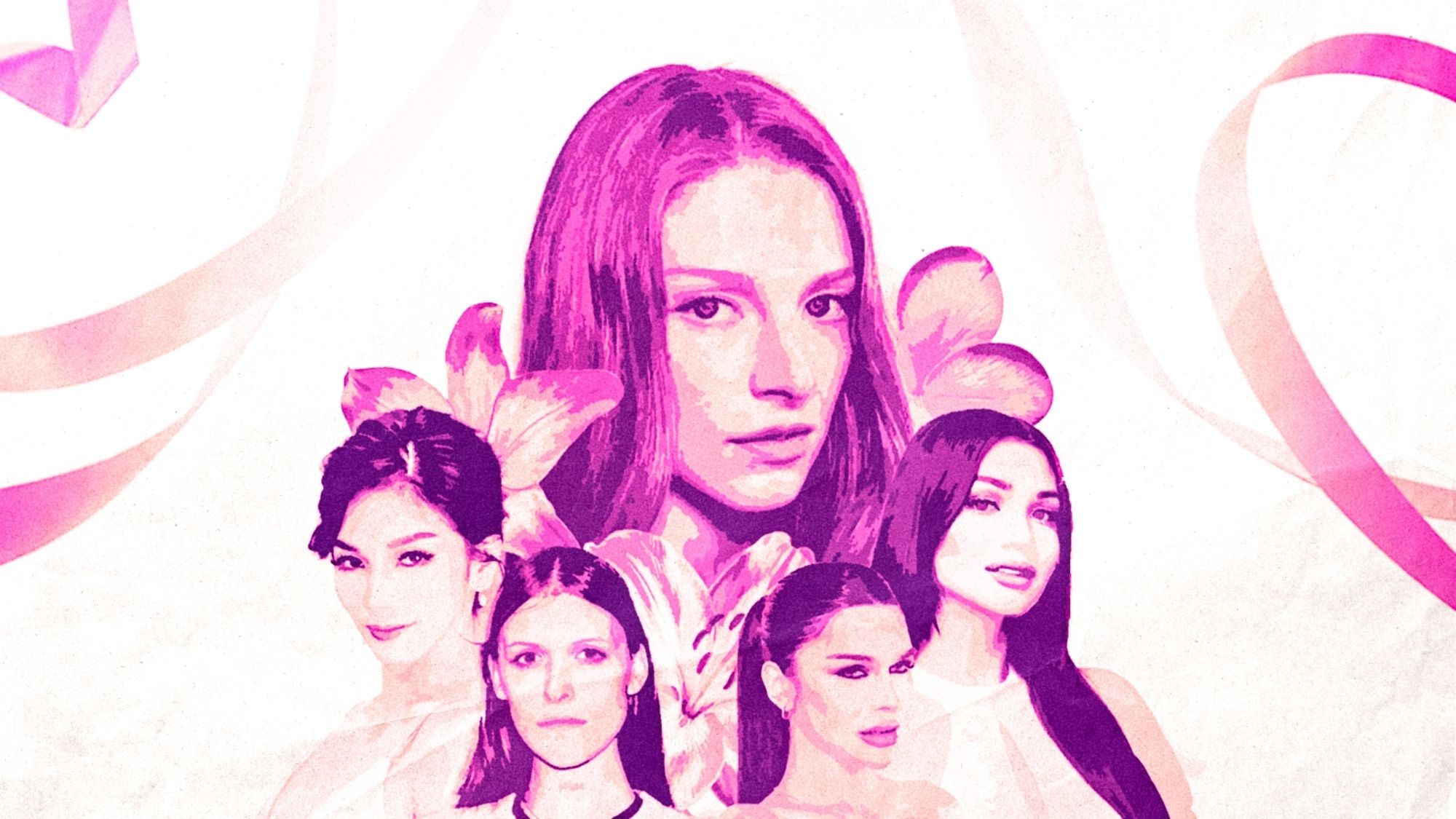
Later scholars expanded this by arguing that gender is formed through continuous socialization, through social norms, and through institutional expectations, rather than fixed biological traits alone. These ideas continue to influence contemporary discussions surrounding public figures such as Jamie Casiño, whose visibility and advocacy have sparked debates around womanhood; Stormi, a streamer whose advocacy for transgender visibility goes beyond the traditional spaces and advocates for inclusion in the gaming community; and Kevin Balot, a beauty queen whose success in national and international pageants has become part of broader conversations about womanhood.
Similar discussions have emerged internationally around artists such as Ethel Cain, whose experiences as a trans woman have contributed to broader conversations about gender, identity, belonging, and church. Hunter Schafer, Laverne Cox, and Caitlyn Jenner have also become prominent figures in contemporary discussions about gender identity, showcasing how debates about womanhood increasingly involve questions of social recognition, experience, and identity alongside biology.
What exactly is the question?
The core question is how womanhood should be defined: Some use biological criteria that include private organs and bodily functions such as menstruation. Meanwhile, some use identity and lived experience, which includes social expectations and expression, or a combination of both. Most academic frameworks argue that no single biological marker fully captures what it means to be a woman.
The argument affects not only trans women but also cisgender women with different biological realities, intersex individuals, and anyone whose experiences of gender do not fit narrow or traditional categories of biology.
Some argued that womanhood should be based primarily on biological sexual characteristics. Another argues that gender is socially constructed and defined through the identity, recognition, and lived experience of trans women and cis women. Many scholars take a more nuanced approach, acknowledging biological differences without using them as a basis for exclusion but rather inclusion.
What does the scholarship say?
Feminists such as Judith Butler, Sally Haslanger, and Julia Serano argue that gender cannot be reduced to biology alone because society plays a defining role in how gender and sexuality are shaped and understood.
From childhood, socialization assigns distinct roles: boys are often expected to be strong while girls are expected to be gentle and nurturing. These gendered expectations can be seen in how society associates professions like nursing with women and policing with men.
Families, schools, religious institutions, media, and cultural norms all contribute to these expectations, influencing how individuals understand themselves and how they are recognized by others. In this view, gender is not simply a biological fact but also a social experience that develops through interactions with the world around us. Across theology, philosophy, and medicine, there is no single universally accepted definition of gender. If experts across multiple disciplines continue to debate the concept, it raises the question of whether any individual or group should have the authority to dictate nor enforce a single definition for everyone.
The definitions are not just theoretical but affect the lived realities of trans people, cisgender people, intersex individuals, and people whose genders do not conform to the societal expected biology. These views shape how people are treated in schools, workplaces, healthcare systems, and public spaces. For example, transwomen students often feel unsafe and uncomfortable going to bathrooms, and classrooms due to fear of bullying or discrimination. In healthcare, transwomen are being denied the care they need including gender affirming treatment.
In reality, narrow definitions of womanhood can lead to exclusion and harm. In a 2015 U.S transgender survey they found out that nearly half (46%) of respondents were verbally harassed in 2014 because of being trans. Broader frameworks of gender and sexual theory such as gender performativity of Judith Butler, and Intrinsic Inclinations Model of Julia Serano aims to balance recognition of differences with respect for dignity and the inclusion of various individuals.
What’s Next
These debates are no longer confined in academic spaces or social media but increasingly present in policy discussions, and healthcare guidelines, shaping who is legally recognized, how public institutions treat individuals, and what rights and protections people receive. As a result, the debate is no longer merely about defining gender but about determining how societies should balance legal certainty, administrative practicality, individual dignity, equal treatment, religious freedom, and public welfare.
Future institutional developments will likely focus less on establishing a single universal definition of gender and more on developing context-specific frameworks. Institutions may continue distinguishing between biological sex and gender identity depending on their purpose. For example, biological sex may remain relevant in medical diagnosis and certain athletic competitions, while gender identity may be recognized in areas such as anti-discrimination protections, education, employment, identity documents, and public services.
Other institutions may adopt administrative procedures that recognize lived identities while maintaining legal safeguards against fraud or misuse. Such approaches acknowledge that different institutional settings require different policy considerations rather than a one-size-fits-all definition of gender.
The Philippines is trying to reflect this shift through several proposed legislative measures. The proposed SOGIE Equality Bill seeks to prohibit discrimination based on sexual orientation, gender identity, gender expression, and sex characteristics in employment, education, healthcare, housing, and access to public services.
Meanwhile, the proposed House Bill No. 9929, also known as Sharmaine Bill, or Lived Identities and Recognition Act, which will allow transgender, intersex, and non-binary Filipinos to update their lived names and gender markers through a simpler administrative process, reducing barriers associated with legal recognition. In healthcare, proposals such as the Right to Care Act seek to recognize designated caregivers which includes unmarried and same-sex partners for medical decision-making. Collectively, these proposals demonstrate that contemporary debates over gender and identity are increasingly influencing Philippine law and public policy, with practical implications for legal recognition, healthcare access, anti-discrimination protections, and the rights of diverse communities.
Who decides if you’re a woman?
Ultimately, the global discourse surrounding trans women and the boundaries of womanhood cannot be settled by biology alone. They are rooted in years of social expectation and how society decides who is recognized, who is excluded, and how dignity is extended in everyday life.
If centuries of debates have failed to produce a universal definition, perhaps the question is not what defines a woman, but rather: Who has the authority to decide for everyone else?