





Now Reading: Son, don’t pull the trigger
-
01
Son, don’t pull the trigger

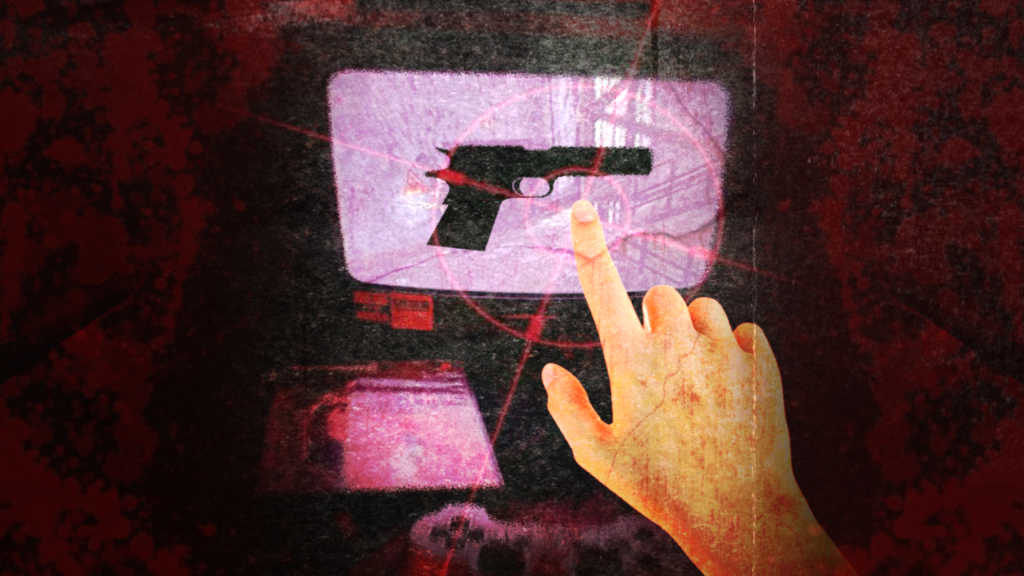
When we were children, the norm amongst the boys would be very much alike–if we do not have any classes, we would huddle in a five-peso-or-so computer shop, turn the volume up high, and boot up Grand Theft Auto: San Andreas (GTA: SA).
Keying in HESOYAM, AEZAKMI, and PROFESSIONALSKIT, we would unleash mayhem in the fictional, albeit realistic downtown San Andreas. Explosions, blood, killing the police, batting down your neighbors, carnapping; everything was all possible in the sandbox that was the GTA games.
In the wake of recent school-violence cases, public attention has turned toward platforms such as Roblox and games such as GoreBox. But the available facts demand precision, as with the Tacloban case, with investigators examining one suspect’s engagement with GoreBox; in other cases, interior and local government secretary Remulla queried about children being contacted, groomed, and moved from gaming platforms to more private online spaces.
Yet a platform being part of a child’s digital environment is not the same as proving that a game caused the violence.
Across the country, these incidents reflect the material reality that children and adolescents are now exposed and aware of more and more violence, it is not simply games that should be the culprit in the tragedy and loss of lives since June this year.
A child’s formative development, in reality, cannot be attributed solely to exposure to games such as GTA nor Roblox. As a human being, a child is made as the product of the “environment of relationships,” of those who surround them; that of which they see as people who they must look up to, just as Bandura’s learning theory suggests.
In Filipino culture, the people they look up to would be authority figures: parents, teachers, leaders of the community. Pillars. Institutions.
The question is not whether violent games can shape a child’s imagination or emotional responses. They can. The question is whether a game, by itself, can explain why a child acquires a weapon, embraces violent ideologies, isolates from others, and ultimately harms another person. The evidence does not support that simplistic conclusion.
A game is not a parent, a teacher, a church, or a state institution. It cannot provide a child with a weapon, normalize cruelty inside a home, dismiss cries for help in a classroom, or recruit a child into an extremist network on its own. But platforms can become unsafe when adults exploit weak safeguards, when harmful communities operate without intervention.
Hence, to simply pass the blame and put it into the creative manifestation of control is unreasonable. Society has had its fair share of normalizing violence as well.
Children who commit violence must be held accountable in ways appropriate to their age and the gravity of the harm they caused. Ignorantiam legis excusat neminem, but the law’s cold eye should not be blind to why a child acted a specific way– But accountability should not erase the harder question: who failed to recognize distress, manipulation, isolation, or violent fixation before another child was hurt?
If violence is only found through games, then why would Rodrigo Duterte, a man born in 1945, without Roblox nor the internet in his youth, would resort to it in resolving the roots of the drug crisis in the country?
Ferdinand Marcos Sr himself, who was born 28 years prior; who would never even see the birth of the internet in the Philippines–yet his conclusion to use iron tactics during his two-decade-long dictatorship is second to none in terms of violence. And yet, he never saw the internet, moreso Roblox.
Blaming games also ignores the violence children encounter outside screens. They witness it in homes where hurting a child is called discipline, in public rhetoric that treats killing as a shortcut to order, and in institutions that respond to pain only after it becomes a scandal.
Violence is learned not only through what children play, but through what adults excuse, reward, and fail to confront.
If violence is only acted up upon exposure to games, then why would a father hit his son, saying that it is an act of love? Should the father, who understands that love is forgiving, be the first one to abate the child of his mistakes, and not blame the games which he is in front of?
If adults insist that pain is a legitimate language of discipline, children may learn that power belongs to the person who can inflict fear. Our law may dictate that corporal punishment in schools is prohibited, yet physical punishment in the home has remained legally insufficiently prohibited. That contradiction should concern us: we condemn violence in public while leaving room for it to be justified as private correction.
Society and its structures are to blame, and not its products. If we want children to be safe against violence, then we too, who are now far beyond the age of majority and understanding, must change ourselves. That we ourselves should remember the children we were: carefree, jolly, and playful; and we must keep it that way.
So yes, regulate platforms. Remove violent content that targets children. Strengthen age checks, reporting systems, school counseling, and firearm safeguards. But do not mistake the screen for the whole society reflected in it.
To every child being failed by adults who should know better, the words must come before the weapon, before the silence, before the irreversible act:
“Son, don’t pull the trigger.”