









Now Reading: Over 40 areas in Luzon, Visayas experience haze from Indonesia fires
-
01
Over 40 areas in Luzon, Visayas experience haze from Indonesia fires
Over 40 areas in Luzon, Visayas experience haze from Indonesia fires

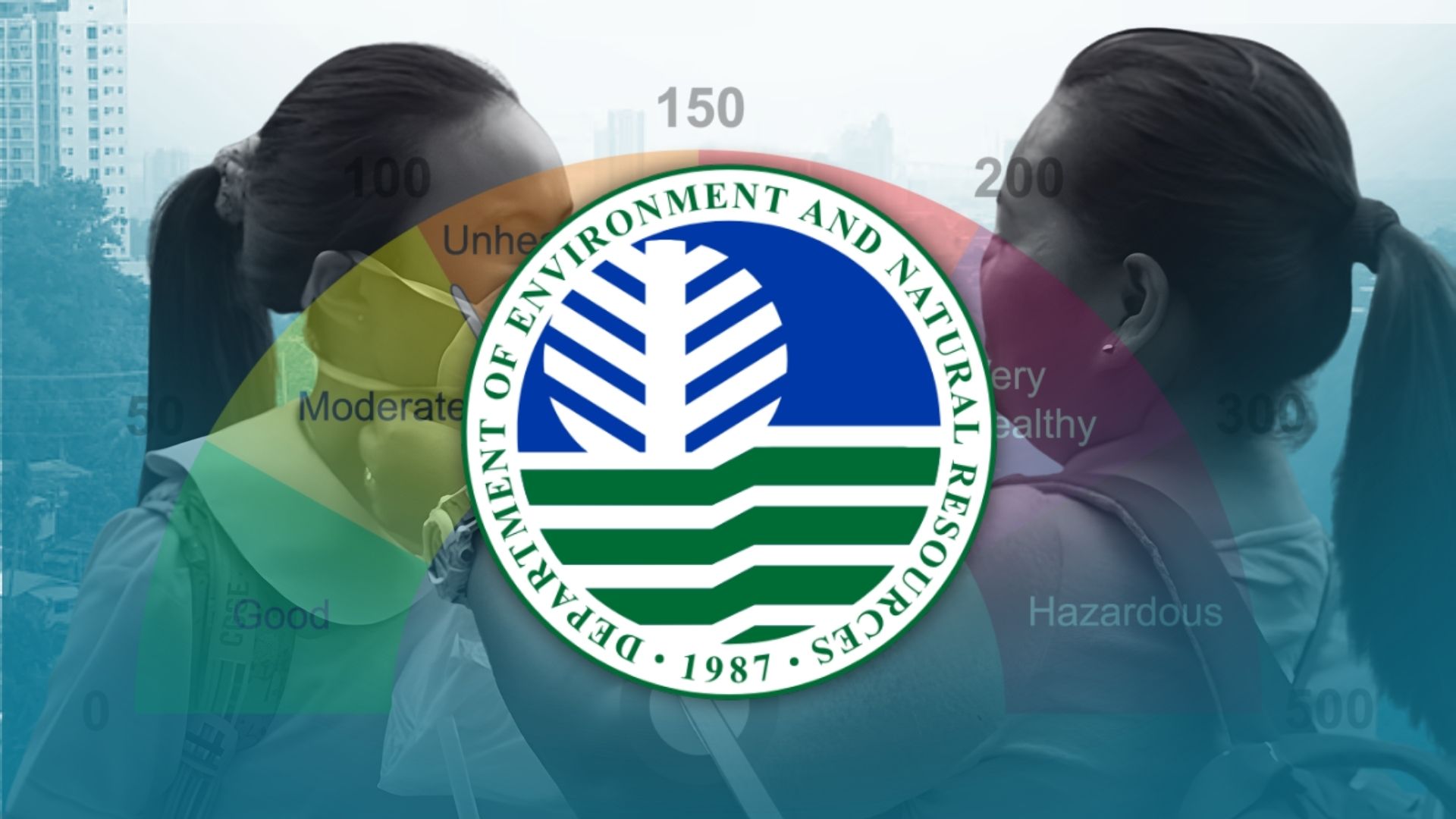
Haze linked to ongoing forest fires in Kalimantan, Indonesia affected several parts of the Philippines on Sep. 1, as air quality monitoring stations recorded unhealthy to acutely unhealthy levels in Metro Manila and hazy conditions were observed in other regions.
The Department of Environment and Natural Resources–Environmental Management Bureau (DENR-EMB) said elevated concentrations of fine particulate matter, or PM2.5, may be associated with smoke and haze from fires in Indonesia carried toward the Philippines by prevailing winds.
As of 6 a.m. today, air quality monitoring by the DENR-EMB showed “Acutely Unhealthy” conditions across 11 monitoring stations in Metro Manila, including Las Piñas, Malabon, Mandaluyong, Manila, Marikina, Muntinlupa, Parañaque, Quezon City-Ateneo, San Juan, Taguig, and Valenzuela.
Parañaque recorded the highest Air Quality Index (AQI) reading at 296, followed by Quezon City-Ateneo at 241, Las Piñas at 237, Manila at 231, and Malabon at 229.
Taguig and Valenzuela both registered AQI readings of 224, while Marikina recorded 217, Muntinlupa 216, San Juan 213, and Mandaluyong 207.
Meanwhile, Navotas and Pateros recorded “Very Unhealthy” air quality at AQI readings of 153 and 172, respectively. Makati registered an AQI of 111, classified as “Unhealthy for Sensitive Groups,” while the monitoring station along Commonwealth Avenue in Quezon City recorded a “Fair” reading of 98.
The elevated pollution levels followed similar conditions recorded the previous evening. As of 7 p.m. on Aug. 31, Parañaque and Las Piñas had already registered “Acutely Unhealthy” air quality, while several other areas in Metro Manila were classified under the “Very Unhealthy” category.
Satellite monitoring cited by the Philippine Emergency Alerts Monitoring Center also showed haze extending beyond Metro Manila, reaching parts of Luzon, Visayas, and Mindanao as of 8 a.m. today.
Moderate to heavy haze was reported over Cavite, Laguna, Batangas, Mindoro, Palawan, parts of the Bicol Region, and several provinces in Western and Central Visayas, including Antique, Aklan, Capiz, Iloilo, Negros Occidental, Negros Oriental, and Cebu.
Light to moderate haze was also reported in parts of Central Luzon, Rizal, Quezon, Camarines Norte, Camarines Sur, Catanduanes, Albay, Sorsogon, Masbate, Bohol, Leyte, Samar provinces, and parts of the Zamboanga Peninsula and Bangsamoro region.
Hazy conditions were also observed in parts of Calabarzon and Mimaropa, according to reports citing DENR-EMB monitoring.
In Central Visayas, Talisay City recorded “Very Unhealthy” air quality Tuesday morning as haze affected parts of Cebu. DENR-EMB Region 7 advised the public to wear masks outdoors, limit prolonged outdoor activities, particularly in hazy areas, and monitor official advisories.
PM2.5 refers to particulate matter measuring 2.5 micrometers or smaller. Fine particles may come from vehicle exhaust, fuel combustion, wildfires and agricultural burning.
According to the World Health Organization, fine particulate matter can penetrate deep into the lungs and enter the bloodstream, with exposure associated with health effects involving the respiratory and cardiovascular systems.
DENR-EMB continued monitoring air quality in affected areas as hazy conditions were observed across parts of the country.