






Now Reading: Cause of death: Negligence
-
01
Cause of death: Negligence

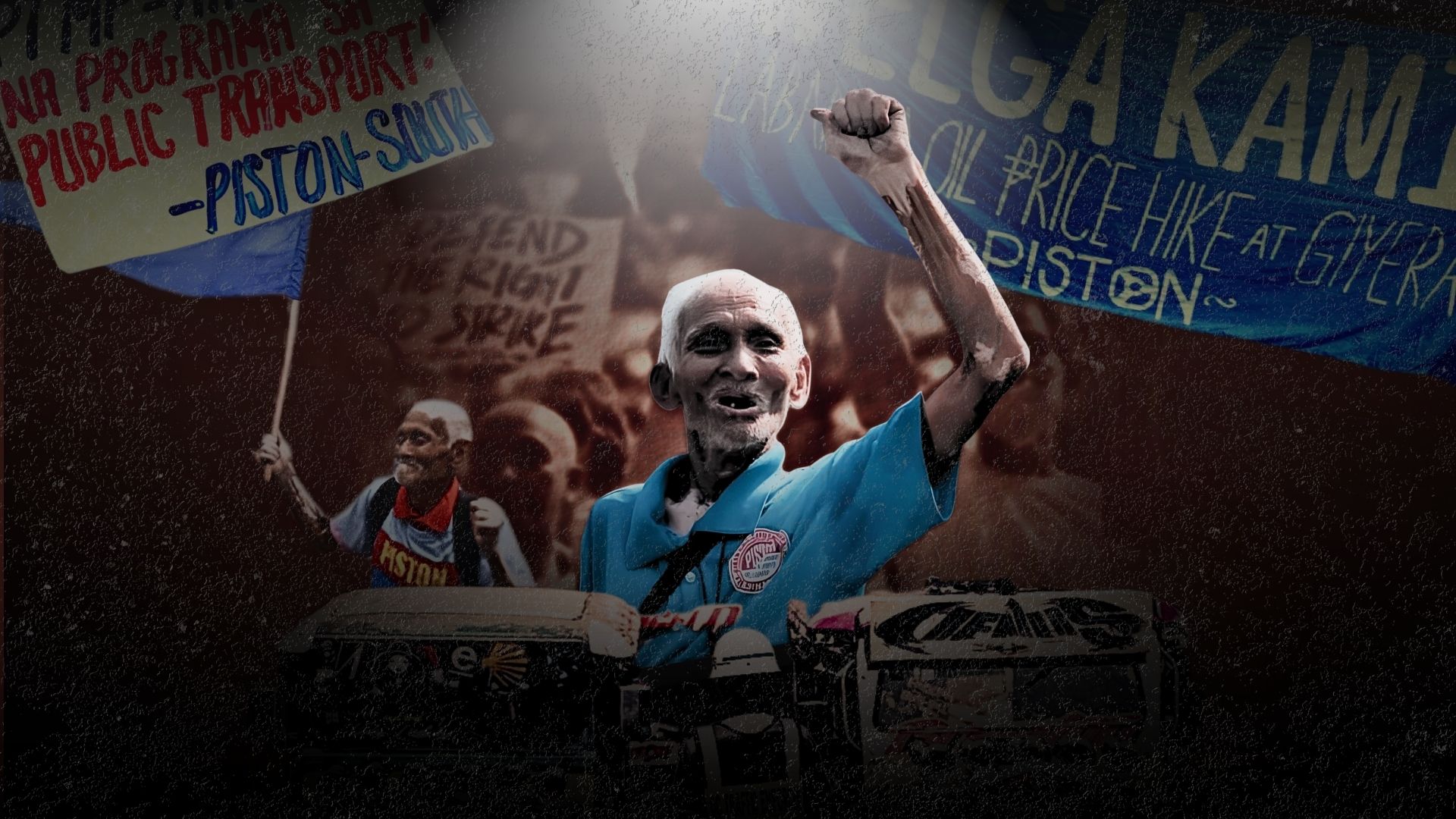
Gevo Geganto
Imagine you are a driver, but instead of sitting behind a wheel, steering down familiar roads, you’re standing on the streets holding a placard.
For many traditional jeepney drivers in the Philippines, including the late Elmer Cordero, that has been an exhausting reality for years.
After suffering from a heart attack while participating in a transport strike on September 29 of this year, Cordero, also known as Tatay Elmer, has sadly passed away. But his death was far from natural. It was a manifestation of a country that forces workers to fight for their own livelihood—where even the elderly must drag themselves onto sunbaked and polluted front lines to achieve what should’ve been rightfully served to them.
Amid his old age of 78, Tatay Elmer led and stood alongside other jeepney drivers in the mobilization to protest rising fuel costs, which, little did he know, would be the last time the roads would hear his voice again.
For about five decades, the thoroughfares were his way of sustaining himself and his family, and he knew of the harsh reality bound by asphalt and concrete. As a result, he did not only dedicate himself to the wheels but also to safeguarding and keeping those same wheels rolling. This resolve would, in due course, become evident during the height of the COVID-19 pandemic in 2020.
Tatay Elmer and five other drivers where left with no choice but to resort to the streets after the Duterte administration decided to put traditional jeepney operations to a halt. Beyond policy, the decision meant taking away what fed them and their families. But instead of being heard, the now infamously known Piston 6 were arrested, detained, and charged.
What should have been recognized as a desperate plea for survival was dismissed as a public health hazard.
Later on, the timeworn face of Tatay Elmer behind bars became a reflection of the state of transport workers in the country during the pandemic. And it was only in 2024 that the charges against them were eventually dismissed, with a Caloocan court’s decision of acquittal.
But no chains could ever deter what he was standing for.
Tatay Elmer continued to fight not only for himself but also for those who faced the same struggles as him, even beyond the challenges within the transport sector.
In a statement released by the Pagkakaisa ng mga Samahan ng Tsuper at Operator Nationwide, the association said that he had perfect attendance at every strike and protest against the jeepney phaseout, rising oil prices, corruption, imperialist plunder, and all other pressing issues affecting the people.
The life of Tatay Elmer was quite remarkable. He was not merely a jeepney driver-activist. He lived the essence of being a Filipino. He cared for the country enough to seek better working conditions for every jeepney driver and, overall, a better country. And yet, what’s saddening and frustrating was that he died seeing a transport sector still in desperate need of help and a country deep in ruins.
Having a man like him stand with us is both something to be grateful for and a letdown. Truth is, a man like Tatay Elmer is still a result of a broken system. They emerge over the crowd not because they want to, but because the system leaves them with no choice. And, truth be told, again, we need more people like him, even though we shouldn’t in the first place.
As we mourn his passing, we should likewise mourn what has become of our country: a place where drivers are forced out of their vehicles just to capture the attention of the state and show the struggles they endure every day. But we also cannot afford to mourn for so long and let what he fought for die with him. The problems of the transport sector and the other multisectoral issues persist and now, more than ever, what they need is attention.
No citizen should be born in a systemically distressed country only to die fighting the same conditions. No one should lose their life because the state cannot be more negligent than it already is.