




Now Reading: ON SONA 2025 | Universal Hoax Care
-
01
ON SONA 2025 | Universal Hoax Care

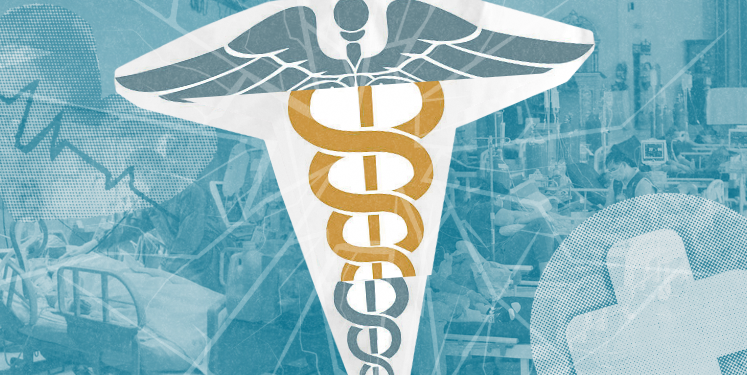
We sit silently in the waiting room, anticipating the news that may bring relief and recovery. Instead, we’re met with a diagnosis that currently has no available treatment.
This sickness we call systemic neglect. This has long plagued the Philippine healthcare system, and efforts to address these diseases have relied on the same prescription: Republic Act 11223, also known as the Universal Health Care (UHC) Act. In his last State of the Nation Address (SONA), President Ferdinand Marcos Jr. promised a reform in UHC to heal our ailing system.
As of mid-2025, Marcos’ 51 BUCAS Centers provide over 860,000 patients with urgent and ambulatory care, and established Super Health Centers, the DOH-PGH and UP-PGH Cancer Centers in the National Capital Region. These promises are to guarantee equitable access to quality and affordable healthcare. There’s a subtle improvement, yet efforts remain concentrated in urban areas, neglecting rural health, exemplifying regional inequality. Additionally, the lack of facilities, staff, and supplies persists.
As it goes, the initiative offers no real change, just a mirage of progress. Healthcare remains disjointed from the true realities of the decaying system. Neglect remains the diagnosis, and this disease endures.
Rx: hoax care
According to Statista, there are approximately 42,000 health facilities nationwide, and 63% are barangay health stations that are under-equipped and understaffed, 6% are Rural Health Units (RHU), and of the 1,341 hospitals, only 721 are public. Under UHC, Local Government Units (LGUs) are obliged to refer patients upward from barangay health stations to RHUs to Provincial Hospitals. In theory, the ideal system should be a smooth referral, but this system is often broken, with PhilHealth coverage unable to bridge the gaps due to underfunding.
This 2025, PhilHealth’s benefit expenses rose to ₱440.3 billion, a 109% increase from 2024. Still, no government subsidy was allocated to the institution after the expanded coverage for conditions such as dialysis, cancer, and outpatient care. PhilHealth is known for its delayed reimbursements, which lead to budget strains in hospitals and defeat the purpose of UHC. Truth be told, not every Filipino is properly enrolled in PhilHealth anyway, and out of the 42,000 health facilities, only 2,901 are accredited for the health insurance.
To those born into privilege, public hospitals are a last resort. For many Filipinos, they are the only choice; their final lifeline. Holding such accreditations means the medical center should be able to provide advanced services instead of the best care, patients are met with subpar service, while staff remain overworked and underpaid.
Marcos’ Spectacare
To the Marcos administration, health is not a right but a prop for a choreographed performance staged for applause. This illusion is elevated through press releases and curated appearances. “Number one talaga, number one para sa akin sa priority na ginagawa ng pamahalaan ‘yung healthcare,” says Marcos.
The administration’s pursuit of visibility builds an illusion that they’re doing more. This phenomenon could be explained through the lens of Guy Debord’s The Society of the Spectacle. For Debord, visibility is not viability; it only covers up the neglect and does not provide any impact. Their attention is focused on amplifying progressive urban areas with self-sufficient LGUs while rural health and regional inequalities continue to be neglected. Improper execution does nothing for the needs of Filipinos.
Next in Lie
Quezon Province’s Health Network–Quezon Medical Center (QPHN-QMC) is an ISO Certified, Level III hospital under the LGU. The hospital hosts nearly a thousand patients a day, some coming from the most distant towns of Quezon Province. As early as dawn, patients line up for the Outpatient Department (OPD) for surgeries and consultations. QMC struggles to accommodate the volume of patients, while provincial hospitals are the best option for affordable care. They’re oversaturated as a result of rural neglect.
One netizen shared “QMC, public hospital napakadaming pasyente pero sa emergency dalawang nurse at isang doctor sa mahigit kumulang isang daang pasyente?”
The provincial government dedicates marketing to create a reputation for QMC, but what people endure exposes this fabricated image. Behind this, the inner corners are rotting ceilings and broken facilities. A testimony from a former employee of QMC states,
“Yung pasyente mong buhay nang ipasok–patay mo nang ilalabas.”
The funds that could’ve been used for intensive care were instead spent lavishly on a new gazebo to cover up the patients camping outside.
To protect the spectacle, camping is prohibited, and even documentation is framed as a violation of privacy, punishable by cyberlibel. The truth is, this is implemented with the intent to cover up the decay. No window-dressing can hide the reality for Filipinos; even the so-called best public hospitals rely on illusion to maintain the mirage of recovery. QMC is a microcosm of the true reality across the country; it’s meant to be the best quality of public health service, yet we’re faced with the hard truth.
The prognosis
As I see it, universal health service in the Philippines is unlikely as long as the system is flawed. Better yet, address the core issue that causes the system to fail instead of pushing for ordeals that’ll end up as another pie-in-the-sky. Moreover, instead of ex-post facto approaches, the government should follow a proactive path in recovery with proper needs analysis. The divide between the rich and the poor is not mitigated, and UHC does not bridge the gap in healthcare, and no amount of spectacle can cover this up. Localized health systems are extremely dependent on a local government’s administrators; the likelihood of a centralized system is a long-shot plan, and the lived experiences expose the truth behind lofty promises.
We’ve been in the waiting room for years, and we’re still in critical condition. We need a new prescription, and we don’t need a one-size-fits-all approach—instead, we need a specialized focus on the issues in healthcare to remedy the extremely diseased system. Health is a right and not a privilege, and especially not a prop. This UHC “reform” is not the prescription that’ll heal the years of neglect. We cannot keep getting caught in the illusion. This is not universal health care; this is abandonment and silent cruelty towards the poor.