








Now Reading: SILENCE IN SCIENCE: Overlooked STEM agendas in Marcos Jr.’s SONAs
-
01
SILENCE IN SCIENCE: Overlooked STEM agendas in Marcos Jr.’s SONAs
SILENCE IN SCIENCE: Overlooked STEM agendas in Marcos Jr.’s SONAs

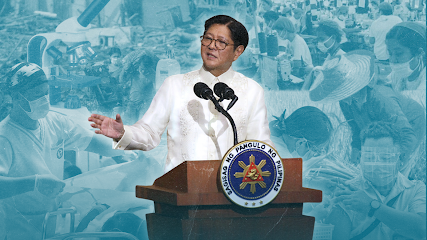
President Ferdinand Marcos Jr. had outlined his vision of an innovation-driven Philippines in his previous State of the Nation Addresses — but three years under his administration, many of his supposed Science, Technology, Engineering, & Mathematics (STEM) commitments rarely get the same attention, despite their crucial role in the country’s progress.
With the 2025 SONA echoing more commitments, the president’s past promises are still riddled with an ambiguous path forward, as critical STEM agendas remain sidelined in the national discourse.
Modern farms, missing organics
Mechanization, farmer debt relief, and agricultural modernization have all been emphasized in Marcos Jr. ‘s SONAs as key components of his administration’s food security plan.
In 2022, he pledged to “increase agricultural productivity through technology and infrastructure”, and by 2023, he celebrated the New Agrarian Emancipation Act’s passage, which forgiven ₱57 billion in farmer debt.
However, his national reports have noticeably overlooked organic farming, a tested-and-proven strategy for soil regeneration, climate resilience, and lowering dependency on imported fertilizers.
This omission is striking because the Philippines imports more than 85% of its fertilizer supply, which leaves local food production susceptible to price shocks from around the world, as was the case during the fertilizer crisis in 2022.
Biofertilizers, which use naturally occurring microorganisms to enrich soil nutrients, are a cost-effective alternative.
Research by the Philippine Rice Research Institute (PhilRice) has shown that biofertilizers can reduce chemical fertilizer use by up to 50%, improve soil health, and increase crop yields, especially in rice and corn production.
If agricultural modernization is to mean long-term resilience — as claimed in the SONAs, then organic farming and biofertilizers must be at its foundation, not afterthoughts.
Without policy support and incentives for these solutions, the Philippines risks locking itself into chemical dependency, unsustainable farming, and fragile food sovereignty.
Wasted waste reform
The Philippines has long struggled with the challenges of environmental degradation and vulnerability to climate.
In his SONAs, President Marcos Jr. has repeatedly discussed it alongside pointing to flood control projects and building more resilient infrastructures — but waste management — one of the reasons for these dilemmas, remain unaddressed.
Currently, the country ranks as one of the top plastic waste polluters in the world. Given this, catastrophic events such as flooding caused by clogged drainage systems occur.
This direct link between waste and disaster risk is rarely acknowledged in national policy discussions, including Marcos’ own reports.
The problem, though, is more than just bad waste management.
The Extended Producer Responsibility (EPR) Law was meant to make companies recycle and reuse their plastic packaging, but it still doesn’t have enough money and isn’t being enforced well.
Many companies have only filed compliance plans and haven’t set up proper systems for collecting or recycling, and local governments don’t have the resources to carry it out, which could mean that the law is just another piece of paper that sounds good in theory but doesn’t work in practice.
Moreover, EPR remains blurry for the sight of the masses because as of now, there is limited public information on the progress of these recovery efforts.
In addition, incomplete or inaccurate data on waste generation, collection, and recycling rates can obscure the true impact of the EPR programs.
With these in mind, addressing the problem will be a crucial step toward the prevention of its domino effect. Without this critical link, the country’s fight against climate vulnerability remains incomplete.
Green gaps in the concrete jungle
With cities expanding both vertically and horizontally, the need to integrate green infrastructure into climate-vulnerable areas becomes more urgent.
The Philippines could definitely follow in the footsteps of its Southeast Asian neighbors such as Singapore, Indonesia, and Malaysia, in wholly integrating sustainable solutions in urban expansion.
It could install pocket parks, rain gardens, green roofs, and permeable pavements—offering a breath of fresh air and aesthetic relief.
According to the United States Environmental Protection Agency (US-EPA), these green infrastructures are beneficial in cooling overheated urban zones, reducing localized flooding, and filtering air pollutants.
However, across all of President Marcos Jr.’s SONAs, there remains a deafening silence on fast-tracking the creation of climate-resilient and livable cities.
While he has centred his priorities on renewable energy and disaster preparedness, he has continually sidestepped the nationwide implementation of sustainable urban planning.
This gap is concerning as urbanizing without sustainability in mind has exhausted many Filipinos—battering them with heat-related illnesses, flash floods, and rising pollution
In Metro Manila alone, rapid land development and shrinking vegetation have distorted the city’s natural heat balance.
According to Philippine Atmospheric, Geophysical and Astronomical Services Administration (PAGASA) weather specialist Nivagine Nievares, the urban heat island phenomenon has enveloped the city, making the area much hotter than its rural neighbours. As a result, temperatures in the metro have risen by 1 to 2°C.
This slight elevation significantly heightens the risk of heat-induced conditions and worsens the air and water quality.
Some efforts exist, but they fall short.
The Green, Green, Green program, spearheaded by the Department of Budget and Management, has made significant strides in urban greening, as evident in the ₱1.055 billion budget allocated in 2024.
Yet despite this boost, its reach remains uneven.
Many local governments still struggle with inadequate access to technical support and long-term financing. In most cases, green infrastructure is treated by most localities as an afterthought—optional rather than essential.
If climate resilience is to go beyond words, as promised in every SONA, then greening cities must be a national mandate, not just a municipal wish.
With climate catastrophes just waiting to strike the nation, Marcos must move urban greening to the center of his priorities.
No matter who holds the president’s seat, the primary goal of the country is to extend promises beyond speeches and start to engrave green spaces in every block, street, and neighbourhood.
Power struggle
The grim reality with the energy sector of the Philippines is that it is tightly enslaved to fossil fuels. A minor disruption in supply chains can cause both economic issues and energy insecurity—problems ordinary Filipinos are already shouldering.
Despite these possible drawbacks, fossil fuels have powered 79% of the country’s electricity in 2024, according to Ember Energy. This is clearly an alarming figure that contradicts the Marcos administration’s sustainable agendas.
In his previous SONAs, Marcos echoed the government’s National Renewable Energy Program. Even stating that he will “aggressively promote renewables,” aiming for a 35% share of renewables in the power mix by 2030, and 50% by 2040.
But for many, that goal is simply too slow.
Energy poverty in the Philippines is worsening, as households pay an average of ₱11.34 ($ 0.19) per kilowatt-hour. This ranks as the second highest in Southeast Asia, next only to Singapore, according to data firm Global Petrol Prices.
Yet despite electricity corporations delivering Filipinos sky-high electric bills, they still suffer from power outages, grid instability, and slow response to power issues.
As such, aiming for the 50% share of renewables in the power mix by 2040 is an unambitious goal by the current administration, highlighted Gerry Arances, convenor of the Power for People Coalition.
“This is too long to wait for consumers to have reasonably priced electricity, free from dependence on foreign fossil fuel sources,” he emphasized.
Until the president resolves such complaints, more Filipinos will fall into the trap of energy injustice. They are forced to pay premium prices for unreliable electricity, while the country’s shift to clean energy crawls at a snail’s pace.
Trapped potentials in innovation
President Marcos Jr. has praised Filipino scientists in their fields numerous times in his SONAs, as well as other feats in science and technology.
Even so, the discussion cuts short when it comes to science-to-business translation — hindering the development of products that could potentially improve the lives of people.
Without this, many innovations remain in laboratories, failing to create jobs or reach communities that could benefit from them.
The Philippines doesn’t have a research shortage. But still, most of these never materialize publicly.
For instance, institutions like the University of the Philippines are pioneers in terms of technological and medical advancement — but most of these inventions fail to upscale their production — leaving Filipinos hanging with their problems.
According to the Philippine Institute for Development Studies (PIDS), only a small fraction of publicly-funded research actually reaches commercialization; mainly due to the lack of venture funding, weak industry linkages, and little to no support in other aspects.
If Marcos Jr. aims for a “modern and innovative Philippines” to take root, future SONAs should go beyond celebrating research milestones, but address how these would turn to become engines of our economy.
Without these, even the best Filipino innovations risk staying on paper or in lab shelves — good science, but lost development opportunities.
Healthcare hurdles
President Marcos Jr. has made hefty promises to elevate the healthcare system in the Philippines, most of which are still leaking out problems.
In his 2023 and 2024 SONAs, he announced the establishment of specialty hospitals, citing the UP-PGH Cancer Center and the Philippine Cancer Center as milestones to expand access to cancer care.
Nevertheless, most rural hospitals are suffering from the lack of facilities, offered services, and health staff.
According to the Department of Health (DOH), despite rural residents accounting for 40% of Filipinos, only about 10% of healthcare providers are deployed in their areas—leaving millions deprived of proper healthcare.
Marcos also vowed to decongest hospitals by building new facilities. However, public hospitals remain overcrowded, with patient-to-bed ratios exceeding DOH standards, particularly in Mindanao.
A 2022 study by the Philippine Institute for Development Studies (PIDS) revealed alarmingly low hospital bed densities in provinces like Masbate (0.05), Sulu (0.15), and Occidental Mindoro (0.096), far below the national average of 0.5 beds per 1,000 people.
Health Secretary Ted Herbosa emphasized the critical need to send more medical professionals to the provinces. Programs like Doctors to the Barrios and Mobile Clinics have only been healthcare band-aids, not long-term services that cater to Filipino welfare.
The President also promised in his 2022 SONA to reduce the price of medicines and stabilize supply. But three years into his administration, drug prices remain among the highest in Southeast Asia.
While PhilHealth has expanded coverage to include 53 generic outpatient drugs, life-saving treatments remain out of reach for many.
In the case of breast cancer, one full course of treatment costs up to ₱450,000, literally putting survival behind a paywall.
For low-income patients, living longer is no longer a universal right but a privilege earned by the wealthy.
With the Marcos administration facing mounting criticism over his ‘deluded promises,’ the first step is to confront these health hurdles—not just in his speeches, but in tangible actions that will officially cure the country from its healthcare crisis.
One health, one future
Diseases do not respect boundaries — not between animals or humans, nor between the health and the environment.
In a country battling the likes of African Swine Fever, avian influenza, and climate-related diseases like leptospirosis, overlooking the One Health Approach is a risk that the country cannot afford.
The Philippines is a known hotspot for emerging infectious diseases, and recent years have shown how costly these outbreaks can be.
Through the years, ASF had taken billions of pesos from the hog industry, while water-borne illnesses like leptospirosis continue to surge every rainy season, claiming lives in the process.
These are not isolated problems — they are the result of weak coordination between public health, veterinary services, and environmental management.
A 2022 report by the World Health Organization (WHO) and Food and Agriculture Organization (FAO) highlighted how countries adopting One Health strategies manage to detect outbreaks earlier and prevent economic losses in agriculture and trade.
Neighboring countries like Thailand and Vietnam have adapted to the cause, applying different strategies such as disease surveillance and focusing on zoonotic disease control, among others.
In the Philippines, experts from the Philippine Council for Health Research and Development (PCHRD) have long urged for a unified One Health strategy, but it has yet to be prioritized in national policy.
A true preventive approach begins long before an outbreak reaches humans — on farms, in animal markets, and in our ecosystems.
Without One Health, Filipinos will remain stuck in a cycle of reacting to crises rather than preventing them.
Water woes, weak solutions
In every SONA, President Marcos Jr. has given special spotlight to strengthening water security—a long-held promise yet riddled with visible flaws.
Marcos pledged to rehabilitate and improve the water supply across borders. In 2024, he emphasized the Jalaur River Multipurpose Project in Iloilo. This is a massive irrigation and flood control dam that serves as a solution to the massive agricultural loss caused by El Niño.
Moreover, in 2023, he cited the Wawa Bulk Water Supply Project that will help expand the water supply in Metro Manila and enhance flood controls, making it a safety net against constant rainfall and typhoons.
But behind these flagship developments lies a deeper dysfunction.
Water distribution systems remain broken, especially in far-flung areas. Their pipes are old, filtration is nonexistent, and funding is scarce.
In fact, the Department of Environment and Natural Resources (DENR) reported that around 40 million Filipinos still suffer from inadequate access to a proper water supply.
The regions under siege are Central Visayas, with 11 percent of the population still requiring basic water services; Zamboanga Peninsula, with 14 percent of the population still not connected with basic water services; and Bangsamoro Autonomous Region in Muslim Mindanao (BARMM), with only 27 percent having basic water services.
In urban cities, even with infrastructure in place, access is undermined by costly and inconsistent service because of privatized control.
Across many provinces, privatized water utilities, particularly PrimeWater, owned by the Villar family, have become infamous for serving high tariffs, erratic service, and unreliable access.
In areas like Bulacan, Nueva Ecija, Tarlac, and several provincial subdivisions, consumers have reported supply interruptions, dirty water, and zero accountability despite soaring bills.
Despite these pressing issues troubling many Filipinos, not once were they uttered in Marcos’ 2024 SONA. This blatant omission by the administration not only dismisses the cause of many water woes but also deprives millions of Filipinos of their fundamental right to the droplet of life.
If Marcos is serious about delivering on his water security promise, then he must transcend beyond building dams and name-dropping irrigation projects.
His administration is urged to quench not just the thirst for water, but also for people’s long-awaited justice—a clean, accessible supply unburdened by inflated and unfair billing.
State of Omission, Not State of the Nation
The promises in Marcos Jr.’s SONAs speak of modernization, resilience, and progress, yet many crucial aspects of science and technology remain in the margins — with each one serving an equal purpose for the people.
If future SONAs are to live up to their vision of a self-reliant and resilient Philippines, then this pattern of omission must end. Whoever is given the seat of presidency, STEM agendas must take their rightful place at the heart of national development.