





Now Reading: Words we wished we had heard
-
01
Words we wished we had heard

Francine Tosoc
What keeps you alive when the thought of ending it all never leaves?
There are nights when it seems like escaping the suffocation of darkness feels impossible. When running away, keeping ourselves occupied, and coping just don’t work anymore. At some point, the thought of permanently putting an end doesn’t seem to be bad at all.
And then a message popped up, coming from someone we least expected. It might be from our best friend who’s typically asking the most random questions; our classmate who’s asking if you’re already done with your schoolworks; our sibling who’s asking us to fund their Roblox addiction, or a mere stranger telling us the most bizarre thing.
They might not know, but those messages hit more than just a notification. In a way, it kept us alive for another second, and without even realizing, their words—which might be the silliest ones we’ve ever gotten—serve as a guide to keep us from drowning in the abyss of darkness.
Reality check
Every year, the total number of individuals dying because of suicide keeps rising. According to World Health Organization (WHO), there are more than 727,000 people who have died due to self-destruction as of March 2025, making it the third leading cause of death among 15-19-year-olds globally. To think about it, the numbers are already huge. Yet, it is still expected to increase.
Meanwhile, more than 20 million people find themselves engaging in suicidal behavior yearly. But statistics cannot capture the weight of what this truly means. This issue is more than just the people dying– it’s also about the never-ending stigma surrounding it, making it so grueling for these souls to reach out and let other people know what they’re going through.
These individuals are being labelled as selfish, cowardly, losers, and weak once they try to initiate or engage in a conversation revolving around suicide or having suicidal ideation.
Change the narratives
This is why we celebrate the month of September as Suicide Prevention Month, to acknowledge and raise awareness about how important it is for this issue not to be surrounded by disgust and shame. Because in reality, talking about suicide doesn’t cause it; silence does.
The ninth month of the year isn’t just the start of what we call “Ber months,” where we start thinking about the holiday season. More than just the Christmas chills, this also serves as a ray of hope, a bridge to open-mindedness, and to amplify the whispers of helplessness.
This is also why we decided to gather the voices of survivors who once stood on the edge, waiting for a rope to come and save them. They need a channel to share the words they wish someone had said to them during their darkest moments as having experienced it first-hand, they know that sharing what stopped them can guide others still struggling.
Letters of hope
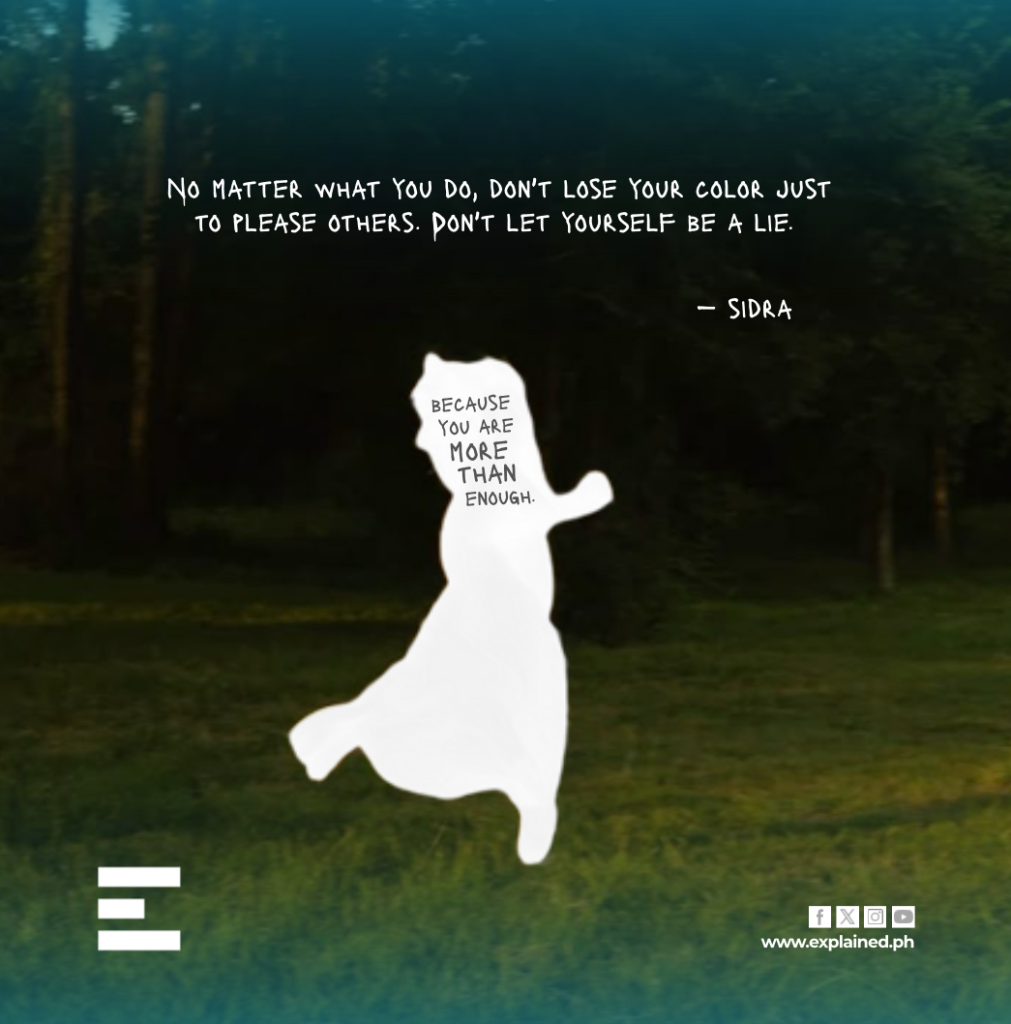
Through collected reflections, many people shared the words they longed to hear— all to give others the hope that some of them never got.
These are passages that are unpolished, honest, and drawn from nights of fighting battles no one else could see. They come from moments when reasons to live felt scarce and fragile, yet the heart still longed for even the faintest reminder that staying was worth it.
Some wrote about how they wished someone had told them their pain was real, that they were not a burden, and that the future could still hold something gentle for them. Others shared that the smallest reminders: “You matter,” “I’m glad you’re here,” “I’ll walk with you through this,” would have been enough to loosen despair’s grip, even just for a moment.
And in their sincerity, we are given both comfort and a responsibility: to be that voice for someone else. To speak the words we once needed into another person’s night. To become, even unknowingly, the reminder that light is still possible.
The power of words
Why do these words matter?
Because they carry weight, for more than just letters, these words, no matter how short or long they are, can either make or break a human being. And the fact that these are from the people who have once experienced what it is like standing on the edge with hopelessness in their minds makes them more connected to the one who will be reading those messages.
As Loretta Girzartis said, “If someone listens, or stretches out a hand, or whispers a word of encouragement, or attempts to understand a lonely person, extraordinary things begin to happen.”
Threads of hope intertwined
Some survivors have lent their voices to this article not as distant observers, but as companions who once felt the same despair. At the heart of it, the words we wish we had heard on our darkest nights are the same words we can choose to give others now.
And no, they don’t have to be perfect, long ones, or poetic. As long as it’s sincere and completely from the heart, the other person who needs it will definitely feel the impact you’ve given to them– a positive one.
To say, “You are heard”, “I see you,” or simply “I’m here” might not end all the pain, but it can quiet despair long enough for hope to breathe again, gradually resulting in people finding another will to live. And sometimes, that gentle reminder is enough to help someone choose to stay for another day.