




Now Reading: Rallies are tomorrow’s country
-
01
Rallies are tomorrow’s country

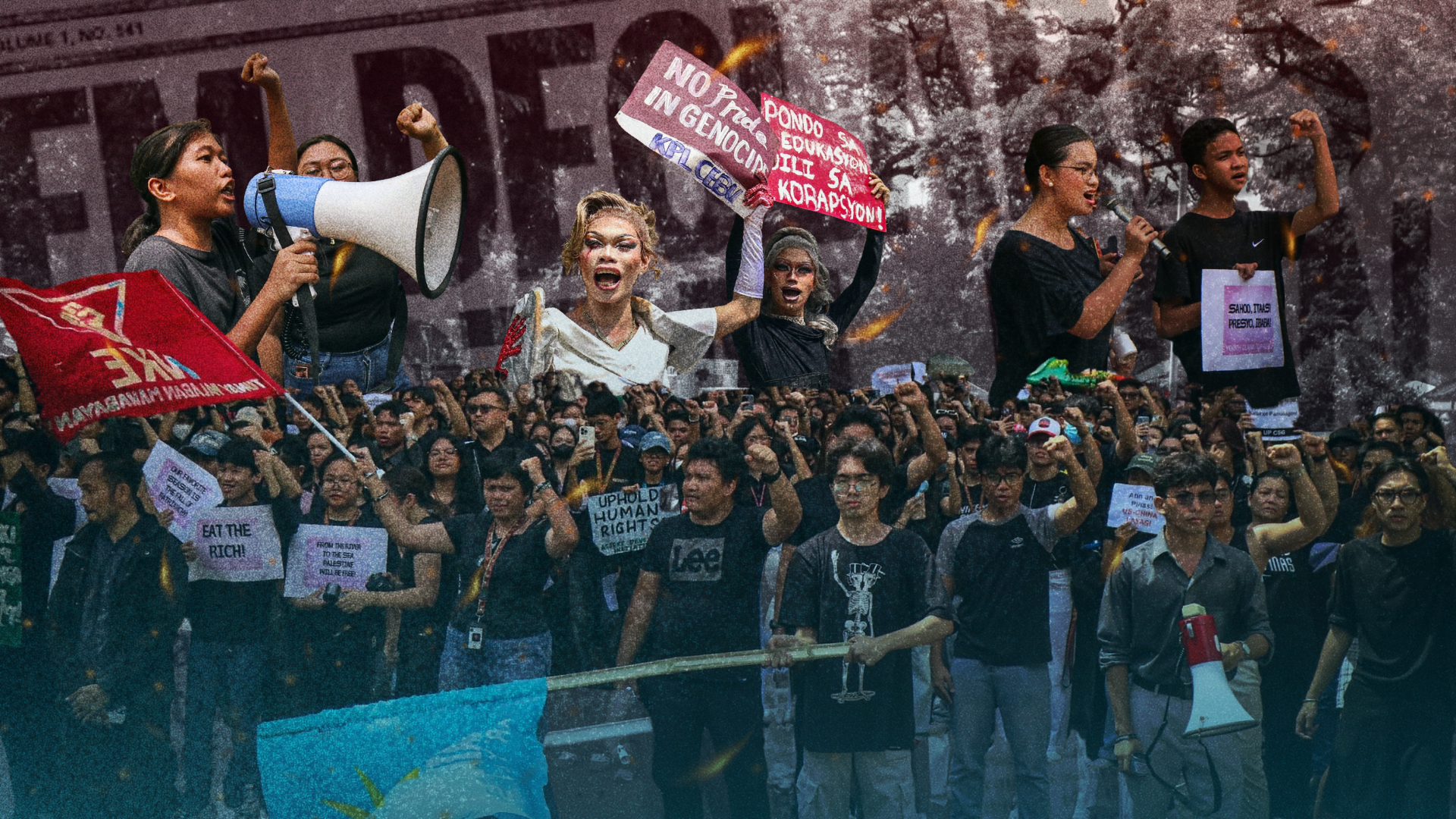
For a few hours on an otherwise ordinary afternoon, a rally can feel like a country within a country, a fleeting republic conjured not by law but by bodies and belief. One enters through the crush of the crowd: the smell of sweat and dust, the accidental brush of strangers’ arms—and finds that the ordinary coordinates of life: the hierarchy of wealth, the architecture of power, the loneliness of private dissent, are suspended. Inside the rally, people live as if the world they long for already exists, inhabiting what the anthropologist Victor Turner once described as communitas: a state of unstructured togetherness where conventional roles dissolve and human beings meet, for once, as equals.
“It feels like breathing for the first time,” said Teresa, a public school teacher who had never attended a rally until tuition hikes threatened to push her children out of school. “All year, puro lang ako complain about sa treatment sa amin, but iba ‘pag nanawagan ka. Iba ‘pag napakikinggan ka.” Her language, oscillating between exasperation and wonder, captures what psychologists call the paradox of collective action: it is both catharsis and construction, release and rehearsal.
More than politics, a rehearsal of life
It is tempting, almost too tempting, to describe a rally in the flat lexicon of politics: the slogans, the permits, the speakers on stage. But to stop there is to misread its strangeness. A rally is not simply a demand projected outward; it is a rehearsal enacted inward. It insists on change not only in the abstract sense of laws and leaders but also in the lived microtextures of solidarity: in the way strangers hand each other water bottles, in the way chants rise without central command, in the way no one asks who you are before chanting with you.
French social theorist Gustave Le Bon once argued crowds dissolve individuality into irrational frenzy. And yet, lived testimonies complicate that reduction. The mother explaining placards to a child on her shoulders, the students inventing chants from scratch, the jeepney driver shielding a stranger with his umbrella—none of these acts resemble frenzy. They resemble what Erich Fromm would call the “need for relatedness,” the innate human impulse to belong to something larger than oneself.
These small gestures rarely make it to manifestos or news tickers. And yet, they form the heartbeat of the rally. Intimate reminders that solidarity is not an abstraction but a choreography of small acts, repeated until they feel natural.
The brief architecture of belonging
In this sense, a rally is not merely a confrontation with the state. It is also an experiment in the community. The crowd becomes a prototype of the society it demands: egalitarian, generous, unafraid. You are no longer a solitary voice shouting into the void of power; you are a syllable in a collective chorus, a note in a song whose melody you may not fully know but instinctively follow.
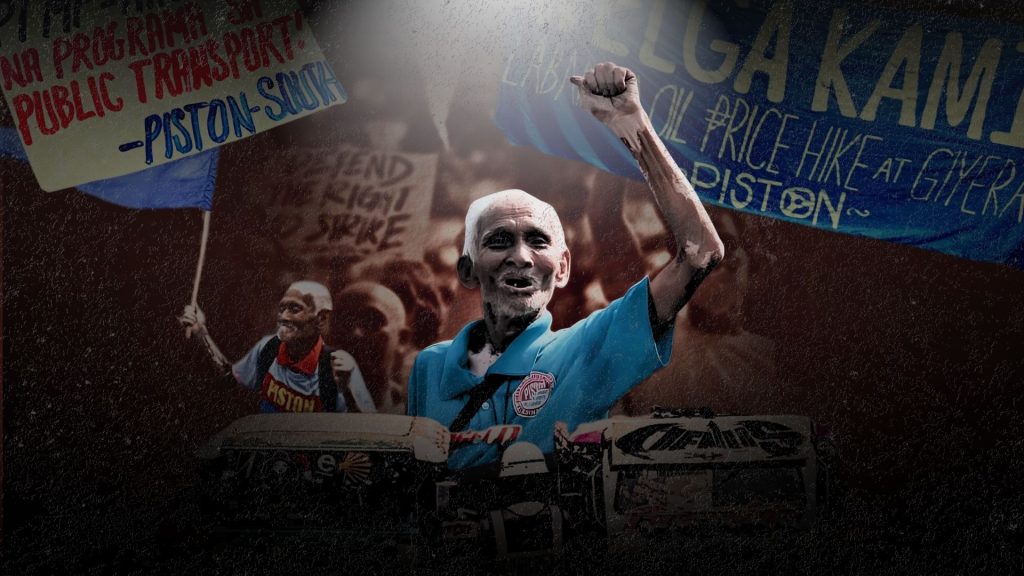
Miguel, a tricycle driver from Cavite, described it with startling clarity: “Sa trabaho, lagi ako nayukod sa mga pasahero, sa mga enforcer, sa mga taong mas mayaman sa akin. Pero sa rally, di ako nakayukod kahit kanino. Lahat gusto ng pagbabago kaya di ko maintindihan bakit panay NPA at terorista tawag sa amin.” His laughter afterward suggested embarrassment, but also recognition—that for a fleeting moment, hierarchy lost its grip.
History bears this out. The EDSA People Power revolution of 1986, which toppled a dictatorship through mass mobilization, is remembered less for the speeches from the stage than for the images of nuns offering flowers to soldiers, strangers sharing food across barricades, whole families kneeling in prayer beside tanks. Similar testimonies ripple across global contexts: from Tahrir Square in Egypt to the Umbrella Movement in Hong Kong, participants recall not merely the political stakes but the lived sensation of equality, the collective exhale of fear into courage.
Impermanence as poignancy
Critics often note that rallies are impermanent, that the utopia they conjure dissolves as quickly as it appears. This is true. When placards are discarded and crowds disperse, the world remains stubbornly intact: the same leaders in office, the same inequalities entrenched, the same struggles waiting the next morning. But impermanence does not equal futility. Turner’s anthropology of ritual reminds us that liminality—those brief thresholds where ordinary structures are suspended—are never permanent by design. They are powerful because they reframe how permanence itself is experienced.
A rally, in this sense, functions like fireworks: brilliant, fleeting, unforgettable. It is not meant to endure indefinitely but to remind its participants that endurance is possible. Its brevity becomes its poignancy: a reminder that change, however slow in arriving, can be imagined collectively before it is built structurally.
What lingers after the noise
If you ask those who joined rallies long after the banners have yellowed, they rarely recall the talking points from the podium. What they remember is sensation: the roar that made their ribcage vibrate, the strange joy of shouting with strangers, the sudden awareness that fear can be eclipsed by solidarity. “I used to think it was dangerous,” said Arlene, a nurse who skipped a hospital shift to join a rally in 2022. “But then I realized: danger is when you stay quiet. That’s when nothing changes.”
Psychologists studying collective action note this afterlife. Research by Drury and Reicher (2009) on protest movements shows participation can permanently reshape self-concept: individuals come to see themselves less as isolated actors and more as members of a collective capable of action. Democracy, in this reading, is not a static possession but a muscle exercised in public, one chant, one march, one raised fist at a time.
“You go home tired, sunburnt, hoarse,” said Carlo, a university freshman, recalling his first rally. “But when I looked at my phone later that night, I saw photos of us: faces, chants, colors. I thought: maybe this is how history starts. Maybe it’s small.” His intuition aligns with history’s verdict: great movements are rarely born in legislatures first; they are incubated in plazas, side streets, and makeshift stages where people practiced the world they wanted.
To live otherwise, even for a day
The piercing lesson, then, is this: a rally is not only about making noise but about teaching silence how to listen differently. After the chants collapse into quiet, after the streets empty and routines resume, the memory of what was possible… what was lived, even briefly haunts the ordinariness of daily life. Every desk, every classroom, every jeepney ride afterward is colored by the faint reminder that the world does not have to be arranged the way it is.
To stand in a rally is to step into a provisional republic, one built not on permanence but on fragile, dazzling recognition: that strangers can, for a time, live as if the world were already just.
And that, perhaps, is the most subversive act of all, not only to resist what is, but to embody what could be, even if only for a day.