









Now Reading: Skin Stretching Opens Door to Future Needle-Free Vaccines, Study Shows
-
01
Skin Stretching Opens Door to Future Needle-Free Vaccines, Study Shows
Skin Stretching Opens Door to Future Needle-Free Vaccines, Study Shows

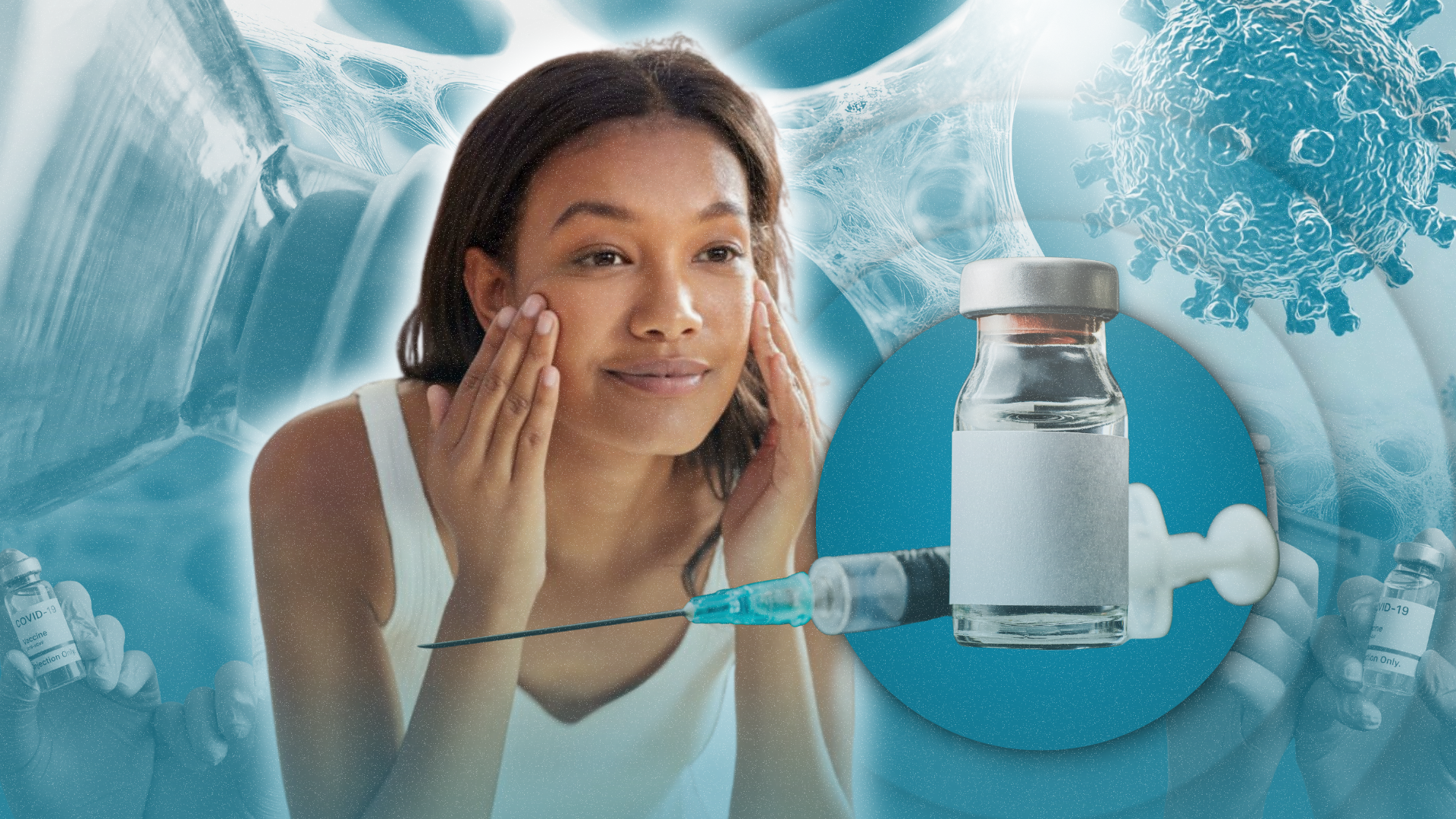
Instead of piercing through, vaccines may soon glide in through newly opened pores, thanks to the immune activation caused by skin stretching.
Researchers from King’s College London and the Curie Institute reported that stretching the skin activated immune defenses and increased its permeability to large molecules.
The study, published September 17 in Cell Reports, revealed that mechanical stress caused changes in collagen fibers, opened hair follicles, and allowed the skin to absorb compounds more easily.
“It was quite surprising—I would not have expected so much production of inflammatory molecules just from stretching the skin,” said Elodie Segura, an immunologist at the Curie Institute and senior author of the study.
The team found that stretching stimulated the secretion of immune molecules and attracted immune cells such as neutrophils, macrophages, monocytes, and dendritic cells.
In fact, dendritic cells migrated to nearby lymph nodes in mice, which the researchers recognized as a classic early immune response.
Skin as a Gateway
“Human skin is usually much less permeable than mouse skin because it has a thicker outer layer, but in this case, it responded in the same way because the molecules are moving through the hair follicles, not through the outer skin layer,” explained Stuart Jones, pharmaceutical scientist at King’s College London.
The researchers confirmed that stretched skin allowed large molecules to pass through hair follicles which increases permeability in both human and mouse samples.
Using germ-free and hairless mice, the team deduced that dendritic cells sensed metabolites from skin microbiota that penetrated the open follicles.
How Stretching Activated Immune Cells
The researchers built a device resembling a tiny suction cup that applied strain to mouse skin for 20 minutes.
They recorded that the force was similar to that applied when people rub moisturizer or receive massage therapy.
When the stretched skin was analyzed under a multiphoton microscope and through transcriptomics, the scientists recorded changes in collagen orientation and gene expression in over 1,000 genes.
These genes included several that coded for cytokines which signal molecules that activate inflammation and immune defenses.
Segura and her team confirmed that even acute stretching caused cellular changes that strengthened immune surveillance in the skin.
Vaccine Test in Mice
The team then tested whether this skin-opening effect could deliver vaccines without needles.
They applied a topical solution of fluorescent flu vaccine while stretching the mice’s skin.
Dendritic cells absorbed and transported the antigens that lead to a stronger antibody response against the H1N1 flu antigen than a standard intramuscular injection.
“Just stretching the skin was more effective than delivering the same vaccine with a needle, which shows the practical relevance of this immune activation,” said Jones.
The researchers also said that adding an adjuvant did not further improve the immune response which suggests that stretching alone was sufficient.
The fluorescent marker revealed that the vaccine antigens accumulated in nearby lymph nodes, where immune responses were coordinated.
Looking Ahead
Although the study produced promising results, the researchers remind the need for more work in humans.
They highlighted that most of the data came from mice, so further studies are necessary to confirm whether the effect applies to people.
“You should be really careful about what you apply on your skin,” warned Segura.
She emphasized that while vaccines could enter this way, toxic compounds might also penetrate or even trigger allergies.
Jones added that the team was already exploring potential uses beyond vaccines, including diagnostics and cell therapies.
“This new pathway into the skin could be used in lots of different ways—we showed its potential for vaccine delivery, but we’re also starting to think about delivering cell therapies and whether it could be used for diagnostics,” Jones said.
If proven in humans, vaccines without the sting of needles may no longer be a stretch of imagination.