








Now Reading: Artificial ignorance
-
01
Artificial ignorance

Vera Kim
While the internet has always had questionable corners, Artificial Intelligence (AI) has made it easier than ever to flood social media with short, low-effort content. Much of this “AI slop” is dismissed as harmless entertainment— from Fruit Love Island, bits of fruit stories and their over-the-top relationship dramas, to Stick Figures reenacting historical events with exaggerated storylines too juicy to pass on. Yet beneath all of this absurd humor lies a recurring pattern deserving of a much closer look.
Fragile Filters
Most of these contents revolve around themes of sexual harassment, coercion, rape, and sexism. On platforms like TikTok—one of the dominant social media platforms in the Philippines—this AI slop is uploaded under the guise of it being “Educational”. Paired with seemingly informative and innocent captions, it slips right through the cracks of a flawed moderation system.
Truly, the irony is something that is hard to ignore, as the very technology used to create these AI-generated videos is also the technology that platforms like TikTok depend on to filter them. When AI is left to moderate AI, contexts are left misunderstood— gradually blurring the lines between sensationalism and awareness.
But the cracks in moderation do not end with automation. In 2023, TikTok removed nearly 4 million videos in the country due to violations. Behind the algorithms are human moderators tasked with reviewing an overwhelming volume of reported content, often under significant time pressure. The delay allows this slop to remain online long enough, reaching millions of engagements before they are removed. Worse still, some even evade moderation altogether, exploiting our ignorance with abuse without ever being flagged as harmful.
Feeding on the Vulnerable
The problem extends beyond the content itself—it lies in who are exposed and left vulnerable in the face of it.
Content like these AI slop thrives on shock value—and algorithms that prioritize engagement over substance feed upon this.
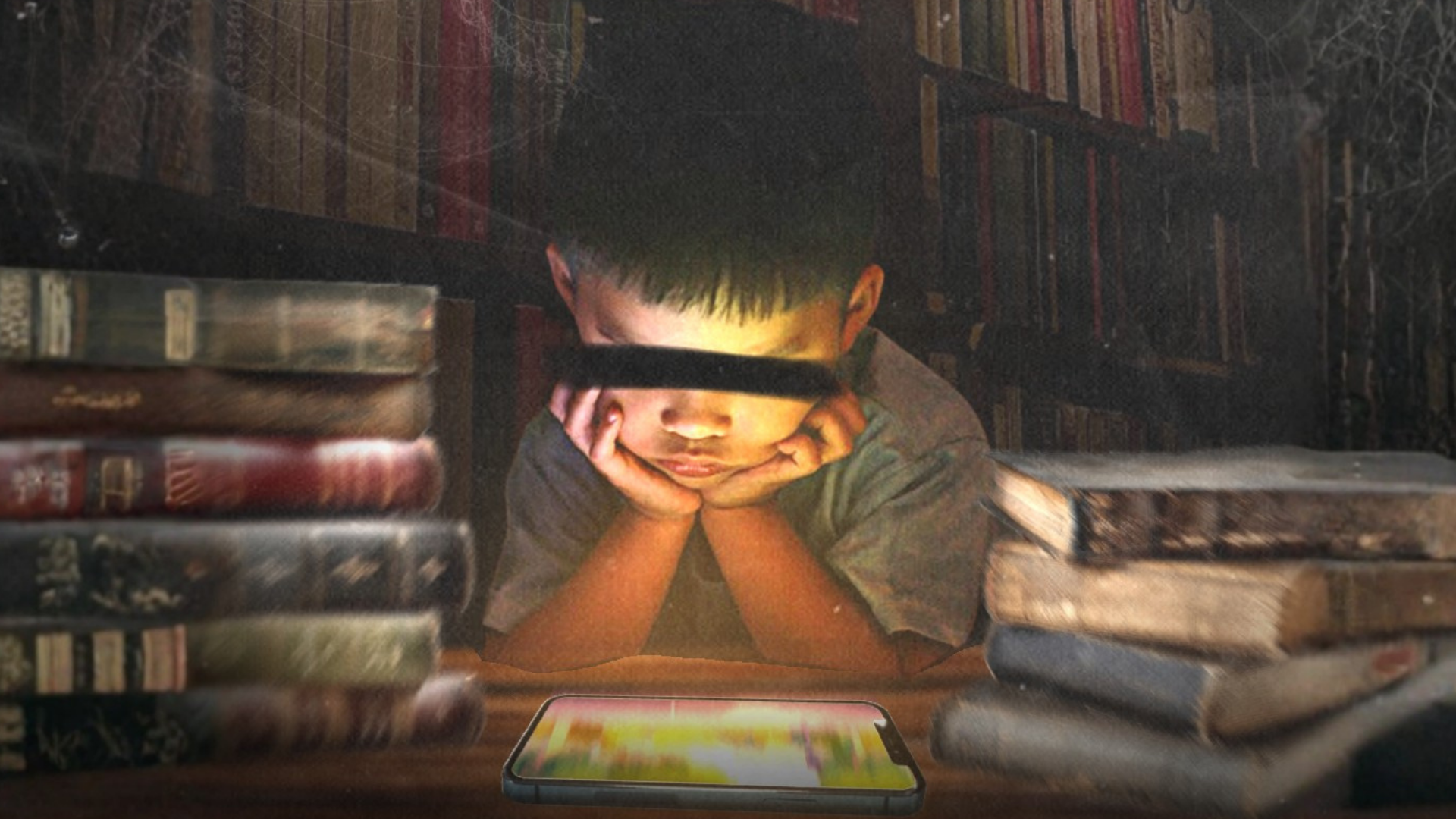
With 83.8% of the population active online, children and teenagers are among the groups most engaged with short-form social media platforms. While young users might not actively search for content involving fetishizing themes, algorithms can still place such content in front of them just because it is trending or highly engaging. Bright colors, easy-to-digest concepts, and humorous dialogue mask sinister intentions that many viewers are too young to understand.
In the Philippines, where nearly 1 out of 5 children face Child Sexual Abuse (CSA), an environment where many children are already vulnerable to sexual violence, media that quietly desensitize people to abusive behavior can blur the lines between consent and boundaries.
But perhaps the most uncomfortable question is: why do these videos continue to spread in the first place?
Who Gets To Decide?
Algorithms do not create trends in a vacuum —they push what people watch, like, and comment on. Likewise, AI relies on original human knowledge and prompts, reflecting existing norms embedded within our society. These systems do not manufacture demand; instead, it responds to it. Unfortunately, with the rise of AI slop, we saw how this technology is now merely reduced to catering to twisted demands that perpetuate content openly degrading women or downplaying sexual abuse.
More troubling than the technology itself is the societal flaw it lays bare— a society so desensitized to misogyny, and a growing tolerance for abuse. In the face of it all, we as a society are forced to confront our choices because every click decides the future that the next generation will inherit.
As AI continues to rapidly evolve, our standards for moderation and digital responsibility must keep pace. Otherwise, the greatest threat won’t be what’s on the screen, but our blindsight to what we’ve grown numb to.