









Now Reading: Cebu students, teachers raise ‘budget cut’ woes ahead of SONA 2025
-
01
Cebu students, teachers raise ‘budget cut’ woes ahead of SONA 2025

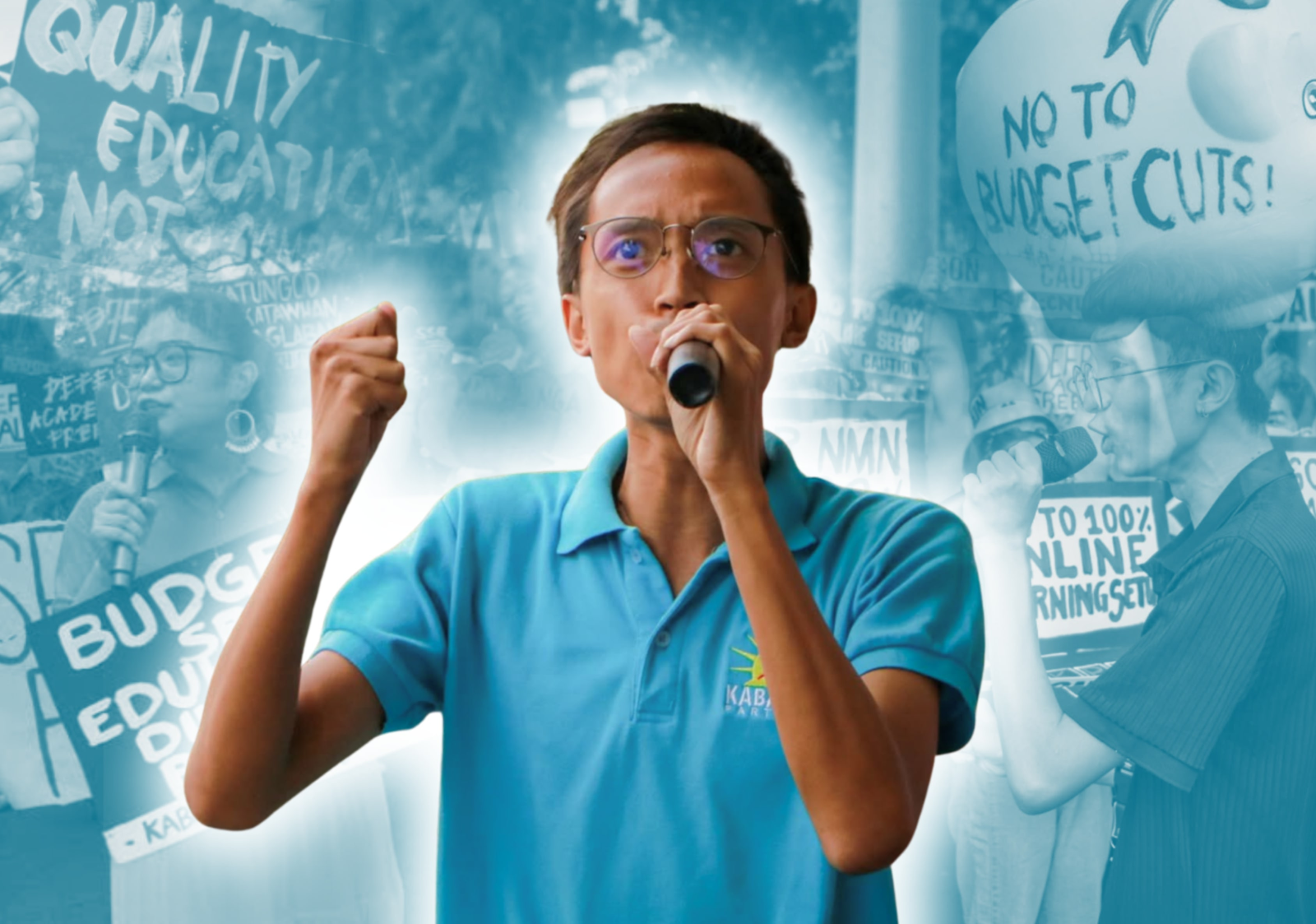
Youth representatives in Cebu City lamented the effects of the decreased 2025 national budget for the Department of Education (DepEd) ahead of President Ferdinand Marcos Jr.’s fourth State of the Nation Address (SONA) on July 28.
Kabataan Partylist (KPL) National Secretary General Joaquin Labio stressed that the chronic budget cuts in State Universities and Colleges (SUCs) remain one of the most pressing challenges that burden students in Marcos Jr.’s administration.
“Because of [budget cuts], students do not have enough slots to enter these [state] universities and are forced to enter private schools. There are a lot of lacking learning facilities such as classrooms, student emails, library, and wifi access,” said Labio in an interview with Explained PH.
He added that the impact of the education underfunding has worsened the situation of students in Cebu Normal University (CNU), which recently mandated a one-hundred percent shift to an online-class setup.
“Tungod sa pag-cut sa among budgets, ang among facilities inadequate gihapon siya. Walay chance na ma-improve ang mga classrooms ug ang among ventilation kay init gihapon kaayo,” said Patricia Hope Alivio, chairperson of KPL – CNU.
(Due to the budget cut, our facilities remain inadequate. There is barely any chance to improve the classrooms and the lack of proper ventilation worsens the heat felt inside the campus.)
Citing a survey conducted by the CNU Main Campus Supreme Student Council (SSC), they noted that students are “not equipped” for the abrupt modality shift.
The survey revealed that students were concerned about the poor quality of learning, limited access to physical resources, technical difficulties, and the limitations of remote instruction, particularly for practical subjects.
As given in Memorandum Circular No. 43, s. 2025, the CNU administration mandated a full shift to online classes at its Main Campus to pave the way for the retrofitting of school facilities for the Centralized Student Smart Hub project.
Castron Troy Encabo, a student in CNU, voiced their disappointment over the sudden news of the full shift to online classes, which was announced at noon, when students were set to have their classes.
“Naa baya uban students na gikan sa province na niari pa ug city, nagbayad na sa ilang boarding houses ug wala ta kahibalo, naay mga parents sa students na nangutang para lang naay pangplete ang ilang mga anak padulong diri sa city,” they said.
(There are some students who are commuting from the province to the city, have paid for the boarding house rent, or have parents who had to loan to support their children’s transportation needs.)
For Encabo, the institution’s implementation is not reflective of the “quality education” often claimed by the university administration.
The budget for State Universities and Colleges (SUCs) was reduced to Php 113.749 billion in the National Expenditure Program (NEP) for 2025, a 11.29 percent decrease from 2024’s Php 128.23 billion.
‘Overburdened’ faculties
Alivio also shared that teachers in CNU likewise grapple with the effects of budget cuts.
“Ang among mga teachers dugay maabot ilahang sweldo,” stating that the salary delay goes as far as January.
(It takes a long time before our teachers could receive their salary.)
Meanwhile, the University of the Philippines (UP) System is experiencing a significant budget decrease for 2025, with its allocation reduced by Php 2.076 billion after President Ferdinand Marcos Jr. signed the General Appropriations Act (GAA) in December 2024, bringing the total to Php 22.69 billion.
It saw an 8.38 percent decrease from its Php 24.77 billion budget from last year, despite its proposed budget of Php 39 billion in the House of Congress.
Regletto Aldrich Imbong, an Associate Professor at UP Cebu and a member of the All UP Employees Union, stressed the ‘drastic’ effect of these cuts on teachers and university employees.
Imbong said that UP’s budget cut can be pinned to the reduction of capital outlays, or one-time expenditures on infrastructure and other long-term investments, shrinking from Php 3.10 billion to only Php 431.53 million in 2025.
“Dili lang makaapekto sa mga capital outlay, pero labi na gyud sa personnel services, mao ni siyay makapa-constrain sa mga administration sa paghire ug mas daghan pa nga mga empleyado,” he said.
(It will not only affect capital outlays, but also personnel services, which will constrain administrations from hiring more employees.)
He added that Cebu SUCs in particular are introducing new academic programs that require an expansion of what he called “faculty and staff complement.”
“Kung dili ni mahitabo, ma-overbuden ang mga employees nato tungod sa kadaghan mga trabahuon nga pagawsaon sa mga limitado kaayo nga mga empleyado,” he said.
(If this does not happen, our employees will be overburdened due to the heavy workload that will be done by very limited employees.)
Another concern cited is the financial restriction on academics’ capacity to undertake research and produce publications.
The limited funding, as per Imbong, is the reason why the system remains underdeveloped and dependent on international research.