








Now Reading: SONA 2025: Marcos vows more reforms, improvements in government services
-
01
SONA 2025: Marcos vows more reforms, improvements in government services

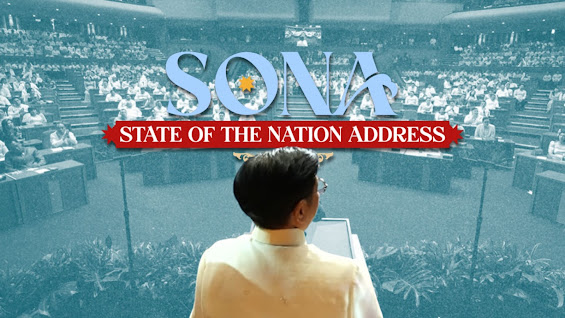
President Ferdinand Marcos took the stage as he delivered his fourth State of the Nation Address (SONA), promising more improvements to the public in the last three years of his term.
During his speech on July 28 at the Batasang Pambansa Complex, Marcos laid out the accomplishments of the administration, as well as its plans for the following years, which mostly revolved around the issues of poverty, health, education, and corruption.
As Marcos started his speech, he noted that he was aware of the disappointment of the Filipinos towards the government’s performance, as shown in the results of the elections.
“Malinaw sa akin ang mensahe ng naging resulta ng halalan: bigo at dismayado ang mga tao sa pamahalaan, lalo na sa mga pangunahing serbisyo. Ang leksiyon sa atin ay simple lamang: kailangan pa natin mas lalong galingan, kailangan pa nating mas lalong bilisan,” he said.
Poverty
While the economy of the country has been seen to improve, Marcos admitted that it does not totally mirror the condition of the citizens.
“Kung datos lang ang paguusapan, maganda ang ating ekonomiya, tumaas ang kumpyansa ng mga negosyante: bumaba ang inflation, dumami ang mga trabaho. Ngunit ang lahat ng ito ay palamuti lamang. Walang saysay kung ang ating kababayan naman ay hirap pa rin at nabibigatan sa kanilang buhay,” the President said.
Marcos vowed that in his last three years, his administration will reinforce the various livelihood programs of the government, which the Filipinos can benefit from through the Department of Labor and Employment and the Department of Trade and Industry, and other related agencies.
“Hindi na ako magpapaligoy-ligoy pa. Maayos na hanapbuhay talaga ang mabisang pantiyak laban sa kahirapan at laban sa gutom. Dumarami ang mga nililikhang hanapbuhay sa ating bansa ngayon,” he said.
Included in these projects are microenterprise startup assistance, free business management training, and an industrial work boost.
Marcos added that the Philippines is ready to compete on the global economic stage. “My single resounding message to the international business community is that the Philippines is ready. Invest in the Filipinos,” he said.
Agriculture
On the widely-sought 20-peso per kilo rice, Marcos emphasized that the government has already proven that rice at a low price is possible while also considering the right amount of pay to farmers.
“Sa mga nagtatanong kung nasaan na ang 20 pesos na bigas, napatunayan na natin na kaya na natin ang bente pesos na bigas na hindi malulugi ang ating mga magsasaka,” he said.
Marcos promised that the government will allot 113 billion pesos for the expansion of the said project nationwide through the hundreds of Kadiwa stores in the country.
The president also vowed to strengthen rice production and facilities for the farmers, as well as provide free boats to be given to fishermen.
The coconut industry is also eyed to be improved by the Marcos administration, as they will propose to the Congress to amend RA 11524, or the Coconut Farmers and Industry Trust Fund Act.
“At upang lubos na pasiglahin ang industriya ng niyog, hihilingin natin sa Kongreso na amyendahan ang Coconut Farmers and Industry Trust Fund Act act para mas maging angkop [ang batas] sa pangangailangan ng ating magsasaka,” he said.
Energy, water crisis
Marcos admitted that while many improvements in the country in terms of energy efficiency and water service have been made, there are still places that are left behind in accessing the said necessities.
“Bagaman dumarami ang mga planta ng kuryente sa buong bansa lalo na ang mga bagong teknolohiya at malinis na enerhiya, bagaman kilalang-kilala na tayo sa buong mundo dahil sa pagpapahalaga sa renewable energy, nariyan pa rin ang problema sa enerhiya na damang-dama ng bawat Pilipino,” he said.
Marcos revealed that more than one million homes are set to have electricity through the solar power home system initiative of the government, which he said will lessen the burden for the citizens in paying their electricity bills.
In terms of water service, Marcos said that he has received many reports of water districts and their joint venture partners being unable to fulfill their responsibility to the consumers, stressing that the authorities of these agencies will be held accountable.
“Titiyakin ng LWUA (Local Water Utilities Administration) na mailalagay na sa ayos ang serbsiyo ng tubig…titiyakin nating mapapanagot ang nagkulang sa mahalagang serbisyong publiko na ito,” he said.
Education
With the Philippines’ low rank in international assessments, Marcos admitted that the country is facing an education system crisis, with both students and teachers having a hard time catching up with the knowledge and abilities that they should be learning or teaching.
Marcos emphasized the administration’s focus on education, saying that they will continue to push forward policies that will improve the system.
“Puspusan nating pinapagana ang sistema ng edukasyon. Sa lahat ng kinakaharap natin ngayon, ito pa rin ang rurok,” he said.
Marcos also mentioned that in the following months, the government will further strengthen the mental health assistance in schools by adding more school counselors; the construction of school infrastructure by reaching far-flung areas; and the health vaccinations necessary to be administered to students at a young age.
The President also vowed that this school year, teachers will now receive compensation for teaching overload and overtime.
Marcos also said that subsidies and financial assistance for students are to be expanded by the government in public colleges and universities, as well as in technical-vocational schools.
“Mga magulang sulitin na ninyo ang mga pagkakataong ito dahil hangad natin na sa lalong madaling panahon, ang bawat isang pamilya ay may anak na nakapagtapos ng kolehiyo o sa TESDA,” he said.
Public health
Expanded healthcare services are set to be implemented in the following months by the Marcos administration, as the President revealed additional illnesses that will receive free treatment under PhilHealth’s zero-balance billing.
These services include all diseases related to the heart and the kidney, those that need immediate assistance or are in an emergency, malnutrition, vision problems, as well as therapies for People with Disabilities (PWDs).
“Batid natin ang reyalidad sa mga pampublikong ospital. Kaya sa lahat ng aking binanggit na mga haligi na naitaguyod na natin…wala nang kailangan pang puntahan o lapitan pa—itinuloy na po natin ang zero-balance billing,” Marcos said.
“Ibig sabihin, ang serbisyo sa basic services sa ating mga DOH (Department of Health) hospitals, wala nang babayaran ang pasyente dahil bayad na ang bill ninyo,” he added.
Transportation
Marcos boasted about the different projects that have been implemented by the administration and the improvements that are being made to ease the public transportation experience of citizens, not only in Luzon but also in some parts of Visayas and Mindanao.
Among the following projects are the continuous construction of the railways, such as the North-South Commuter Railway and the Metro Manila Subway Project.
The Philippine National Railways (PNR) Bicol Line, which was destroyed by Typhoon Kristine, has already been fixed and is planned to be extended to Ragay, Camarines Sur, and eventually the town of Tagkawayan, Quezon.
Moreover, Marcos also revealed the comeback of Love Bus, a popular 1970s public utility vehicle, in the provinces of Cebu and Davao, wherein passengers will be free of charge.
“Naaalala pa ba ninyo ‘yung tinatawag na Love Bus? Ito ‘yung popular na pampublikong bus sa Metro Manila na sinimulan noon 1970s. Ngayon, hindi lang natin ibabalik ang Love Bus, gagawin pa natin itong libre,” he said.
Peace and order
With the rising tension in the West Philippine Sea between the Philippines and China and the threat to this issue posed to the country’s sovereignty, Marcos stressed that they are continuing to strengthen police and military forces.
“Ang kapayapaan ay mahalagang pundasyon ng bagong Pilipinas, kaya pinapatatag natin ito kasabay ng ating pag-unlad. Patuloy tayo sa pagpapatibay ng ating kapulisahan at sandatahang lakas,” Marcos said.
He also stressed that the country will continue to experience a lower crime rate with the police’s improved response.
“Kahit pa sinasabing bumababa ang antas ng krimen sa bansa, walang ibang magpapalubag ng pangamba at pagkabahala lalo na sa ating mga biktima mismo ng kriminalidad, kung hindi ang mga kapulisan. Sila ay reresponde sa tawag ng tungkulin sa loob lamang ng limang minuto,” Marcos said.
The President also emphasized the duty of the state investigators in bringing down the culprits behind the infamous ‘lost sabungeros’.
“Nagtutulungan ang buong pamahalaan para lutasin ang mga kaso ng mga nawawala dahil sa mga kagagawan ng sindikato sa likod ng madilim na mundo ng mga sabungan,” he said.
Flood control projects
Following the recent flooding incidents due to typhoons and habagat, Marcos said that a nationwide investigation will commence this year, which shall hold authorities who are proven to be guilty of corruption of government projects liable.
“Isasapubliko natin ang listahang ito (contains the defective flood control projects). Kaya ang publiko na saksi sa mga proyektong ito ay malayang suriin ang listahan at magbahagi ng kanilang nalalaman para makatulong sa ating imbestigasyon,” Marcos said.
The President added that there will be an audit and performance review regarding the flood control projects to check and ensure that the money was spent in the right manner.