









Now Reading: COLUMN | Rewriting responsibility
-
01
COLUMN | Rewriting responsibility

Aaron Inciong
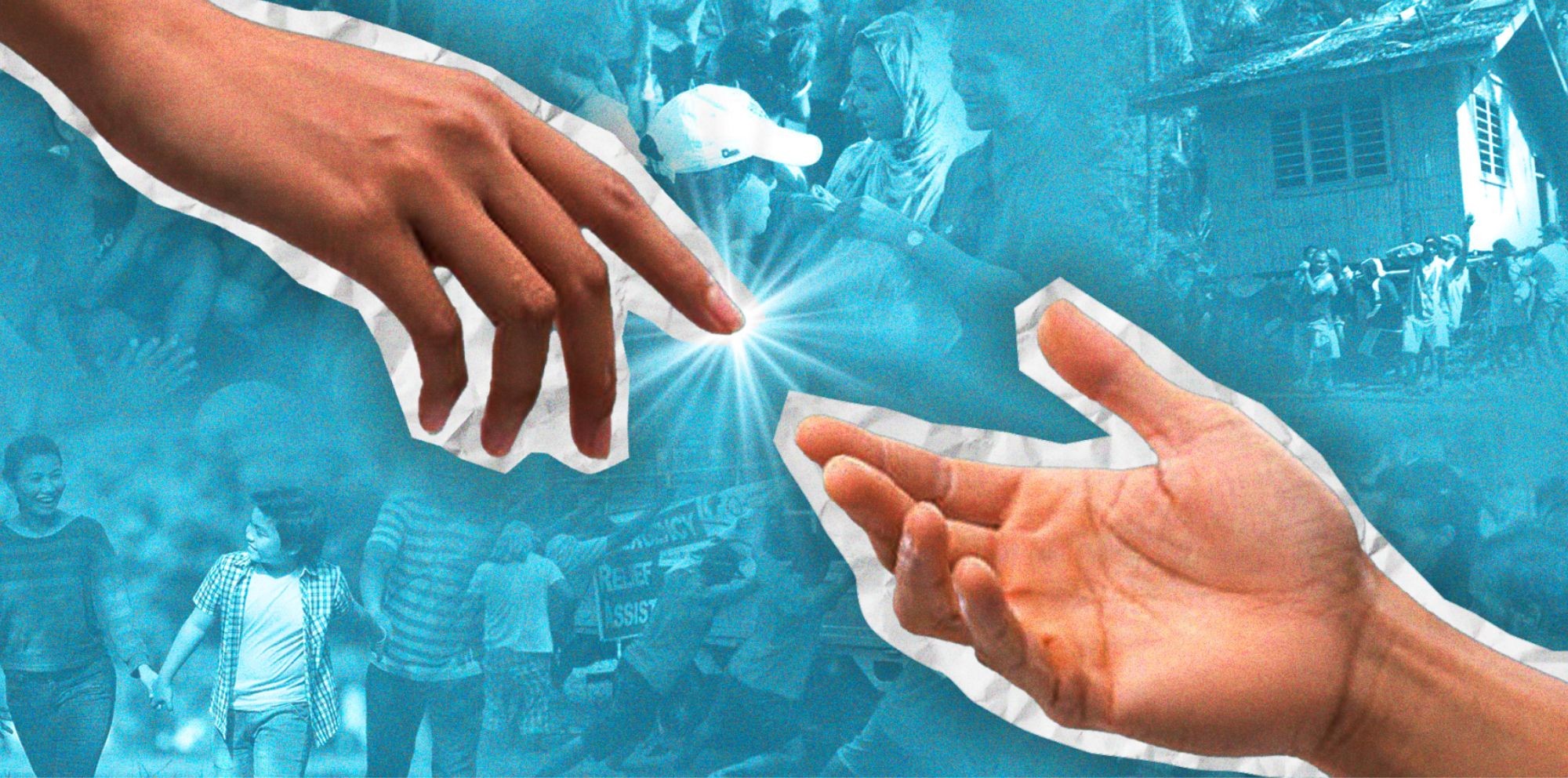
You cannot build a home on broken beams, and yet this bill asks children to carry the whole roof. When care turns into compulsion and love into liability, this confuses guilt with gratitude and weaponizes culture against healing.

Our culture has a strong sense of filial duty. A lot of us were taught that children should pay back their parents for what they did for them. And in a lot of cases, they do—because they love them, not because they have to. But when this moral ideal becomes a law, like in Senator Ping Lacson’s proposed Parents Welfare Act, we have to pause and think about what it will cost.
Under existing laws, particularly the Family Code, parents are already obligated to support their children until they become capable of supporting themselves. This is a legal and moral duty, not a favor.
On paper, the bill sounds noble: financially capable children should support their elderly, sick, or incapacitated parents. But in practice, it opens the door to a mess of complications—legal, emotional, and systemic—that no clarification can sweep under the rug.
Yes, Senator Lacson has clarified that children are not obligated to support abusive or neglectful parents. That is in Section 16. But here’s the catch: this exemption is not automatic. It requires a court process—with due notice and hearing. Which means, in short, children will still have to prove their trauma.
By hiring legal counsel, submitting evidence, reliving the pain, and trusting a legal system that’s often neither trauma-informed nor accessible. Especially for marginalized youth, this isn’t just a loophole. It’s a loaded trap.
Despite posing as shared responsibility, the bill still emphasizes filial obligation, a cultural ethic that can quickly become coercive when it becomes law.
In households with rigid family roles, certain children—often the eldest—are pressured to shoulder both the financial and emotional burden, regardless of their own capacity.
The bill doesn’t just reinforce filial obligation—it deepens gendered inequality by turning invisible labor into silent liability.
As it is written, the law supports the idea that we owe something just because we are related by blood. That love is a debt. That children are born into contracts they never agreed to.
It also lacks clear guidelines for how this ‘support’ is supposed to work. What happens when siblings argue? Who gets to say who pays what? Who steps in when one child is jobless, but another earns just enough to be legally liable? There’s no clear state mechanism to mediate this. No safety net to catch the fallout when family conflict escalates into legal warfare.
Let’s talk about the government’s role here. The bill gestures at public eldercare by proposing ‘Old Age Homes’—but with only 50 slots per province. That’s barely a band-aid. And if those homes fall into disrepair, as many government facilities do, guess who’ll be pressured to pick up the slack? The very children this bill claims to protect.
It’s not just a matter of whether or not abuse occurs. It’s also a matter of ability. What does the law say about who is financially capable? Many of us are technically employed, but we live paycheck to paycheck because of inflation, contract work, student loans, or not having enough work. Will the law see that nuance, or just look at income figures and call it a day?
And then there’s what the bill doesn’t say. It doesn’t take into account unpaid work—care, time, and emotional support that some children provide without financial compensation.
Many in our generation are navigating unstable jobs, economic insecurity, and inherited trauma. Forcing us into a one-size-fits-all definition of duty ignores the nuanced realities we live with every day.
It defines support in a narrow, capitalist way: only things that can be measured matter. This means that those already burdened by economic hardship will quietly absorb yet another responsibility—unseen and unacknowledged.
Let us be clear: there are families where love and care go both ways, and children are happy to help their aging parents. That’s lovely and real. But this law doesn’t apply to those families. It sounds like all families are like that. No, they’re not.
Some children have been neglected. Others were abused. Even if they want to, some people just can’t afford to help. And no law should make them give what they never got.
While Lacson’s clarification is a welcome footnote, it doesn’t change the bigger picture. This bill still treats children as safety nets.
It still puts responsibility before healing. It still assumes that all parents are worthy of support, and all children are in a place to give it.
We need to build a system where eldercare isn’t a family’s burden alone. Where the state invests in its elderly—not just through token facilities but through real, sustained care. Because if the family is truly the foundation of society, then the government must help reinforce it—not abandon it and hope the children will hold the roof.
Even the most sacred cultural values—like utang na loob—must be re-examined when they start becoming laws. Love cannot be legislated, duty cannot be assumed, and responsibility cannot be one-sided.
We are not your retirement plans. We are your children—not extensions of obligation, not savings accounts in human form. And that, in itself, should never be taken for granted.