









Now Reading: Forged in Manila, proven in New York: Filipino Michael Purugganan is NYU Faculty of Arts and Science Dean
-
01
Forged in Manila, proven in New York: Filipino Michael Purugganan is NYU Faculty of Arts and Science Dean
Forged in Manila, proven in New York: Filipino Michael Purugganan is NYU Faculty of Arts and Science Dean

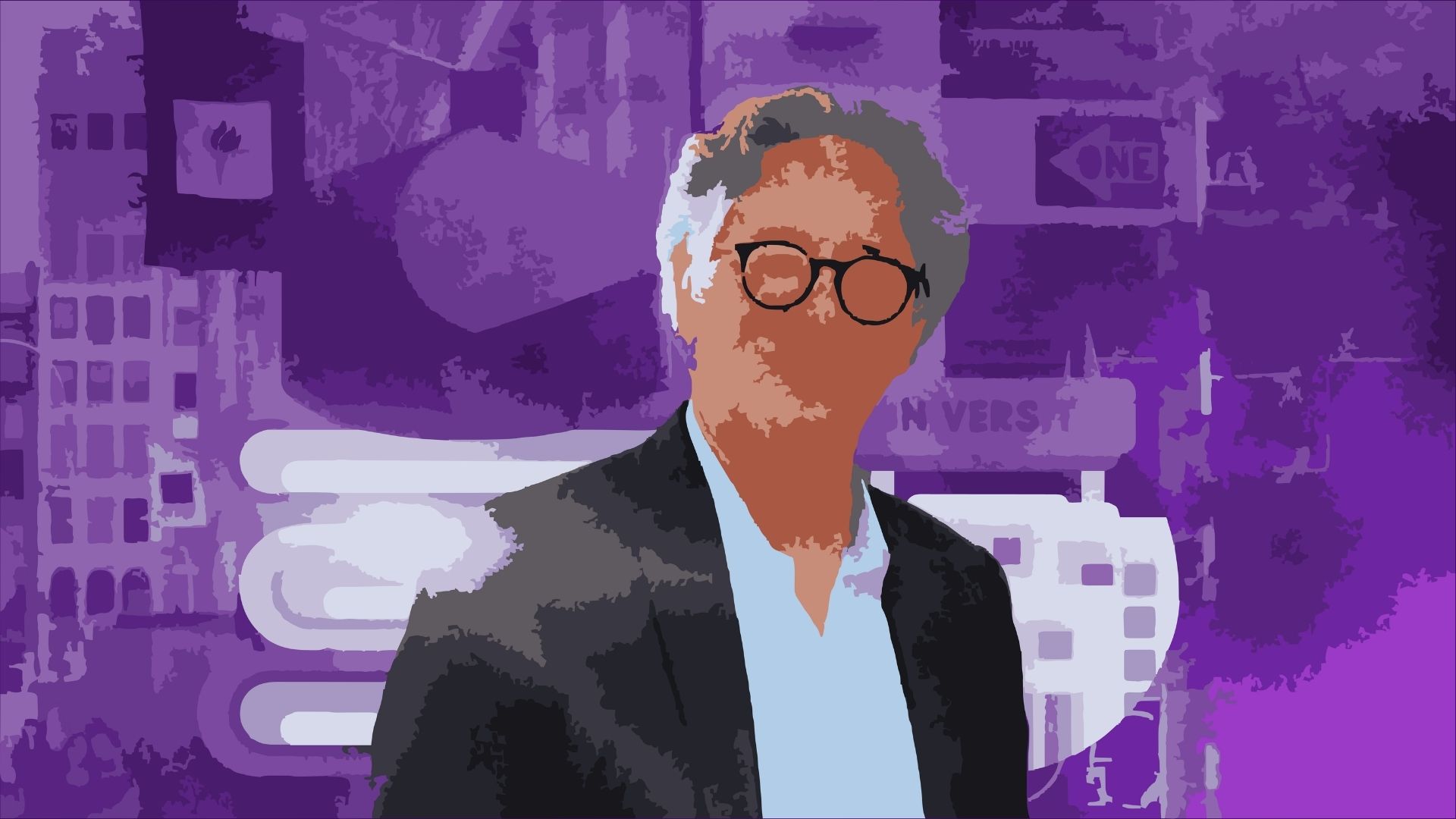
Maricar Nuiz, Bhenzane Kurvy Supsup, and Arriane Grace Villasana
Shaped by science, strengthened by hardship.
Forty-three years ago, as the world slumbered while the universe awakened, there were eyes awake and pages quietly written in the midst of an uncertain time. A young Michael Purugganan — then just a student, not yet a scientist, not yet a dean, pressed pen to paper in the dark: in a Manila where fear had learned to knock on doors without warning.
The terrifying moments he faced as a 20-year-old student activist were not a distraction from his career, rather they were the exact training ground he needed to steady America’s largest private university going through its own storm.
Press reaction
A dim glow of alchemy chamber first shaped young Dr. Michael Purugganan — a science scholar who seemed concealed on the outside, but burned a spirit that was not easily silenced. By day, he traveled the space between chemical compounds and scientific study; by night, he transformed into an individual who carved from stone the truth which those in positions of authority wished to deny.
As others rested, he wrestled with the words he wrote in a newspaper, at night, assembling fragments of truth intended to be suppressed during a period of time when the spirit of freedom was being suffocated. Every page he touched came with a risk: threats and shadows he could not fully discern, and cases that could end his simple student life.
Instead of retreating, this experience served to further mold him. His life became two teachers: the chemist that taught logic, and the periodist that taught determination. From there, a belief gradually took shape: that the truth is not just spoken, but is fought for to the end.
Every night once swallowed by fear became the very foundation of a leader unshaken no matter how dark a storm can be.
The science of staying rooted
When he left the Philippines for the United States in the mid-1980s, he was not simply chasing a diploma abroad. He was carrying the uncertainty of a young Filipino scholar trying to find where his future truly belonged.
Back home, he had already lived through years of political tension, censorship, and resistance as a student journalist during the Marcos dictatorship. He knew what it meant to survive instability. Perhaps that is why, somewhere along his journey in science, he became deeply fascinated with rice — the quiet grain that has long symbolized survival for millions of Filipinos.
To many people, rice is ordinary. It is routine, expected, almost invisible on the dining table because it is always there. But for Purugganan, rice carried a far more profound story. It was a crop shaped by adaptation, migration, and endurance. It survives harsh climates, changing environments, floods, droughts, and generations of human struggle. It feeds entire nations while continuously evolving to withstand the demands of the world around it. In many ways, the crop reflected the life he was slowly building for himself.
His shift from chemistry to botany was not merely an academic decision; it was rooted in practicality and hope. He believed that studying plants would allow him to contribute something meaningful if he eventually returned to the Philippines. At the University of California San Diego, he immersed himself in the study of plant evolution and genetics, focusing on one of the world’s most essential food staples.
“Rice is one of the most important food crops in the world,” Purugganan said in a 2012 interview with The FilAm magazine. “It provides a third to half the calories consumed in the world. It’s grown primarily for food. There’s a huge international interest in it.”
After completing his postdoctoral research in 1995, Purugganan considered returning to the Philippines. But the opportunities he hoped for were not waiting for him. There were no research positions available at the University of the Philippines at the time.
For many, that kind of disappointment could have marked the end of a dream. Instead, he chose to remain where growth was possible. Like the crops he spent years studying, he adapted to unfamiliar soil without losing the roots of where he came from.
For Purugganan, science was never detached from humanity. His fascination with crops was also a fascination with survival itself — with understanding how living things endure through time, hardship, and change. “For a long time, I’ve been interested in studying major crops in the world and how they originate, how did they evolve,” he once shared.
There is something deeply human in that pursuit. Purugganan’s story is not simply about academic brilliance or scientific achievement. It is about learning how to continue growing even when life changes your original plans. It is about understanding that survival does not always arrive dramatically. Sometimes, survival looks quiet. It looks like persistence, adaptability, and the courage to keep building a future far away from home while still carrying home within you.
Building places where ideas can breathe
Michael Purugganan did not become the kind of leader who simply occupies an office and manages numbers from a distance. At New York University, he became someone who reshaped the very spaces where human curiosity lives. His leadership was grounded in a belief that discovery cannot thrive in limitation. If people are expected to think beyond the boundaries of the known world, then they must also be given spaces that allow imagination, collaboration, and innovation to flourish.
As Dean of Science, Purugganan oversaw the transformation of thousands of square across NYU into modern research facilities dedicated to physics, chemistry, neuroscience, psychology, and computational science. Under his leadership, NYU’s global academic standing steadily climbed, reflecting not only institutional success but also his commitment to creating an environment where groundbreaking ideas could emerge.
Yet what makes Purugganan’s leadership remarkable is that it was never driven purely by prestige or competition. Beneath the rankings, renovations, and research centers was a more human philosophy: people do their best thinking when they feel supported, inspired, and intellectually free. He championed projects that invested not only in infrastructure, but also in possibility: helping establish centers dedicated to quantum phenomena, molecular nanoscience, chemical biology, and even the connection between language, music, and emotion.
In many ways, his approach to leadership mirrors the same curiosity that once drove him as a scientist. He understood that discovery happens when people are given the freedom to ask difficult questions. Decades earlier, as a young journalist during the Marcos dictatorship, he had already experienced what it meant to fight for truth under pressure. Now, as an academic leader in America, he found himself once again protecting spaces where truth, inquiry, and intellectual freedom could survive.
That belief became even more crucial when he stepped into a larger leadership role during one of the most turbulent periods in modern American higher education. Universities across the United States faced political pressure, funding threats, and growing uncertainty surrounding academic freedom, diversity initiatives, and international education. Yet amid the instability, Purugganan remained steady, guiding NYU through financial and institutional uncertainty while maintaining stability within the university community.
NYU President Linda G. Mills and Provost Georgina Dopico later affirmed this trust in him, saying, “With Michael at the helm, Arts & Science is poised to reach new heights, driven by a commitment to academic rigor and discovery.”
They added, “We have watched Michael succeed in strengthening this community during exceptionally challenging times, fostering an environment grounded in a shared scholarly mission and shared humanity.”
Perhaps that is what truly defines Michael Purugganan — not only his intelligence, achievements, or leadership titles, but his understanding that universities are ultimately about people. Behind every laboratory, every research center, and every academic ranking are human beings searching for answers, purpose, and meaning. His journey proves that leadership is not merely about authority or prestige. Sometimes, it is about protecting space where others can continue imagining a better future without fear.
The 2026 trial by fire
The real challenge for Purugganan’s background came in 2025 when the NYU board made him the interim dean of the Faculty of Arts & Science. This is the part of the university with over 1,000 faculty members.
His new job started at a tough time. The new Trump administration had just started a campaign against big American universities. They wanted to stop and cancel hundreds of millions of dollars in research grants to get rid of diversity, equity and inclusion programs on campuses.
Panic rippled through academia. Columbia University had a problem with a $400-million funding freeze. Harvard University had to go to court to fight big budget cuts. The Trump administration was also very strict about student visas. This made it hard for universities to function.
While other academic leaders were struggling with these big problems Purugganan felt like he knew what to do. He had dealt with situations before like when state censors gave him trouble forty years ago. He did not want the problems outside the university to hurt NYU’s core.
So he did not give up. Instead he found a way to make the university stronger. During his time as dean Purugganan was able to get $25 million in fundraising. This meant the university’s academic mission was safe. He also made sure the operating budget for 2027 was balanced.
The NYU board saw that Purugganan was the leader, for this tough time. So they made his job permanent in 2026. The NYU President Linda G. Mills and Provost Georgina Dopico said: “As we look to the future, we have every confidence he has the leadership, temperament, and values to inspire the collective trust of his colleagues and students.”
A lifelong anchor
Forty-three years ago a young student editor was sitting in a lit newsroom in Manila. He was holding a pen and that pen was like a shield he was using to stand up against a really big and powerful group.
Now Dr. Michael Purugganan is standing in the middle of Greenwich Village. He is in charge of an academic group and he is helping it get through a very difficult time. The world is not the same as it was before. The country is also very different now and the problems that we are facing are not the same as they used to be, however, Dr. Michael Purugganan is still the same person that he was forty-three years ago.
He uses the spirit of his youth and his sharp scientific mind which helps him show that real leadership is not about avoiding problems but rather, it is keeping things steady in a storm. As Dr. Purugganan becomes the Dean he is not just protecting a university’s money. He is protecting the heart of education, proving to the world that when there is a storm, a Filipino’s roots are too strong to be shaken.