








Now Reading: ICC wraps up Duterte confirmation hearing; ruling set in 60 days
-
01
ICC wraps up Duterte confirmation hearing; ruling set in 60 days
ICC wraps up Duterte confirmation hearing; ruling set in 60 days

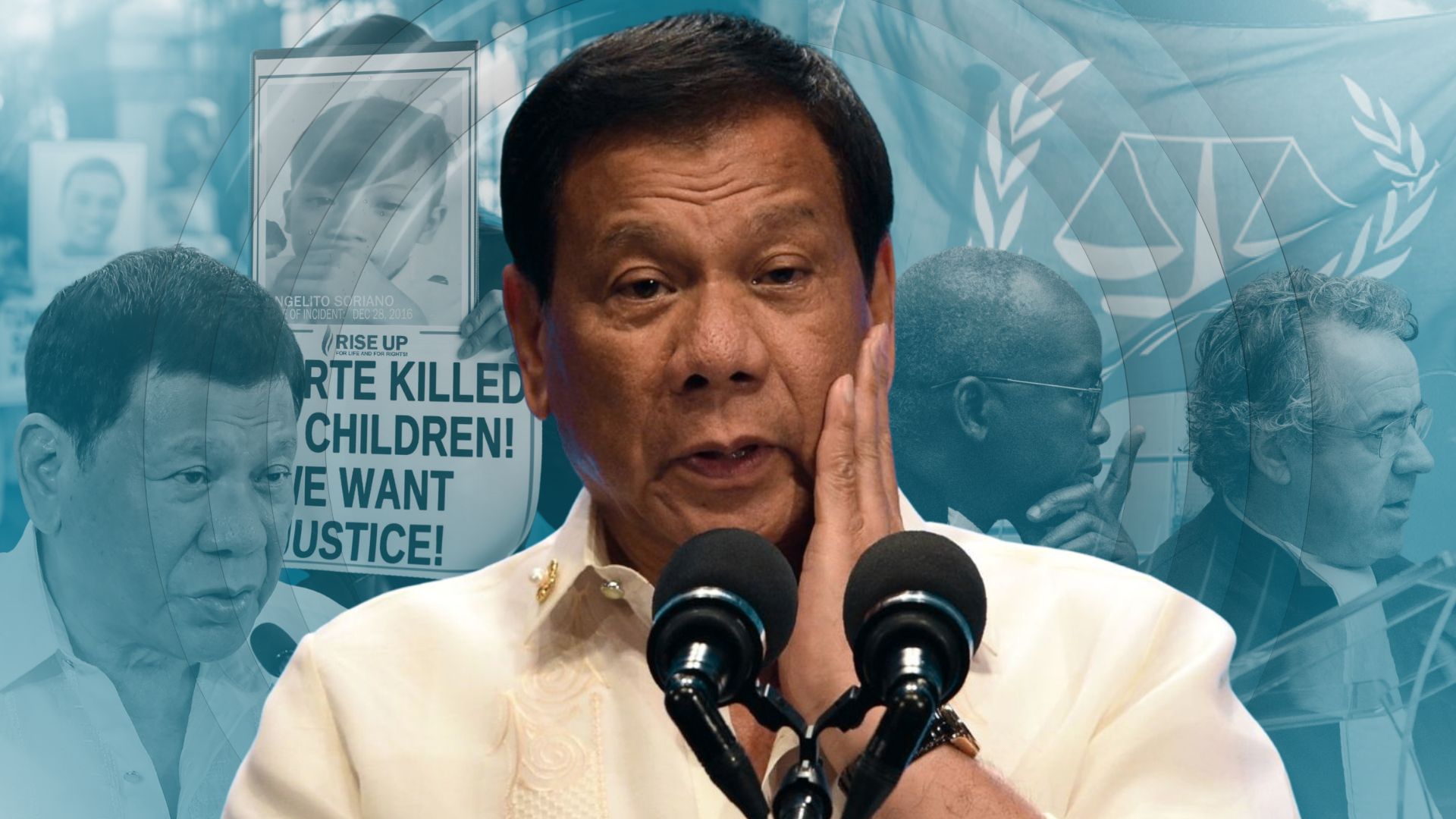
The confirmation of charges hearing in the case of former President Rodrigo Duterte before the International Criminal Court (ICC) Pre-Trial Chamber I concluded on Feb. 27, with the judges set to deliver their written decision within 60 days.
The hearing determines whether there is sufficient evidence to establish substantial grounds to believe that Duterte committed the alleged crimes.
After the oral submissions of both parties and the Common Legal Representatives of the Victims, the judges heard the closing statements.
Office of the Prosecutor Closing Statement
ICC Prosecutor and Senior Trial Lawyer Julian Nicholls asserted that they had met the standard of substantial grounds for confirmation and that the case should proceed to trial.
“That was in virtually every order and it didn’t mean anything. It was standard wording as part of their coverup,” Nicholls said, responding to Duterte’s lead defense counsel Nicholas Kaufman on documentation issues, noting that top leaders in crimes against humanity cases rarely put criminal orders in writing.
Nicholls also countered the defense claim that the term “neutralize” meant arrest not kill.
“These two victims (Espinosa and Yap), they are noted as neutralized on the list, not on the day they are arrested, not on the day they go to jail, they are marked neutralized on the day they’re killed,” he said.
He also addressed the defense’s argument that the court is not investigating the current Ferdinand Marcos Jr. administration, stating that Duterte prevented such investigations by withdrawing the Philippines from the Rome Statute.
Nicholls also rejected the defense’s claim that Duterte had no direct connection to the killings, citing a witness who said they heard the former president, allegedly using the codename “Superman,” issue a direct order over the phone.
“He wants to be remembered as the man with the gun. It is time for him to take responsibility for the crimes he brags about,” Nicholls stated, as he played a video of Duterte’s public remarks shortly before his transfer to The Hague.
In the video, he told Filipinos the killings were for the nation, not for himself or his family, and even encouraged supporters to fund a monument showing him holding a gun, a move the prosecution called contemptuous and an open justification of murder as a “necessary evil.”
The prosecution concluded with a quote from Duterte on August 16, 2017: “I know I will have my own downfall. I cannot be president forever. I know that they will demand to answer for all this dead.”
Common Legal Representative of Victims Closing Statement
Following the prosecution, the Common Legal Representatives of the Victims, represented by Atty. Gilbert Andres, delivered their closing statement.
“In our closing statement…we’ll first rebut the defense submissions and then provide the larger context for why the confirmation of charges against Mr. Rodrigo Roa Duterte is vital for the victims, especially in relation [to] their communities and the Filipino nation,” Andres said.
He likened listening to the defense’s submissions to the parable of the elephant, focusing only on parts rather than the whole context.
Andres then presented a 10-point rebuttal against the defense’s claims.
“Under the Philippine Constitution, executive power is vested in the President. Whatever the President publicly states is policy,” the Filipino lawyer said, countering the claim that Duterte’s speeches cannot prove criminal intent.
In his rebuttal, he asserted that the alleged killings were part of a widespread and systematic attack, noting that crimes against humanity do not require a specific death rate.
Andres also cited Philippine Supreme Court issuances and government accounts, contending that the inclusion of drug war deaths among the administration’s accomplishments in its 2017 year-end report could support an inference of state-sponsored killings.
He emphasized that the constitutional guarantee of the right to life removes any presumption of regularity in police operations resulting in deaths, and that the 2021 Philippine National Police (PNP) operations manual falls outside the ICC’s temporal jurisdiction.
“The victims want these charges to be confirmed because they want to be reintegrated to their communities because they are still in the shadows of fake news of fear and of threats from Mr. Duterte’s supporters,” Andres concluded. “Hence it is important that all these charges be confirmed so that the victims will be taken out of the shadow of darkness into the light of truth and justice.”
Defense Counsel Closing Statement
After a short break, the defense presented its final submission.
Kaufman said that as a defense lawyer, he had emphasized due process and the presumption of innocence, but in his view, the public had already judged and convicted his client while relying on emotional arguments to support their position.
“I was a faithful servant of the people, and that is how I wish to be remembered. I have now accepted my fate and I realized that I could die in prison,” Kaufman said, quoting the former president.
Kaufman said that if former President Duterte could be faulted for anything, it was for his choice of language, but he stressed that there was no evidence directly linking Duterte to the alleged deaths.
“I beg you not to confirm any of the charges. I ask you to let Rodrigo Duterte return to the Philippines, not to govern. But simply to let him live out the rest of his days in peace, in his humble dwelling in Davao,” Kaufman concluded.
Nicholls then asked the chamber to strike Kaufman’s remarks on behalf of his client during the closing statements.
“My friend (Kaufman) can’t testify for his client or make a speech for his client. That’s governed by Article 67 H. If he (Duterte) wanted to come here, he didn’t want to come here. He could have come here and talked about whatever he wanted to, but he chose not to,” Nicholls argued.
In response, Kaufman said that his remarks were a mere explanation for his client’s absence from the hearing and not a testimony.
Review of Detention
Separately, during a review of detention hearing before the same chamber, prosecutors and victims’ lawyers argued that the accused should remain in custody, maintaining that he poses a “flight risk” if granted interim release.
Nicholls cited Duterte’s waiver submission, in which the former president rejected the court’s jurisdiction and described his arrest as a “kidnapping,” saying such statements raised doubts that Duterte would voluntarily return to the court if released.
Another lawyer from the victims’ legal representative, Atty.Joel Butuyan, echoed the argument, stressing that Duterte’s continued rejection of ICC authority, combined with ongoing legal efforts by supporters and family members in the Philippines, heightened the risk of non-appearance as the case moves closer to trial.
Butuyan also said victims feared potential intimidation and instability should Duterte be released, emphasizing the court’s duty to protect witnesses and ensure the integrity of proceedings.
Meanwhile, Kaufman said the defense would not oppose Duterte’s continued detention for now, citing a pending appeal before the ICC Appeals Chamber regarding an earlier detention ruling.
What happens next?
With the hearing concluded, the Pre-Trial Chamber will now deliberate on whether the prosecution has presented sufficient evidence to meet the threshold required for confirmation of charges.
The judges may confirm the charges if they find substantial grounds to believe that the accused committed the alleged crimes, allowing the case to proceed to trial.
They may also decline to confirm the charges if the evidence is deemed insufficient, which would effectively end the proceedings against the former president at this stage.
Alternatively, the chamber may adjourn the hearing and direct the prosecution to present additional evidence, conduct further investigations, or amend the charges if the material submitted appears to establish a different crime from that originally alleged.