










Now Reading: Kindness is not a contract
-
01
Kindness is not a contract

A cold law creates a machine; a lawless heart creates disaster.
Governance is a delicate balance between the urgency of human need and the rigidity of the law. In the public service, the most grueling battles are not fought between right and wrong but between two competing versions of the “truth.” One side demands the immediate rescue of a student’s dream; the other guards it.
The recent deadlock in the Cebu City Council over the Asian College of Technology International Education Foundation (ACTIEF) Pit-os College scholarship deal has brought this collision to a boiling point. This isn’t just a standoff over legal prerequisites and auditing standards; it is a crisis of confidence for the families of Pit-os. For years, this neighborhood has looked at the college as a beacon of hope, a chance for the sons of laborers and the daughters of vendors to break a cycle of poverty. This conflict stems from a standoff over the school’s legal prerequisites and the city’s strict auditing standards. At the center of the storm are hundreds of students whose degrees are now gathering dust in a legal limbo, caught between the gears of bureaucratic procedure and the fading promise of a subsidized education.
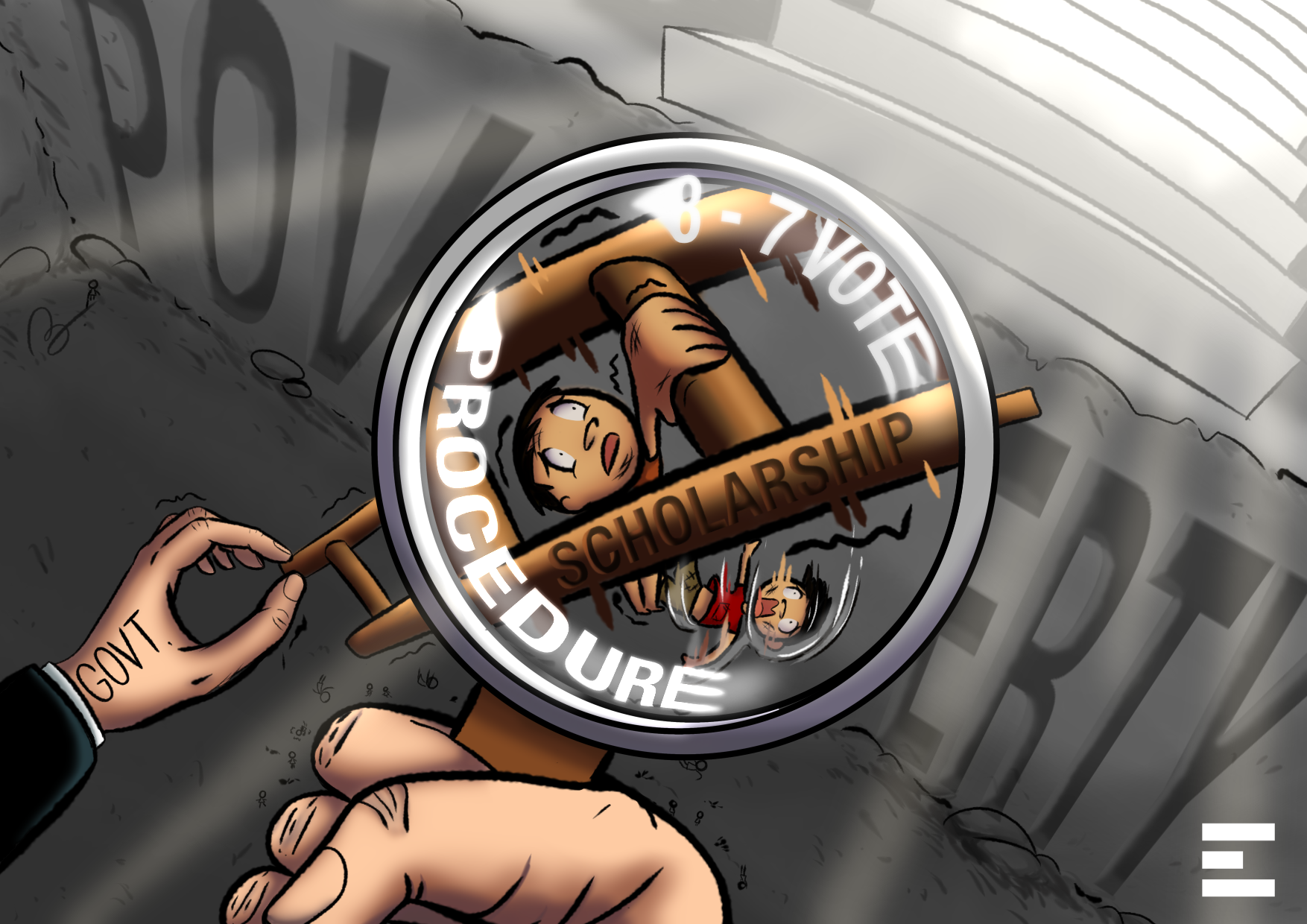
On April 14, the Cebu City Council delivered a staggering blow to these aspirations. In a razor-thin 8-7 vote, the body rejected the proposed Memorandum of Agreement (MOA) with ACTIEF-Pit-os College. The aftermath was a scene of raw heartbreak: students and parents, some of the city’s most vulnerable, dissolved into tears inside the session hall. They were met not with tuition vouchers, but with the terrifying realization that their academic journey might have just hit a dead end before the semester could even finish. The silence of the session hall stood in stark contrast to the sobs in the gallery, marking a moment where the cold finality of a tally sheet outweighed the warm expectations of a generation. In that narrow one-vote margin, the line between an educated future and a financial crisis was drawn, leaving the city’s most hopeful dreamers in the dark.
However, in the cold light of day, it becomes clear that a government cannot be run on empathy alone. For every student crying for an opportunity, there is a taxpayer demanding that their hard-earned money be handled with absolute precision. This is the crossroads where sentiment meets the statutes.
The City Council must prioritize procedural transparency and legal compliance without losing sight of its moral obligation to the youth. While the rejection of the deal feels like a cold-blooded betrayal of the poor, it is a non-negotiable reality: the protection of public funds requires a foundation made of stone, not sentiment.
The primary concern lies in the integrity of government partnerships. The current MOA, backed by the Committee on Laws, argues that ‘red flags’ regarding the school’s documentation cannot be ignored. Specifically, the council flagged potential conflicts of interest under the Local Government Code of 1991 given the institution’s ties to a sitting city official and a lack of verified performance data. Furthermore, the absence of clear documentation aligning the institution with CHED Memorandum Order No. 40 standards raises questions of institutional stability. Even the faculty at the institution face a shadow of uncertainty; when a school’s legal standing is questioned, the very quality of the education being delivered is at risk. If the city authorizes payments despite these gaps, it is not merely a clerical oversight; under Republic Act No. 3019, it constitutes ‘gross inexcusable negligence.’ Such an act invites corruption to the table by allowing public funds to flow into unverified channels, effectively breaching the sacred trust of the taxpayers whose own children are enrolled in these very classrooms.
This rejection serves as a necessary shield against the rise of substandard educational environments. Ensuring that a partner school meets every regulatory standard is not just red tape; it is a guarantee of quality. If the city pays for a student’s seat, it must ensure that the degree they earn actually holds value in the real world. Cutting corners today might solve a financial crisis, but it risks leaving students with a “scrap of paper” that fails to get them a job tomorrow. A scholarship must be an investment in a career, not just a temporary subsidy.
On the other side of the aisle, the law should not be a cage. As the school was allowed to admit students under the banner of a city partnership, the government has a “principle of no take-backs” to finish what it started. For these students, the scholarship was the only ladder out of poverty. To pull that ladder away mid-climb, when it is too late to transfer or find new funds, feels like a calculated cruelty wrapped in the language of “procedure.”
However, a hard truth remains: compassion without order is unsustainable. While the plight of the students is agonizing, signing a flawed agreement only invites future lawsuits and a total shutdown by state auditors. Under COA Circular No. 2012-003, “irregular expenditures” lead to a Notice of Disallowance, which freezes all payments and holds officials personally liable under P.D. 1445. Imagine the chaos if the program were shut down halfway through next year; the heartbreak we see today would be a mere prelude to a much larger systemic collapse. True advocacy for the marginalized means building a system that is “bulletproof,” ensuring that no future administration can dismantle a student’s dream because of a technicality. A painful delay today is better than a permanent legal collapse tomorrow that could bankrupt the entire scholarship program.
The Cebu City Council must now move beyond the 8-7 divide. The advice for ACTIEF to refile and fix its deficiencies is the only logical path. The council’s role is not simply to be the “department of no,” but to provide a clear, high-speed lane for a “yes” that is legally sound. The executive and legislative branches must stop using students as political pawns and start acting as architects of a solution.
If education is the great equalizer, then the bridge to get there must be built on solid ground, not on shaky compromises. The tears in the gallery are a reminder that delays have a human cost, but the rejection is a reminder that public service must be both kind and correct. Governance is not a choice between the heart and the law; it is the art of making the law serve the heart.
If leadership is a public trust, then the city must ensure its promises are as secure as they are generous, for kindness is not a contract if it lacks the legal strength to be honored. Otherwise, we aren’t building futures; we are just selling illusions. Only when the law and the heart are aligned can the doors of the classroom stay open—not just as a favor, but as a right.