










Now Reading: Kutseros, advocates still wary of tartanilla revival amid fuel price hikes
-
01
Kutseros, advocates still wary of tartanilla revival amid fuel price hikes
Kutseros, advocates still wary of tartanilla revival amid fuel price hikes

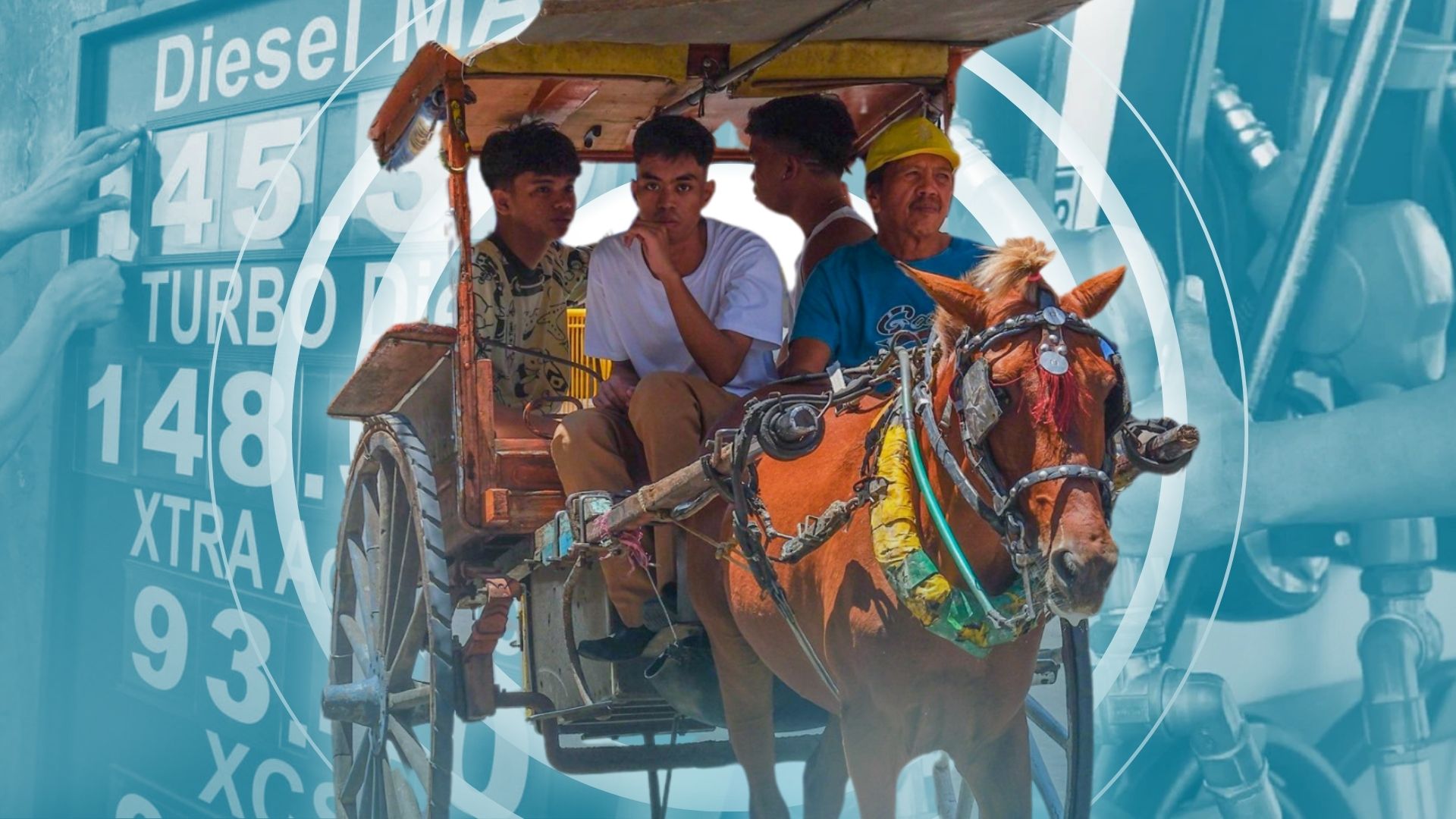
Rising fuel costs tied to Middle East tensions renew its interest, but concerns over sustainability remain.
Kutseros and local animal welfare advocates are still wary of Cebu City’s plan to regularize the iconic tartanilla rides even as fuel price hikes revive interest in the horse-drawn carriages, saying efforts to preserve the living heritage must also confront the rising costs and welfare concerns that have long burdened the trade.
For the city’s surviving kutseros, the idea of elevating the tartanilla amid rising maintenance costs has left many in the community hesitant.
Julieta Gempisao, a 61-year-old kutsera with 30 years of experience, said that while daily earnings are still enough to cover basic needs, the cost of sustaining her carriage horses, Avatar and Balinget, has made the business increasingly difficult to sustain.
“Every six months naa ni sila’y injection, kaduha sa usa ka tuig. Mahal kaayo, moabot og P40,000,” she said.
(They need injections every six months, twice a year. It’s very expensive; it can reach around P40,000.)
Gempisao said most of what she earns from a five-hour workday goes to the horses’ upkeep, including feed, medicine, and regular veterinary care.
“Basta masakit sila [Avatar ug Balinget], ma-worry man ka kung imo siya pakaboun kung ingon-ana ang lawas. Kanang mahilantan sila, gastos jud siya,” she added.
(Whenever [Avatar and Balinget] get sick, you really worry about whether you should still let them work. When they develop a fever, it becomes very costly.)
Other kutseros, such as 68-year-old Dioscoro Enanorya, report even tighter margins, as he pays a P550 daily rental fee for his horse, which significantly cuts into his already modest earnings.
Despite the challenges, kutseros like Gempisao and Enanorya continue the work they inherited from their parents, though Gempisao said her children have long urged her to retire because of the physical demands and financial strain of operating a tartanilla.
Welfare concerns persist
Local animal welfare advocates have raised concerns about expanding tartanilla operations without proper safeguards in place.
Marie Segarra Tabotabo, a longtime advocate from the Mayari Animal Rescue Organization, said that efforts to institutionalize the carriage rides must address long-standing issues affecting working horses.
“If the city plans to make tartanillas a regular part of tourism, it has to ensure that the horses are properly cared for and not pushed beyond their limits,” she said.
Tabotabo pointed to persistent concerns such as heat exposure and lack of proper hydration, limits on working hours, and the overall condition of horses operating in the city.
She also cited observations of undernourished horses working late into the night, with some reportedly resting while still harnessed, raising concerns over proper care, rest, and humane treatment.
Tabotabo has since issued a public appeal to the Cebu City Sangguniang Panlungsod and Mayor Nestor Archival as the proposed ordinance moves toward its second hearing, where she urged the city government to revisit provisions of the ordinance to prioritize animal safety.
“Let us honor tradition without compromising compassion. Tourism should never come at the expense of an animal’s dignity and well-being,” she added.
The renewed push to formalize tartanilla rides gained traction after delegates of the ASEAN Tourism Forum 2026 in late January took part in experiential carriage rides through Cebu’s historic streets, prompting Cebu City Mayor Nestor Archival to propose making the activity a regular tourism offering.
A proposed measure, known as the “Calesa sa Sugbo Ordinance,” seeks to regulate operations by requiring permits, standardizing fares, and mandating veterinary oversight to ensure both safety and heritage preservation.
City vets back plan, flag gaps
The Department of Veterinary Medicine and Fisheries (DVMF) has expressed “strong support” for preserving the tartanilla, but noted technical gaps that could affect the welfare of horses if operations are expanded.
In its letter to the City Council, Dr. Jessica Maribojoc, officer-in-charge of the DVMF, recommended that all horses be properly documented, with the agency tasked to register and maintain a database of carriage horses, as well as issue veterinary health certificates to ensure they are fit for work.
“The department shall be primarily responsible in the monitoring of the health, wellness, and welfare of the horses utilized in the calesas,” the letter read.
To regulate operations, the DVMF called for stricter requirements before permits are issued, including a veterinary health certificate for each horse, and certification that kutseros have undergone training on proper horse care, as well as health cards and drug test results.
It further stressed that “all horses utilized in a calesa must be physically fit” and must have undergone regular veterinary care to support their wellness.
The recommendation also proposed limits on workload, stating that working hours shall not be more than four straight hours, after which horses must undergo a mandatory one-hour rest time.
Historically, tartanillas were once a common mode of transport in Cebu City’s older districts, but their numbers gradually dwindled—from over 100 active units to only a small dozen—due to modernization, rising operational costs, and mounting concerns about animal welfare.
Today, the remaining 40 units operate largely along the narrow streets of Pasil, Taboan, and Duljo, where they are confined to avoid traffic congestion on the city’s main thoroughfares.