










Now Reading: Magnitude 6.9 earthquake strikes Cebu: dozens dead, churches damaged
-
01
Magnitude 6.9 earthquake strikes Cebu: dozens dead, churches damaged
Magnitude 6.9 earthquake strikes Cebu: dozens dead, churches damaged

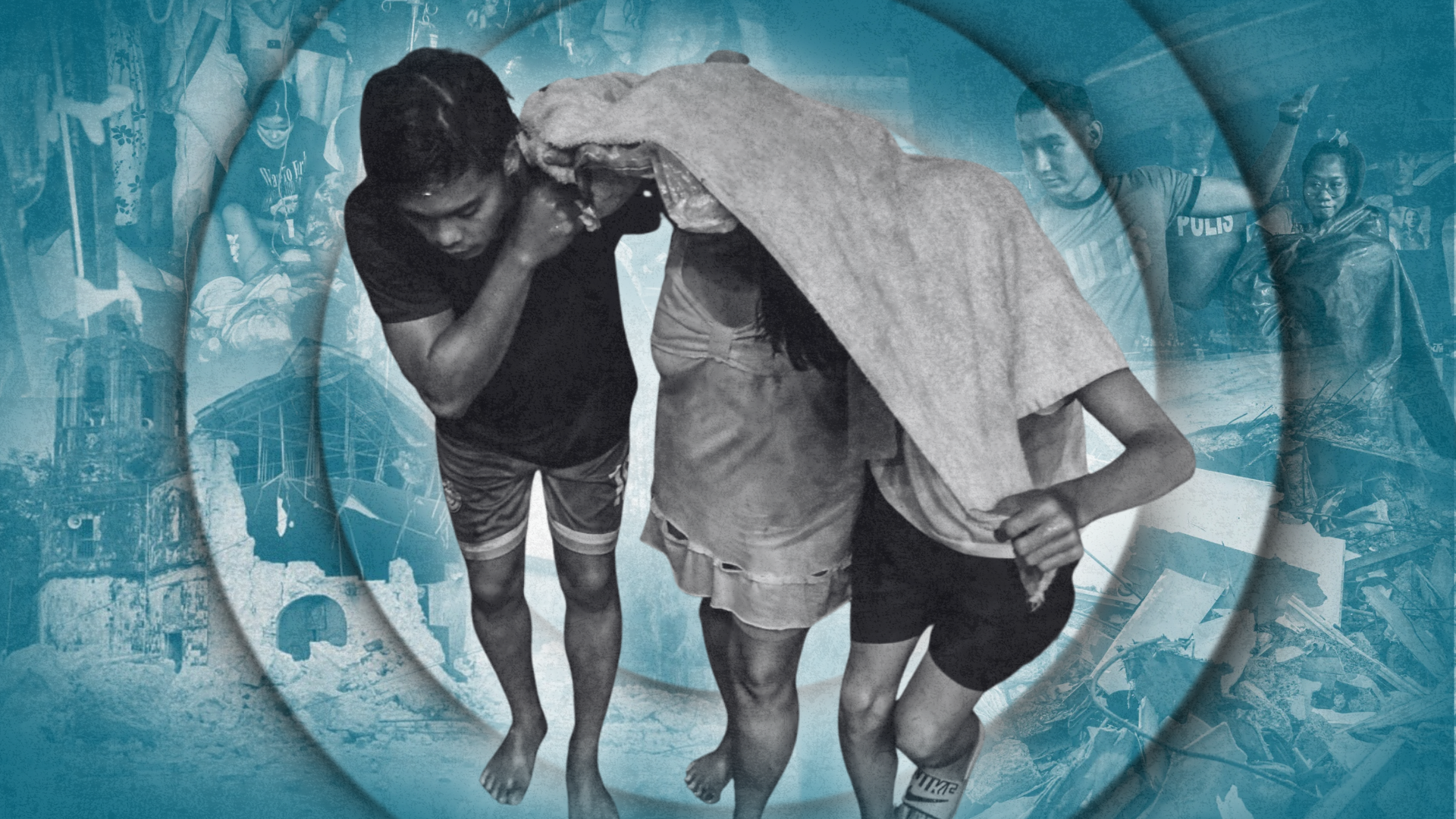
A magnitude 6.9 earthquake violently shook Cebu on Sept. 30 killing at least 63 people, injuring more than 293, and damaging centuries-old heritage sites.
The Philippine Institute of Volcanology and Seismology (Phivolcs) reported that the tremor occurred at 9:59 pm, with its epicenter located 21 kilometers northeast of Bogo City at a shallow depth of five kilometers.
Northern towns bore the brunt of the quake. About half of the deaths were reported in Bogo, a coastal city of roughly 90,000 residents, where local hospitals were overwhelmed and rescue efforts slowed by intermittent rain that followed the earthquake, as well as damaged roads and collapsed bridges.
“We’re still in the golden hour of our search and rescue,” Office of Civil Defense deputy administrator Bernardo Rafaelito Alejandro IV said in a press conference. “There are still many reports of people who were pinned or hit by debris.”
Other hard-hit areas include San Remigio, Medellin, and Tabogon, where collapsing walls and falling debris claimed lives, including those of a child, three coastguard personnel, and a firefighter.
Rescue teams, backed by army troops, police, volunteers, backhoes, and sniffer dogs, conducted house-to-house searches, while authorities considered seeking foreign assistance to speed relief efforts.
Phivolcs briefly issued a tsunami warning for Cebu and neighboring Leyte and Biliran, advising residents to stay away from coastlines due to possible waves of up to one meter. The warning was lifted after three hours, but thousands of residents chose to stay in open fields overnight, wary of aftershocks and landslides.
Cebu Governor Pamela Baricuatro cautioned that the full extent of the damage could be worse than currently reported, particularly in northern towns.
“This was really traumatic to people. They’ve been lashed by a storm then jolted by an earthquake,” Phivolcs director Teresito Bacolcol said, as reported by the Associated Press.
Heritage churches damaged
Among the damaged heritage sites, the 139-year-old Archdiocesan Shrine of Santa Rosa de Lima in Daanbantayan suffered partial ceiling and wall collapses.
Despite the damage, parish officials said several religious images survived.
“Other than the Tabernacle where the Blessed Sacrament is kept, The Miraculous Retablo Image of Santa Rosa de Lima was one of the few images in the shine that wasn’t damaged by the earthquake,” the archdiocese said in a Facebook post. “The other unscathed images so far [are] the Virgen del Carmen, and The Immaculate Conception.”
On Bantayan Island, the Parroquia de San Pedro Apostol, built in 1863 with coral stones, sustained facade damage, with the church cross breaking and outer lights exploding in the quake.
State of calamity
In response to the earthquake, the 17th Sangguniang Panlalawigan of Cebu held an emergency session and declared the entire province under a State of Calamity.
“This declaration enables the provincial government to respond quickly and efficiently,” Vice Governor Glenn Soco said in a Facebook post. “It allows us to mobilize resources, provide immediate aid to affected families, and implement rehabilitation measures as recovery begins.”
Authorities are also inspecting the Cebu Provincial Legislative Building to ensure the safety of employees and officials amid ongoing aftershocks.
Officials urged residents to remain vigilant, follow instructions from authorities, and prioritize safety, warning that aftershocks may still occur.