








Now Reading: Marcos pushes expanded programs, representation to advance women’s rights
-
01
Marcos pushes expanded programs, representation to advance women’s rights
Marcos pushes expanded programs, representation to advance women’s rights

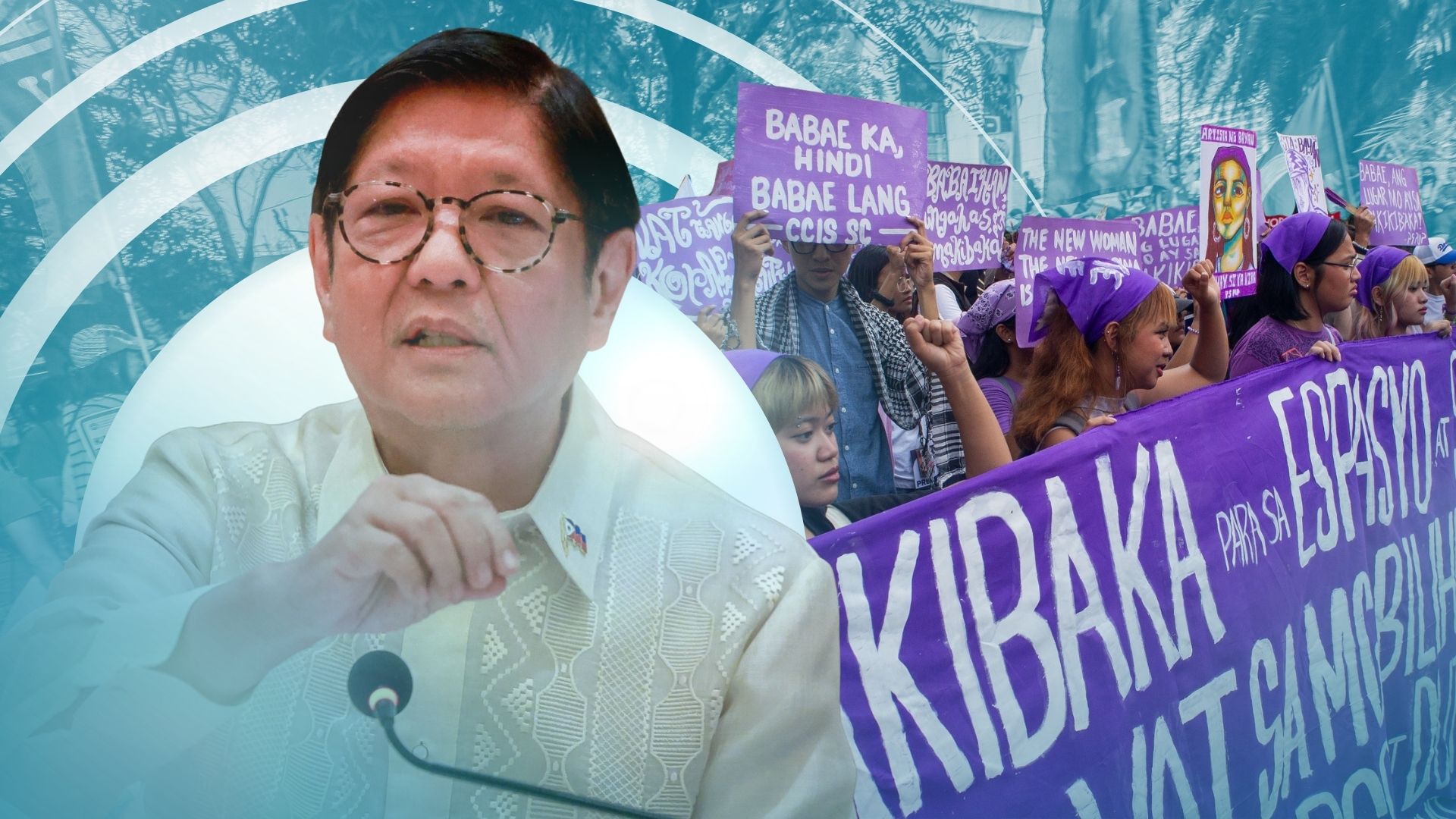
President Ferdinand Marcos Jr. called for stronger and sustained measures to advance women’s rights, pushing for greater representation in governance and expanded economic opportunities as persistent gender gap continues to limit the full participation of Filipino women in society.
In his remarks during the oath-taking of the new officers of the Association of Women Legislators Foundation, Marcos said women in the Philippines remain underrepresented in governance, noting that the country ranked 86th worldwide in terms of women’s participation in national parliaments as of early 2026, a drop from its 82nd position in 2022.
He also pointed out disparities in employment, with only 50.7 percent of women participating in the labor force, compared to nearly 74 percent of men, highlighting the persistent structural challenges that hinder opportunities for Filipino women.
“These realities reminded us that empowering women required sustained action from expanding opportunities in education and employment to ensuring greater representation in leadership and in governance,” Marcos said.
The President said that the administration is committed to broadening opportunities for women, emphasizing efforts to ensure that women are heard, respected, and empowered across sectors.
He added that the government continuesd to strengthen programs addressing violence against women and children, alongside initiatives that support economic participation.
Among these programs is the Sustainable Livelihood Program of the Department of Social Welfare and Development (DSWD), which provided women with capital assistance, skills training, and job facilitation to help them start businesses and secure employment.
He also highlighted the Kapit-Bisig Laban sa Kahirapan Comprehensive and Integrated Delivery of Social Services which enabled women to participate in local governance and development planning, as well as the Pag-abot Program, which extended assistance to vulnerable women, especially those who are in street situations.
Marcos said that these collective efforts contributed to improvements in gender parity, with the Philippines rising to 20th place globally in 2025 from 25th in 2024, based on the Global Gender Gap Report.
Despite these gains, the President maintained that more structural reforms are needed to ensure women’s full participation in decision-making processes, stressing that inclusion must go beyond cultural recognition of women’s roles.
“Women must always be included in the halls where decisions are made, especially when those decisions affect women’s lives,” he said.
Marcos also emphasized the broader social impact of empowering women—that when women are given access to education, employment, and leadership opportunities, the benefits extend to families, communities, and the nation as a whole.
He called for continued collaboration between government and stakeholders to strengthen policies on education, justice, and social protection, particularly for women facing poverty, violence, and systemic barriers.
The President added that while the Philippines remained among the stronger performers in gender equality in Asia, there is still “much that the country can do” to build a more inclusive society where women play a greater role in shaping national development.