






Now Reading: Marcos to sustain education reforms after 2025 PH PISA results
-
01
Marcos to sustain education reforms after 2025 PH PISA results
Marcos to sustain education reforms after 2025 PH PISA results

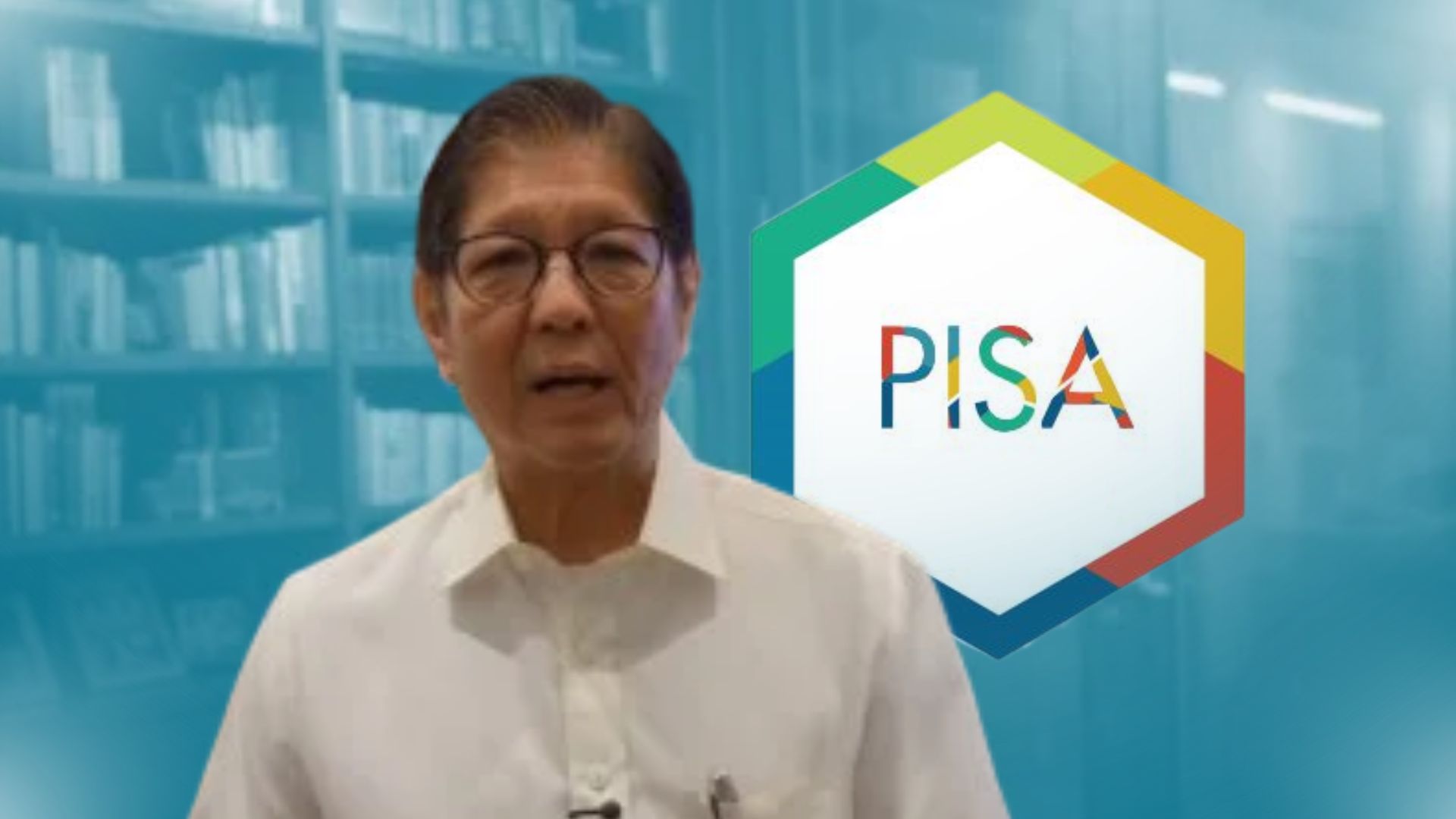
President Ferdinand Marcos Jr. vowed to sustain his administration’s education reforms after the Philippines recorded progress in the 2025 Programme for International Student Assessment (PISA), released on Sept. 9, showing gains across subjects but still below the Organization for Economic Co-operation and Development (OECD) average.
The Philippines has the highest performance since its participation in 2018, gaining an additional 20 points in reading in the 2025 PISA, up to 367 from 347 in 2022, while mean scores in science and mathematics also showed gains compared to 2022 results, up by 17 points to 373 and 16 points to 371, respectively.
These results show development in 3 key subjects, as stated by Department of Education (DepEd) Secretary Sonny Angara, based on the national results held in Caloocan, marking initiatives to further enhance learning strategies for students.
Citing the PISA report, Marcos highlighted that the Philippines is among the few education systems fastest-improving across all domains and that the government was only beginning to implement programs and other initiatives aimed at improving the lives of students and teachers.
“We will continue all of this. We will continue everything we are doing. We are just getting started. We have only begun building classrooms, providing internet access, computers and school supplies, and printing books,” he said.
Philippine Science High School – Davao Region Campus (PSHS-DRC) has achieved the 1st National School Ranking in the PISA 2025 results among 208 schools participating in the assessment.
Regional Director Maria Ines Asuncion of the Department of Education (DepEd) Region XI (PSHS-DRC) went to the campus to show its congratulatory message, marking dedication, skill, and continuing to aim higher in education.
“Your success demonstrates what Filipino learners can achieve when talent is nurtured, excellence is pursued, and opportunities are matched with passion and hard work,” Regional Director Maria Ines Asuncion said.
Despite improved PISA results, the OECD data show that most Filipino 15-year-olds remain below minimum proficiency in science, mathematics, and reading, with top-level performers still rare.
Only 32 percent of Filipino students reached Level 2 or higher in science, 21 percent in mathematics, and 31 percent in reading, but still below the respective OECD averages of 74, 65, and 69 percent, respectively.
Further, another problem identified was students’ unfamiliarity with computer-based testing and PISA’s application-oriented questions, with students reporting they encountered a computer mouse for the first time during the assessment.
These gaps will be addressed by strengthening initiatives such as easing teachers’ workload to increase teaching time, improving the curriculum, and applying learning from PISA gaps in 2022 and 2018, such as proper preparation, more exposure to the PISA environment, familiarity with computer use, and higher cooperation with private partners and education stakeholders, even down to the barangay level.
Education stakeholders also expressed their support for sustaining the gains in the Philippines’ PISA performance and addressing the possible learning gaps.