






Now Reading: Mirroring the Nation
-
01
Mirroring the Nation


Kirsten Flores
The 4th State of the Nation Address (SONA) by President Ferdinand Marcos Jr. presented an optimistic, reform-minded vision for a “Bagong Pilipinas.”
But juxtaposing presidential claims and dissecting the current conditions on the ground, the unvoiced gaps mirror a more nuanced picture.
Polished Frame
Economy
Claim
Pres. Marcos declared that the economy is robust—investor confidence is high, inflation is falling, employment is up, and poverty is declining. He framed the recent data (e.g., single-digit inflation, falling unemployment) as validation that “Bagong Pilipinas” is delivering broad-based prosperity.
Reflected Reality
In the real state of affairs, many Filipinos still feel left behind. Official figures do show growth, but social surveys paint a grimmer picture: roughly 63% of families still consider themselves poor as of late 2024.
Additionally, food and wage pressures persist. One analysis found that 27.2% of households reported involuntary hunger by early 2025, up from just 11.6% in 2022.
Workers’ average wages also remain far below a living standard: a typical daily minimum wage (~₱469)
, marking even subsistence as a daily struggle.
In short, aggregate growth has not yet translated into universal prosperity: inflation may be easing in the CPI, but many Filipinos continue to struggle with low incomes, expensive basics, and underemployment.
Barren Image
Agriculture and Food Security
Claim
The president touted success in controlling food prices and boosting farm output.
He noted the rollout of ₱20-per-kilo rice in pilot areas, expanded subsidies and training for farmers, free livestock, and infrastructure (like irrigation and cold storage) to raise local production of rice, corn, fruits, livestock, coconut, and more.
The SONA vowed to scale these programs nationwide via Kadiwa stores and beefed-up DA funding.
Reflected Reality
Despite these promises, hunger and price spikes remain serious concerns. By March 2025 some 27.2% of families were experiencing involuntary hunger – more than double the rate in 2022.
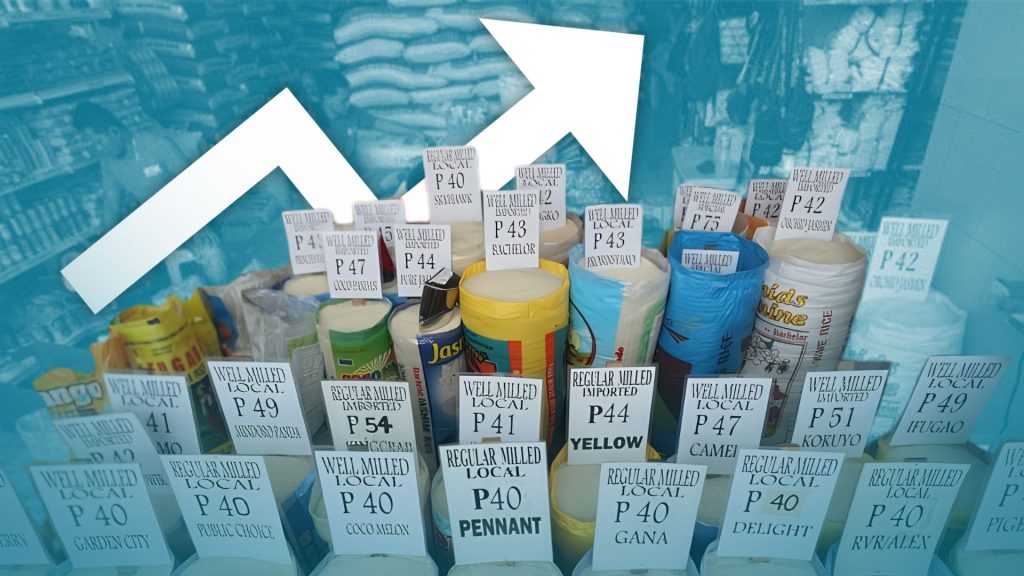
Rice inflation hit multi-year highs even after tariff cuts, prompting a national declaration “food emergency” declaration earlier in February. On the supply side, small farmers still earn very little: one report found a farmer might get about ₱15 per kilo of palay while consumers pay ₱58/kg in Manila.
Rising costs for seeds and fertilizers have also squeezed incomes. In short, food insecurity remains high despite government assistance. The subsidies and Kadiwa stalls have helped some areas, but widespread affordability and farm profitability issues persist even as the administration pours investment into agri-programs
Fractured Glass
Infrastructure and Transport
Claim
The administration promised a wave of new projects: highways, bridges, rail lines (NSCR, Metro Manila Subway, PNR expansions), airports and seaports, plus urban mass-transit reforms (50% fare discounts, family passes, plans to resurrect the free “Love Bus”).
Many big-ticket projects like the Bataan–Cavite bridge, SLEX extensions, and Mindanao highway links were also announced or underway.
The SONA asserted that dozens of power plants, renewable installations, and water projects are in the works to benefit “every household.”
Reflected Reality
In reality, project delivery has been uneven. High-profile constructions have suffered delays or failures: for example, the new Cabagan-Santa Maria Bridge in Isabela in Isabela worth ₱1.225-billion collapsed within a week of opening after a truck crossed it
The president himself blamed a “design flaw” and budget cut on the disaster, given that the structure had been pared down from an initial ₱1.8B plan
Such incidents echo past infrastructure woes: expensive projects that quickly deteriorate, or needed works left unfinished. Many transit expansions are still years from operation. Meanwhile, basic connectivity (e.g., quality roads and bridges in rural areas) remains spotty. The stalled portions of the North–South Commuter Railway and last-mile subways show that grand plans often take much longer than promised.
In sum, infrastructure gains exist, but “Build Better More” has yet to fully overcome longstanding procurement and construction problems: accountability, quality control, and timely completion remain nagging issues.
Flickering Reflection
Energy and Utilities
Claim
The President reported major progress in electrification and clean energy: over 2.5 million homes were recently connected, with plans to reach 5 million more by 2028. Nearly 200 new power plants (including solar, wind, and LNG projects) are being built to boost supply. Net-metering for rooftop solar is being fast-tracked, and lifeline electricity rates are extended. For water, he noted bulk supply projects and filtration systems (especially for islands), and promised to fix failing water districts and make tap water more affordable.
Reflected Reality
Many communities still lack reliable service. Despite the push, roughly 3 million households remained off-grid at the start of the administration, and progress in remote provinces has been slow. Power outages continue to dog rural areas: a wide blackout in Siquijor recently forced a state of calamity, with an investigation finding expired permits, damaged generators, and weak fuel procurement systems at local utilities. The authorities have ordered reforms there, but similar vulnerabilities exist elsewhere.
On water supply, the picture is also mixed: about 6–7 million Filipino households still suffer chronic water interruptions. Nationally, only about 47% of the population has safe drinking water access. In short, while capacity is growing, many service gaps remain. New connections and plants are being built, but decades of underinvestment mean that basic electricity and clean water are still not universally secure or cheap, tempering the administration’s claims of wide coverage.
Streaky Chalk lines
Education
Claim
Education was promised as a top priority: programs like the ARAL learning recovery (after COVID), expanded Early Childhood (Bulilit) centers, and mental health support (counselors) were launched. The government reports 22,000 new classrooms and 60,000 teaching positions created, with more on the way. Digital learning got a boost (laptops for every teacher, Wi-Fi in schools, Bayanihan SIM cards). Senior High incorporated TESDA technical-voc tracks, and free tertiary education funding was increased (serving 2+ million students annually). These measures aim to catch up with students and improve the quality.
Reflected Reality
Fundamental challenges remain. Even before the pandemic, student drop-out was high—roughly 40% of children who start Grade 1 do not reach Grade 10. Surveys found “mass promotion” practices where underprepared students move up levels, a symptom of learning gaps.
Many public schools still lack sufficient classrooms, textbooks, and computers, especially in rural regions. In 2021, only about half of public schools had any internet connectivity. The new ARAL and tutoring programs help, but have limited reach. In short, while funding and programs have expanded, basic issues of overcrowding, resource inequity, and student retention persist. Long-term reform, such as teacher training, school infrastructure, and curriculum strength, remains an unfinished task.
Ailing Vision
Healthcare
Claim
The SONA credited sharp expansions in healthcare: thousands more clinics and hospitals (including specialty centers) were opened, 53 “BUCAS” outpatient centers set up nationwide, and zero-balance billing implemented in all DOH hospitals (eliminating fees for basic hospital rooms). PhilHealth benefits were broadened: higher coverage for surgeries, cancer treatment, dialysis, and transplants, plus new funds for HPV vaccination and malnutrition. Additional budgets were allocated for medical assistance and free medicines.
Reflected Reality
Presently, access to care is improving but still uneven. The Philippines has one of the lowest doctor-to-population ratios in Southeast Asia: about 4 physicians per 10,000 people. This is far below the WHO recommendation.
Specialists are concentrated in cities, so rural areas remain underserved. Many government hospitals still face shortages of equipment and personnel despite new funding. While PhilHealth now covers more services, out-of-pocket payments remain significant for many patients (some estimates place informal payments at a quarter of health spending).
The new zero-billing policy is a welcome step, but it only applies to national government hospitals; many local facilities still charge fees. In short, the health system’s capacity has grown, but enduring gaps (rural access, staffing, and financing bottlenecks) mean Filipinos still face barriers to affordable, quality care.
Faded Safety Net
Poverty and Social Welfare
Claim
Anti-poverty programs: the 4Ps cash transfers now aid over 5 million families (with graduation rates cited), and the new “Walang Gutom” national feeding program and food stamps reach hundreds of thousands. He noted that over 1.5 million families have “graduated” from 4Ps, and more funding will expand feeding programs to 750,000 families by 2027. The goal is inclusive growth and better nutrition for the poor.
Reflected Reality
Despite these efforts, extreme hardship persists. Actual hunger and poverty indicators have worsened in recent years. SWS surveys show involuntary hunger doubling under the Marcos administration: from 11.6% of families in June 2022 to 27.2% by March 2025.
Cash support has helped some families, but many poor people are not covered. For example, the DSWD Walang Gutom Program’s pilot covered about 300,000 of the neediest families, leaving most hungry households without sustained help. Labor groups argue that low wages and informal jobs (rather than lack of subsidies) drive poverty. In short, social programs have mitigated suffering for some, but they have not fundamentally shifted the poverty rate or food insecurity. Deeper economic reforms are required to eradicate the “smudges” of hunger and indigence.
Lingering Smudges
Peace, Order, and Justice
Claim
Presidential claims portrayed peace and security as improved, asserting that all major insurgent groups have surrendered and that the anti-drug campaign is “bloodless” (with no deaths or rights abuses) while yielding huge drug seizures and arrests.
The president also highlighted falling crime rates and increased police capacity (citing equipment and quick response times). The message was that law and order have never been better: streamlining infrastructure permits, suggesting a cleaner, more efficient government.
Reflected Reality
This view is contested by many observers. Human-rights watchdogs point out that violence in the “drug war” has not ceased: official tallies and independent trackers report hundreds of drug-related killings during Marcos’s term. HRW noted that more than 700 people were killed in anti-drug operations under Marcos, about one-third by police and PDEA agents. Thus, the claim of a peaceful “bloodless” campaign is widely seen as misleading. Insurgency and violent crime also persist in pockets (NPA guerrillas, kidnappings by extremists, illicit gambling syndicates, etc.), though at lower levels.
Corruption within law enforcement remains an issue. The Philippines still ranks poorly on Transparency International’s Corruption Perceptions Index, and civil society notes that extra-legal acts by police sometimes go unpunished (the SONA made no mention of strengthening judicial accountability). In summary, major security threats have been contained but not eradicated, and framing the drug war as clean and purely “eight Es” policy overlooks ongoing violence and impunity.
Blurry Horizon
Foreign Relations & OFWs
Claim
The President thanked foreign partners (Gulf states, ASEAN neighbors, etc.) for helping free Filipino hostages and granting pardons to convicted OFWs. He stressed that the Philippines kept its promises on international commitments and will host the ASEAN Summit in 2026. He also vowed continued support for overseas Filipinos in distress.
Reflected Reality
Diplomatic efforts have indeed achieved some successes (e.g., dozens of detained OFWs have been pardoned). However, many cases remain unresolved. Contrary to the SONA’s tone, as of mid-2025, several Filipino sailors kidnapped by the Houthis were still being held. The DFA reported nine crew unfreed in July. Manila says it must rely on allies rather than direct talks, underscoring the challenge.
Meanwhile, systemic reforms for migrant labor (like stronger contract enforcement) have seen little progress. On geopolitical issues, the Philippines’ friendly stance belies regional tensions: disputes over the West Philippine Sea continue with minimal mention. In short, foreign policy has been mainly reactive, and OFWs still face dangers abroad; the “friend to all” posture remains aspirational without fully addressing these unresolved issues.
Faces in the Mirror
The Filipino People’s Perspective
Behind every statistic are lives striving for dignity.
The “mirror” held up by the SONA shows bright spots, but it also casts shadows. For each and every Filipino, real progress means steadier jobs, safer communities, affordable essentials, and trust in government, not just impressive numbers.
Looking Beyond the Rhetoric
SONA 2025 outlined an agenda of optimism: growth, infrastructure, reform, and hope. Though yes, growth has continued, certain flagship programs are in motion, inflation has eased, and more funds flow to social sectors. But deep-seated challenges like pockets of poverty, uneven development, climate shocks, and institutional gaps remain. Achieving the vision of prosperity by 2040 will require much faster growth and more inclusive policies.
Ultimately, true progress will show up only in tangible improvements to people’s lives: full classrooms in every barangay, hospitals that serve all, farms that thrive without constant bailouts, and governance that truly delivers services fairly. Those mirror images are still forming.
For every claim made in the SONA, the evidence urges the nation to hold our nation’s leaders and policymakers accountable and to remember the lived reality behind the gloss.