




Now Reading: ON SONA 2025 | SONA: State of National Amnesia
-
01
ON SONA 2025 | SONA: State of National Amnesia

Before a word is uttered in the President’s State of the Nation Address (SONA) this 2025, the real show begins outside the Batasang Pambansa Complex: politicians and their spouses posing like they’re on the Met Gala’s side entrance. While beyond the cameras, protesters are kept behind barricades, their hunger and rage unseen.
 |
| #CartoonOnPoint by Zen. |
In what world do you deploy 27,000 security personnel not just to protect the President, but to escort senators in custom terno and barong while the country watches on livestream, commentating on hemlines instead of headlines?
Every year, politicians tell us the SONA is for the people. But which people— those starving outside the barricades, or those strutting in sequins inside? How can you say you’re serving a hungry nation while dressed in a P100,000 Filipiniana, arm in arm with your husband who just voted against the minimum wage hike?
On July 28, 2025, President Ferdinand Marcos Jr. is set to deliver his fourth SONA before a joint session of Congress at the Batasang Pambansa Complex — a constitutionally mandated report on the state of the nation that, in recent years, has served more as a stage for spectacle than a platform for substance.
Indeed, the SONA has increasingly resembled a curated performance — a space where politicians flaunt designer outfits while the public is left hungry for substance.
It’s tempting to pin the blame on the media. And certainly, there is merit in holding mainstream media outlets accountable for turning political rituals into lifestyle coverage. But the cameras only follow where attention already flows. Attention in this country has long been engineered away from critical thought and toward curated aesthetics.
This year, an estimated 27,000 security and response personnel will be deployed to secure the venue, not only as a measure of state protection, but arguably also to maintain the illusion of political order and prestige.
Meanwhile, outside the heavily guarded halls, the reality is devastating: 27.2% of Filipino families experienced involuntary hunger in March 2025, the highest rate since the pandemic. This surge includes a spike in moderate to severe hunger across regions, with the Visayas alone seeing a jump to 33.7%, even as over 52% of Filipinos now consider themselves poor.
Instead of confronting policy failures or institutional weaknesses, the country is treated to a display of designer clothing and choreographed applause. Such scenes reinforce the dangerous notion: that governance is a costume, and leadership is just another PR campaign.
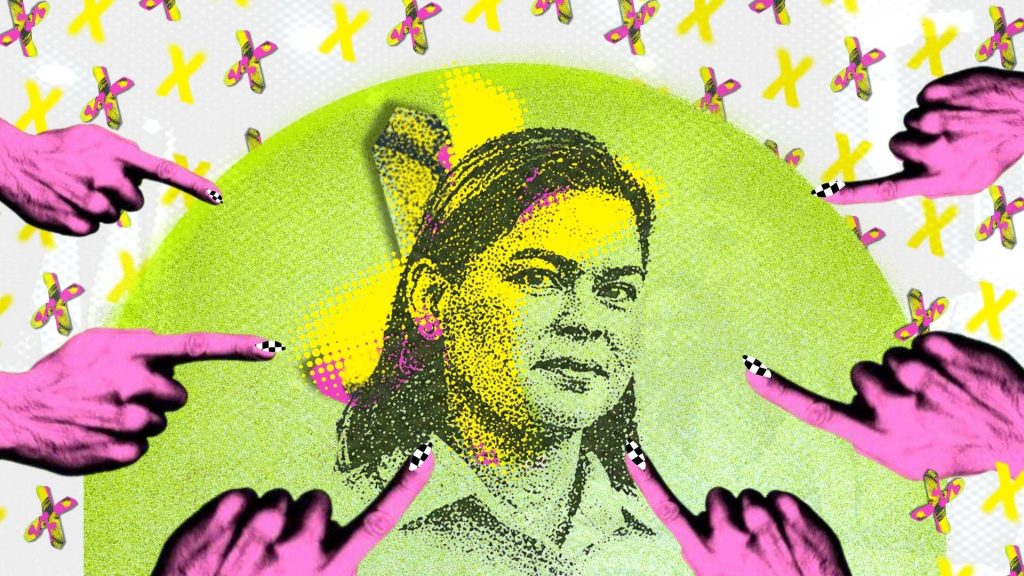
Even more troubling is the context surrounding this year’s address. Vice President Sara Duterte, impeached and charged with corruption, bribery, and conspiracy to commit assassination, is skipping the SONA because, according to her, “Marcos has nothing substantial to say.” That’s rich, coming from a public official accused of plotting a hit on the President himself, all while writing off millions in confidential funds to aliases like “Mary Grace Piattos” and “Team Amoy Asim.”
The impeachment trial, postponed until after the SONA per Senate President Escudero’s timeline, is emblematic of the broader problem: political accountability deferred in favor of political pageantry.
“That’s what some senators agreed together with Senate President Escudero, once we are able to organize ourselves and settle the leadership,” said Senator Joel Villanueva, explaining the delay. The refusal to prioritize the trial before the address reveals a legislative body more concerned with ceremonial harmony than institutional integrity.
This dissonance between ceremony and crisis invites reflection. Why has the SONA become a national costume gala rather than a venue for democratic reckoning? Why has the legislative chamber become a catwalk for state-sponsored spectacle?
One possible explanation lies in what political theorist Guy Debord termed “the society of the spectacle.” In such societies, representation replaces reality — appearances substitute for action. Governance becomes performance, and truth is secondary to what is televisable. The SONA, in this frame, functions less as a mechanism of democratic transparency and more as a performative display of state power.
What gets lost in the process is precisely what the Constitution demands: an honest appraisal of the nation’s condition, and a call to action based on that reality. The pageantry drowns the policy. The fashion erases the failures.
The crisis of SONA is not just that it has become a spectacle. The crisis is that we no longer expect anything else. This is the State of National Amnesia: a country trained to applaud designer gowns and scripted applause while forgetting the blood that once stained the streets outside Batasan.
In a nation where the Marcos name is rebranded and the past rewritten, memory itself becomes resistance. To remember is to refuse silence; to question the spectacle is to reclaim what the show tries to erase.
But amnesia is not irreversible. The first step to memory is confrontation. Let us confront the real state of our nation: a justice system delayed, an education sector crumbling, an impeached vice president dodging trial, and a people trained to watch, not demand.
We deserve better than this televised mockery. We deserve a SONA that actually speaks to the state of the nation, not the state of someone’s stylist. Enough with the claps for couture. Demand outrage.
Demand answers. Hold them to account — not for their poise on camera, but for every betrayal they commit once the lights go out.
If there is anything we must recover this year, it is not simply our attention — it is our right to scrutinize, our capacity to remember, and our refusal to applaud the costumes while the house burns down.