







Now Reading: PH climbs PISA ranks, yet severe learning gaps remain
-
01
PH climbs PISA ranks, yet severe learning gaps remain
PH climbs PISA ranks, yet severe learning gaps remain

Gabriel Ibis
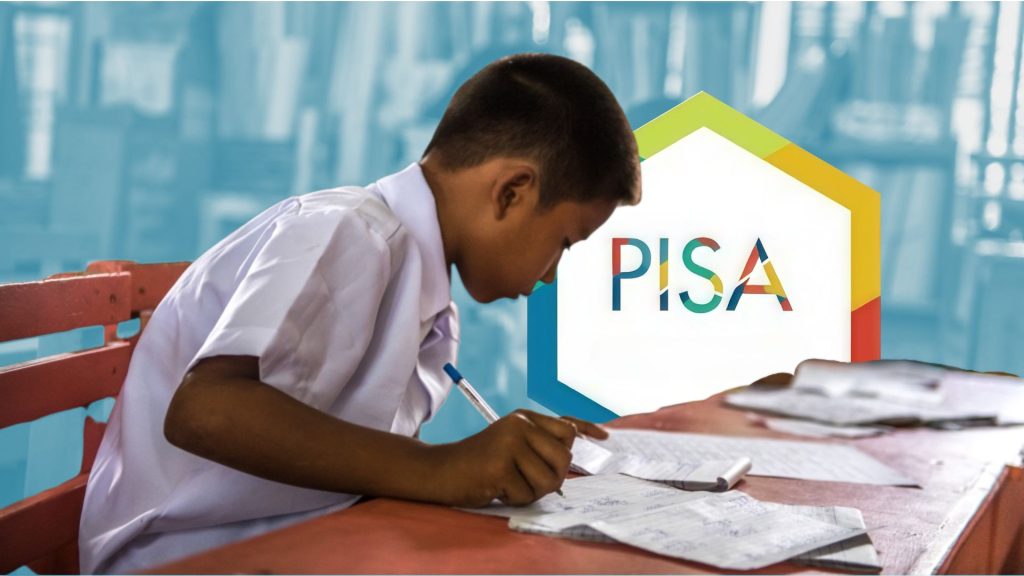
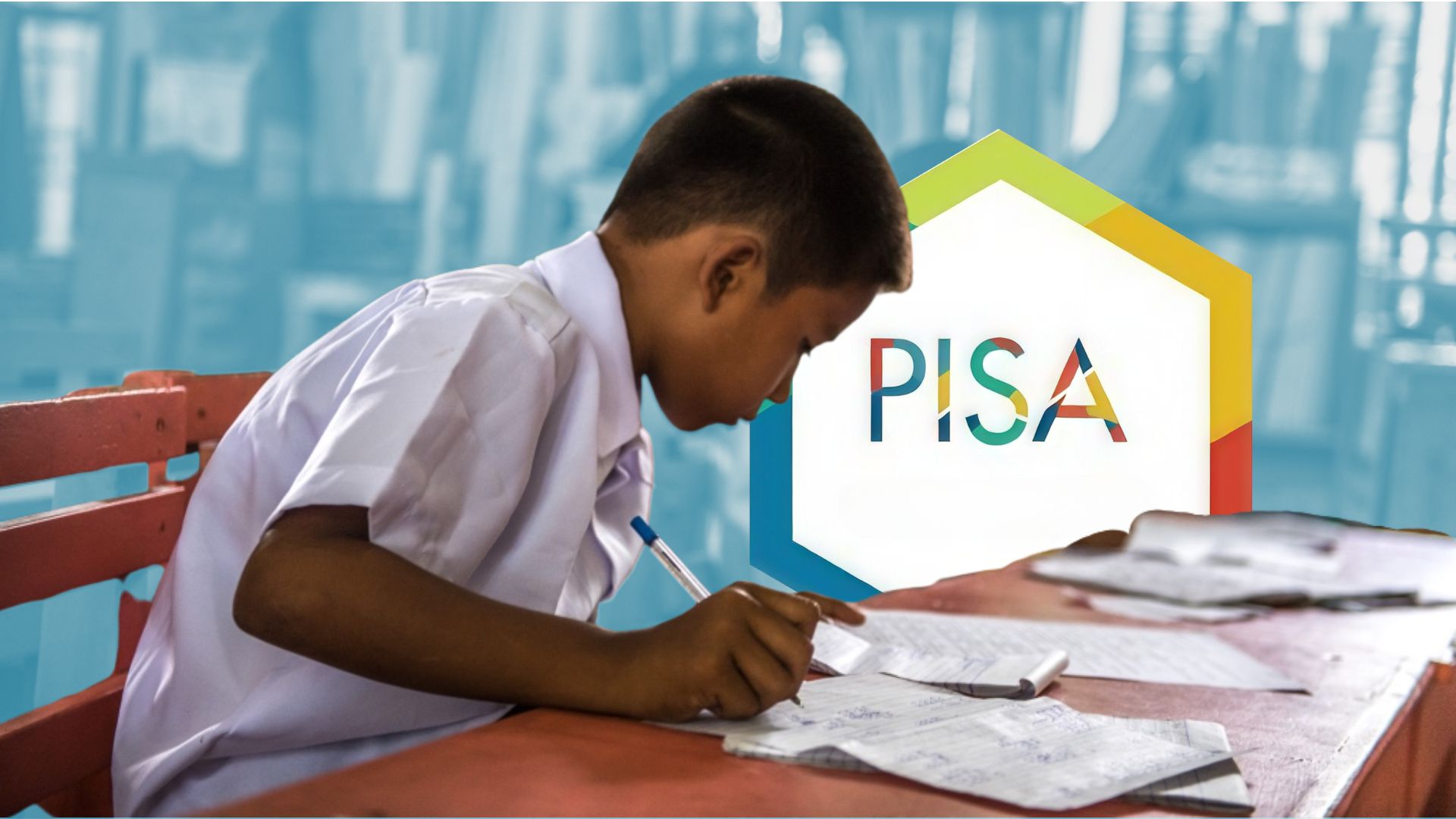
The Department of Education (DepEd) announced that Filipino students achieved record-high scores in the 2025 PISA assessment, though severe inequalities and funding gaps continue to undermine the nation’s basic education system.
Paper gains, concrete deficits
According to results released by the DepEd and the OECD, average scores of Filipino students rising across all assessed areas: reading rose by 20 points to 367, mathematics by 16 points to 371, and science by 17 points to 373.
Out of 90 participating education systems, the Philippines ranked 72nd in reading and 74th in mathematics; it placed 77th out of 91 in science.
In addition, the OECD also recognized the country as the fastest-improving education system in reading.
OECD policy analyst Rodrigo Castañeda Valle said, “The international benchmark is not necessarily the most useful tool at this point.”
“Also because as you have seen, the international trends are very negative. So this is also what makes it so outstanding,” Valle said.
Despite the upward movement, the vast majority of Filipino students continue to miss baseline academic benchmarks.
Only 31 percent reached Level 2 proficiency in reading, 21 percent in mathematics, and 32 percent in science, substantially trailing the OECD averages of 461, 463, and 482 points, respectively.
Top-tier achievers remained virtually absent, with nearly no Filipino examinees reaching Levels 5 or 6.
Overall, 64 percent were classified as low performers across all subjects, while the country scored 434 in computational problem-solving against the 500 OECD benchmark.
Education Secretary Sonny Angara acknowledged the disparity, saying that “we should be proud of how far our learners and teachers have come, but we should be even more determined about how much farther we can go.”
Poverty as the bottleneck?
The assessment revealed a deepening domestic inequality.
The Philippines was the only participating education system where the achievement gap between wealthy and disadvantaged students widened during this cycle. In reading, scores among the wealthiest quartile improved by 41 points, nearly triple the 15-point increase among the poorest.
While private school students posted higher raw scores, the OECD confirmed this gap disappears when the scores are adjusted for socioeconomic status, indicating household income remains the dominant driver of performance.
School safety conditions also deteriorated, with reports of verbal abuse jumping from 22 percent in 2022 to 33 percent in 2025.
Engineering gains under administrative scrutiny
The 2025 results present a marked shift from the 2018 debut and the stagnant 2022 cycle, following a leadership transition at DepEd from Vice President Sara Duterte to Angara in 2024.
Angara attributed the performance to targeted operational interventions, including easing administrative burdens, revising curricula, conducting digital literacy drills, and implementing the Academic Recovery and Accessible Learning (ARAL) Program.
DepEd Undersecretary Malcolm Garma added that the agency paid closer attention to “the psychosocial well-being of our learners” to reduce testing anxiety.
However, the education chief conceded that the results represent an initial checkpoint, pointing to regional peers like Vietnam, which allocates 20 percent of its national budget to education, as benchmarks the Philippines still trails.
Independent educators’ unions remain skeptical of this narrative of recovery.
Groups like the Alliance of Concerned Teachers and the Teachers’ Dignity Coalition argue that a centralized fixation on global testing metrics creates a statistical facade that masks chronic, unresolved deficits.
Ruby Bernardo of the Alliance of Concerned Teachers highlighted acute classroom realities, stating, “Alarming talaga iyong kalagayan ngayon sa kabuuan ng mga estudyante natin. More than ever iyong suporta na kailangan natin: dagdag na classroom, teacher and education personnel, textbooks.”
Benjo Basas of the Teachers’ Dignity Coalition warned against using global metrics to mask domestic failures, noting, “may PISA o wala, dapat ang ating gobyerno ay binibigyan ng pansin, tinutupad yung kanyang obligasyon.”
Billion-peso cliff for borrowed time
The sustainability of the 2025 PISA gains remains highly uncertain due to looming fiscal cliffs.
The ARAL program, which DepEd credits with reducing the number of struggling readers from 6.7 million to 2.2 million, currently holds zero allocation in the proposed 2027 National Expenditure Program.
Angara said, “These latest PISA gains are an encouraging checkpoint, not the finish line. They prove that system-wide progress is possible, but they also highlight why sustained funding and structured interventions like ARAL remain non-negotiable.”
To maintain operations and prevent the education system from calcifying into a two-tiered structure that disproportionately benefits wealthier demographics, DepEd is lobbying lawmakers for a PHP 16.03 billion supplemental appropriation.
The Second Congressional Commission on Education (EDCOM 2) echoed the need for sustained financial and policy support, asserting that “education reform cannot begin again with every change in leadership; it requires consistency of purpose, continuity in implementation, and the commitment of the entire country.”
Whether these manufactured gains can translate into systemic recovery remains uncertain, as it is entirely dependent on the legislature’s pending decision regarding the requested PHP 16.03 billion supplemental appropriation.
Until then, the country’s celebrated PISA turnaround risks standing as a statistical illusion that masks a persistent domestic crisis.