









Now Reading: PH economy slows to 2.3% in Q2 amid weak demand, investment
-
01
PH economy slows to 2.3% in Q2 amid weak demand, investment
PH economy slows to 2.3% in Q2 amid weak demand, investment

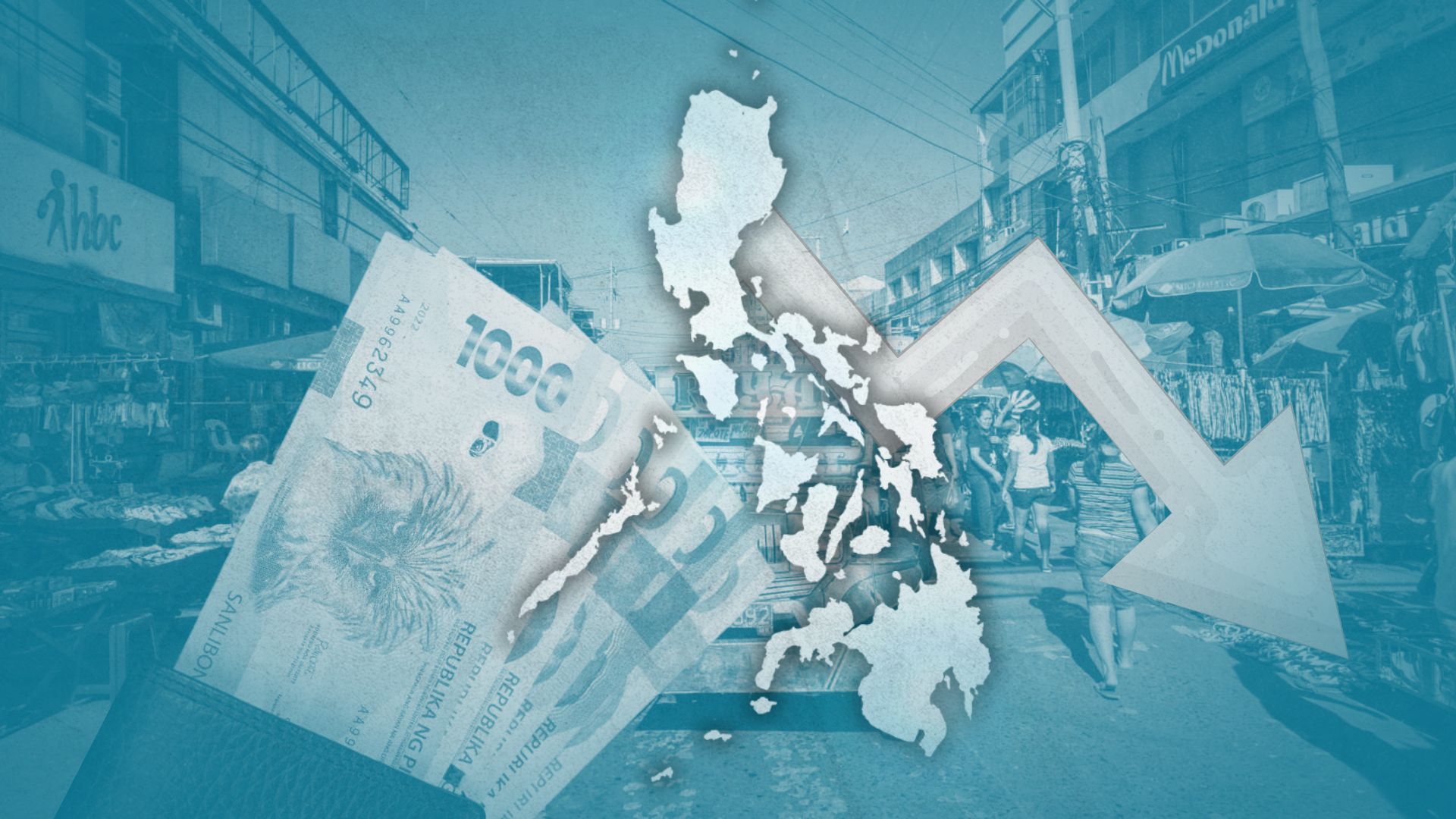
The Philippines faces a steeper climb toward its economic growth target after the Gross Domestic Product (GDP) expanded by just 2.3% in the second quarter of 2026, its weakest growth since the fourth quarter of 2009 outside the pandemic years.
This slowdown came as weak demand and declining investment weighed on the economy, the Philippine Statistics Authority (PSA) reported August 7.
According to PSA, the April-to-June GDP expansion was slower than the 2.8% growth recorded in the first quarter, bringing the first-half growth to 2.6%.
The first-half GDP growth figure fell below the government’s revised full-year growth target of 3.5% to 4.5%.
Investment declines
Gross capital formation, a measure of investment, contracted 9.2% in the second quarter, marking its fourth consecutive quarter of decline.
Construction fell 14.8% year-on-year, while government construction plunged 32.4%, weighing on overall investment.
“Although public construction is a small part of the economy, the amount of contraction, at 32%, brought significant impact on the economy,” Department of Economy, Planning, and Development (DEPDev) Secretary Arsenio Balisacan said.
Balisacan said the decline in public construction was linked to continued caution surrounding the flood control corruption scandal, which affected government spending and investor confidence.
“The sharp decline in public construction was the main contributor in the decline in investments… driven by continuous caution due to the flood control scandal,” Balisacan said.
Consumption eases
Household consumption grew 2.8% during the quarter as higher prices and other economic pressures weakened consumer demand.
“Domestic demand remained subdued, mainly because total investment continued to contract as public construction declined,” Balisacan said.
“Household consumption growth also moderated amid higher inflation, job losses, and lower remittance receipts arising from the Middle East conflict,” the DEPDev secretary added.
Agriculture grew 2.7% during the quarter, while the services sector expanded 4.5%.
The industry sector, however, contracted 2.4%, weighed partly by the decline in construction.
Recovery expected
Despite the slowdown in GDP growth, Balisacan said recent developments indicate that the economy could begin recovering in the second half of the year.
“While the second-quarter result calls for decisive actions, recent indicators give us reason for cautious optimism that the economy may already be entering the early stages of recovery,” he said.
Balisacan said the Department of Budget and Management began releasing mobilization funds for infrastructure projects toward the end of June, while the Department of Public Works and Highways began awarding contracts in June and July.
“We therefore expect public construction and infrastructure spending to begin picking up in the third quarter and gain further momentum in the months ahead,” Balisacan said.
The government said stronger exports, improving business confidence, and increased infrastructure spending could support economic activity in the coming months.
Balisacan said the economy needs to grow at least 4.4% in the second half of 2026 to meet the lower end of the government’s annual growth target.
“What we are experiencing right now, I believe, is transitory, it’s temporary. We are making efforts to get back to the high-growth trajectory,” Balisacan said.